
What Is an ADU and Why Homeowners in California Are Building Them

Key Takeaways
An accessory dwelling unit (ADU) is a self-contained secondary home with its own kitchen, bathroom, and separate entrance located on the same lot as a primary residence.
California state laws since 2017, with major updates through 2024, have made ADU development faster and easier to permit, especially for detached backyard cottages and small manufactured homes.
Many homeowners use detached ADUs to generate rental income, provide multigenerational housing, or create a downsized primary home on their existing property.
Factory-built tiny homes offer consistent quality, predictable timelines, and construction under national building code standards compared to traditional site-built additions.
Tiny Home Cottages specializes in detached, factory-built tiny homes and cottages designed to function as ADUs throughout California and Oregon.
What Is an ADU?
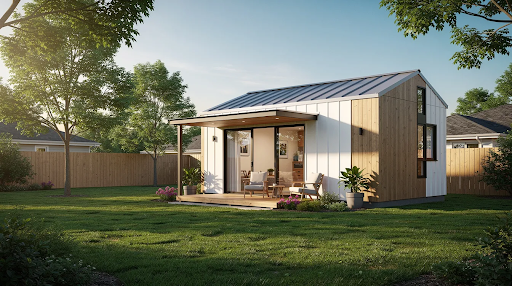
An accessory dwelling unit, commonly called an ADU, is a legal secondary residential unit located on the same lot as a single family home. Think of it as a smaller, fully independent home that shares the property with a main house. A typical example might be a 400 to 800 square feet backyard cottage in California, complete with everything needed for day-to-day living.
What makes an ADU distinct from a simple guest room or home office is its completeness as a residence. A legal accessory dwelling unit ADU includes its own kitchen with permanent cooking facilities, a bathroom with toilet and shower, a dedicated sleeping area, and usually a separate entrance. It functions as an independent housing unit, even though it cannot typically be sold separately from the primary residence. Some recent California legislation may allow separate sale in limited situations, such as properties over one acre with local approval, but this remains the exception rather than the rule.
While ADUs can take several forms, including attached additions or internal conversions, this article focuses primarily on detached ADUs like backyard cottages, tiny homes, and small manufactured homes. In California and Oregon, you may hear these structures called granny flats, in-law units, casitas, or backyard tiny homes. Despite the different names, they all refer to the same general concept under local zoning regulations.
Common Types of ADUs (With a Focus on Detached Units)
ADUs come in several physical forms, but detached units have become especially popular among West Coast homeowners seeking privacy and flexibility. Understanding the different ADU types helps clarify which approach might work best for your property.
Main ADU categories include:
|
ADU Type |
Description |
Typical Location |
|
Detached ADU |
New construction separate from main house |
Rear or side yard |
|
Garage conversion ADU |
Existing garage converted to living space |
Attached or detached garage |
|
Attached ADU |
Addition sharing walls with primary home |
Side or rear of main house |
|
Basement conversion ADUs |
Finished lower level with separate access |
Below main house |
|
Internal ADU |
Converted space within existing home |
Upper floor, attic, or unused rooms |
Concrete examples help illustrate these options. A 600 square feet detached cottage in a Sacramento backyard might provide a complete one-bedroom rental unit, while a converted 2-car garage conversion in Los Angeles could become a studio ADU with full kitchen and bath.
Tiny Home Cottages focuses specifically on detached ADU-style homes, including single story tiny homes, premium single story cottages, lofted tiny homes, cabin series cottages, and HUD manufactured homes. These structures are placed in the rear or side yard, offering privacy benefits for both the main house occupants and ADU residents.
What Is Considered an Accessory Unit?
An accessory unit is fundamentally a smaller, secondary housing unit that serves as a companion to a primary home on the same lot. The key characteristic is its accessory nature—it supplements rather than replaces the main residence.
In practice, terms like accessory dwelling unit, accessory apartment, granny flat, backyard cottage, and secondary unit function as near-synonyms. However, local regulations may use specific terminology in their zoning codes, so it pays to confirm which terms your city or county recognizes.
Building and zoning codes typically impose restrictions that define an accessory structure:
The unit must be smaller than the primary residence in square footage
Most California jurisdictions allow one ADU and sometimes one junior ADU per single family properties
The secondary residential unit must meet all habitability standards for independent living
Maximum sizes often range from 800 to 1,200 square feet depending on local rules
Detached tiny homes qualify as accessory dwelling units when they are permitted as permanent structures, placed on an approved foundation, and properly connected to water, sewer, and electrical utilities. Without these elements, a tiny home might be classified as an RV or temporary dwelling rather than a legal ADU.
Property owners should always verify how their city or county defines accessory unit in its zoning code before beginning any design work or home purchase.
Key ADU Requirements: Kitchens, Bathrooms, and Permits
What separates an ADU from a simple bonus room, studio, or home office is its function as a complete, independent residence. This distinction has significant legal and practical implications.
Essential components of a legal ADU:
A full or efficiency kitchen with permanent cooking facilities (sink, stove or oven, refrigerator space)
A bathroom with toilet, sink, and shower or bathtub
Safe and adequate sleeping space
Independent access, typically through a separate entrance
Compliance with all applicable building code requirements
The kitchen is often the defining feature. Without a true kitchen featuring permanent cooking appliances, the space is usually classified as a guest room, recreation room, or office rather than a habitable ADU. This classification matters because it affects your ability to legally rent the space or count it as a housing unit.
Permits are required in California and Oregon whenever you create habitable living space or add plumbing and electrical systems for an independent residence. This applies whether the ADU is attached or detached from the existing home. State laws now mandate that many ADU permit applications receive a decision within approximately 60 days if they meet objective standards, though actual timelines vary by jurisdiction.
Very small non-habitable sheds under roughly 120 to 200 square feet may be exempt from permits in some areas. However, once a structure is used for sleeping or equipped with a kitchen and bathroom, the necessary permits are almost always required.
Is It Legal to Build an ADU or Tiny Home in Your Backyard?
In California and Oregon, recent state laws have created strong support for backyard ADUs on most single-family lots. However, local regulations still shape the specific rules for your property.
Key California milestones in ADU legislation:
2016-2017: Initial reforms through AB 2299 and SB 1069 eased local restrictions
January 1, 2020: Major updates via AB 68, AB 881, and SB 13 mandated ministerial approval, reduced setbacks to 4 feet, and eliminated parking requirements near transit
2022-2024: Laws including AB 2221 and SB 897 further streamlined the approval process, limited impact fees, and prohibited HOAs from outright ADU bans
Oregon followed a parallel path with Senate Bill 1051 in 2017 and House Bill 2001 in 2019, requiring cities and counties with populations over 15,000 to permit at least one ADU on detached single-family lots, typically without owner occupancy requirements.
Most residential zones in these states now allow at least one ADU, often plus a smaller junior ADU within the primary home. Junior ADUs are units up to 500 square feet contained entirely within the main house, sometimes with shared access.
Details that vary by locality include:
Maximum ADU size (often 800-1,200 square feet)
Height limits (typically 16-18 feet for detached units)
Setback requirements from property lines
Design standards and architectural compatibility rules
Parking requirements, if any
Homeowners should check with their city planning or building department early in the process to confirm where a detached ADU can be placed on their lot. While state laws limit the ability of HOAs to ban ADUs outright, homeowner associations may still impose reasonable restrictions on exterior design, though they cannot make ADU construction infeasible.
How ADUs Add Value for Homeowners
ADUs have become popular in California’s and Oregon’s tight housing markets because they add flexible space and can meaningfully improve a homeowner’s financial position. The housing crisis has made adding housing units to existing residential property an attractive option.
Financial benefits of ADU development:
Potential monthly rental income ranging from $1,500 to $3,000 or more in high-demand areas
Increased property value, with some estimates suggesting 10-20% appreciation
Lower construction costs compared to purchasing a separate property since you’re building on existing land
Rental housing that can help offset mortgage payments or fund retirement
Beyond the financial advantages, ADUs serve important non-monetary purposes. Many families use them for housing aging parents, adult children returning home, or live-in caregivers. Others appreciate having private guest space without sharing walls with the main house. Some homeowners plan to downsize into the ADU later in life while renting out their primary home for additional income.
Consider a practical scenario: a San Diego homeowner adds a 500 to 700 square feet detached ADU to house an aging parent who needs nearby family support but values independence. The unit includes its own kitchen, bathroom, and living space, allowing privacy for everyone. Years later, when circumstances change, the same ADU can transition to a rental unit providing monthly income.
Because ADUs utilize land you already own, the path to more affordable housing options becomes more accessible than traditional real estate purchases. Factory-built tiny home models can further reduce construction costs while maintaining quality.
Detached, Factory Built ADUs vs. Site-Built Additions
When planning ADU construction, homeowners face a fundamental choice between factory-built homes and traditional site-built additions. Understanding the differences helps clarify which approach aligns with your priorities.
Factory-built homes, including tiny homes and HUD manufactured homes, are constructed in a controlled indoor environment under national building code standards. Once complete, they’re transported to your property and placed on a prepared foundation or support system. This process contrasts sharply with site-built projects where construction happens entirely in your backyard over many months.
Key advantages of factory-built detached ADUs:
|
Factor |
Factory Built |
Site Built |
|
Construction timeline |
4-8 weeks for home construction |
6-12 months or longer |
|
Quality control |
Consistent factory QA protocols |
Variable workmanship |
|
Weather exposure |
Indoor construction eliminates delays |
Weather-dependent scheduling |
|
On-site disruption |
Minimal—foundation and delivery only |
Extended construction activity |
|
Cost predictability |
More predictable pricing |
Subject to change orders |
Site-built ADU projects often face schedule delays from weather, material shortages, or coordination challenges among multiple subcontractors. Factory construction avoids most of these variables by building under controlled conditions with dedicated crews following established procedures.
Tiny Home Cottages works with experienced manufacturers that have spent decades building small homes and cottage-style dwellings. This expertise translates to consistent quality and reliable craftsmanship specifically suited to detached ADU applications.
Types of Tiny Home Cottages That Can Be Used as ADUs
Tiny Home Cottages offers several categories of factory-built homes designed to function as detached ADUs on many residential lots throughout California and Oregon. Each product family addresses different aesthetic preferences, space requirements, and budget considerations.
Single Story Tiny Homes These entry-level homes feature modern layouts with approximately nine-foot ceilings throughout. The floor plans prioritize efficient use of space while maintaining comfortable proportions for daily living. They work well for homeowners seeking a straightforward, contemporary backyard cottage.
Premium Single Story Tiny Homes Building on the single story foundation, premium models include upgraded features such as cement exterior siding and enhanced floor plan options. These homes suit property owners wanting elevated finishes without the complexity of multi-level construction.
Lofted Tiny Homes Featuring second-level lofts, steep roof pitches, and large stacked windows, lofted models maximize usable space within a compact footprint. The vertical design creates visual interest while providing flexible sleeping or storage areas above the main living space.
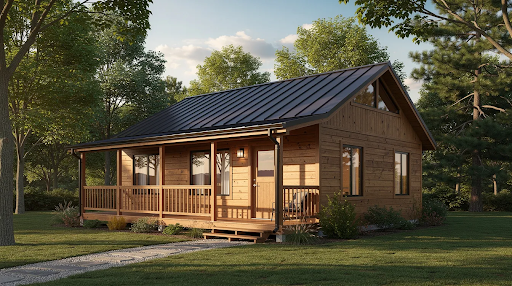
Cabin Series Cottages These homes embrace natural cabin-style finishes including tongue and groove pine walls and ceilings, metal roofing, and fiber cement siding. The aesthetic appeals to homeowners who prefer warm, rustic character over contemporary minimalism.
HUD Manufactured Homes Ranging from approximately 400 to 1,000 square feet, HUD manufactured homes offer larger floor plans while maintaining the benefits of factory construction. These homes follow specific federal construction standards and work well where more living space is required.
A practical example: a 600 square feet premium single story cottage serving as a rental ADU in Northern California, or an 800 square feet HUD manufactured home functioning as a backyard home for family members in Oregon.
Common Uses for Detached ADUs and Tiny Homes
Detached ADUs rank among the most flexible structures a homeowner can add to a residential property. The independent nature of these units opens possibilities that attached additions or internal conversions simply cannot match.
Primary use cases for detached ADUs:
Long-term rental unit providing steady monthly income
Short-term or seasonal rental where allowed by local regulations
Private residence for an aging parent who needs nearby family support
Home for an adult child returning from college or establishing independence
Guest house for visiting family members without disrupting household routines
Caregiver housing for live-in assistance
Beyond rental applications, many homeowners value ADUs for non-income purposes. A dedicated home office with full amenities allows true separation between work and home life. A creative studio or quiet retreat space equipped with kitchen and bath supports extended use without returning to the main house for basic needs.
Multigenerational living works particularly well with detached ADUs. Family members share the same property and can assist one another while maintaining privacy through separate entrances and independent living spaces. The arrangement provides peace of mind for families concerned about aging parents while avoiding the disruption of moving everyone under one roof.
Consider a Eugene, Oregon, homeowner who installs a 400 to 500 square feet cabin-style ADU for a college-age child during school years. The unit provides independence and privacy while keeping family close. After graduation, the same structure converts to rental housing, helping offset ongoing maintenance costs and property taxes.
Financing a Detached ADU or Tiny Home Cottage
Cost represents one of the biggest questions homeowners face when considering a backyard ADU or tiny home. Understanding the full financial picture helps set realistic expectations and identify appropriate financing options.
Total project costs extend beyond the home itself to include multiple components:
Home purchase price
Site preparation and grading
Foundation installation
Utility connections (water, sewer, electrical, gas)
Building permit and ADU permit fees
Landscaping and access improvements
Complete ADU projects typically range from $150,000 to $400,000 depending on home size, site conditions, and local requirements. Factory-built homes often cost less per square foot than comparable site-built construction while offering quality advantages.
Common financing options include:
Cash purchase using savings or investment proceeds
Home equity line of credit (HELOC) leveraging existing home equity
Cash-out refinance of the primary home mortgage
Specialized manufactured home and tiny home financing
Tiny Home Cottages often recommends 21st Mortgage Corporation for qualified buyers. This national lender specializes in manufactured and mobile home loans and has been among the industry’s leading lenders for many years. Financial assistance options may include down payments ranging from zero percent for well-qualified buyers to higher percentages based on credit profile and property conditions.
Typical loan application process:
Choose the home model that fits your needs and budget
Complete a loan application through the lender
Receive loan approval and review financing terms
Lock the interest rate and submit required documentation (identification, income verification, bank statements)
Sign closing documents and finalize the loan
Proceed with home purchase and installation once funds are distributed
How to Get Started With a Detached ADU in California or Oregon
If you’re early in your research and want a clear path forward, breaking the process into manageable steps makes ADU projects far less overwhelming.
First steps for homeowners:
Confirm local ADU regulations – Contact your city or county planning department to understand maximum size limits, setback requirements, height restrictions, and parking rules. Pre application meetings can clarify site-specific questions before you invest significant time or money.
Evaluate your lot – Identify potential ADU placement areas, typically in the rear or side yard. Consider access for construction equipment, utility connections, and privacy for both structures.
Define your use case – Clarify whether you’re building for rental income, family housing, guest use, or future flexibility. Your intended use influences size, bedroom count, and design features.
Compare ADU plans and floor plans – Review multiple tiny home and cottage layouts to find options that fit both your property dimensions and lifestyle needs. Consider bedroom count, accessibility features, and outdoor connections like porches or decks.
Consult professionals – Work with providers familiar with California and Oregon ADU requirements, including local planning staff who can verify your plans comply with local zoning regulations.
The permitting process varies by jurisdiction, but state laws have made many aspects more predictable. Permit issuance timelines, fees, and required inspections should be discussed with your local building department early.
Tiny Home Cottages can assist homeowners through model selection, provide photos of completed homes, explain financing options, and offer guidance on choosing the right detached ADU for your property. Exploring the available lineup helps you understand what’s possible within your budget and lot constraints.

Frequently Asked Questions About ADUs and Tiny Home Cottages
How big can a detached ADU be in California?
California ADU law generally allows detached ADUs up to 1,200 square feet under state law, but many cities set lower limits, often between 800 and 1,000 square feet. Importantly, statewide rules guarantee that eligible property owners can build at least an 800 square feet ADU with 16-foot height and 4-foot setbacks, regardless of stricter local preferences.
Minimum lot sizes cannot be used to block ADUs under current legislation, though height, lot coverage, and design standards may still apply based on local governments’ requirements. Many Tiny Home Cottages models fall between approximately 400 and 800 square feet, fitting comfortably within common detached ADU size limits across most California jurisdictions.
Can a factory built tiny home qualify as an ADU?
A factory-built tiny home can often be permitted as an ADU when it meets appropriate national or state building code standards, is placed on an approved permanent foundation, and connects to utilities according to local codes. This approach treats the tiny home as new construction rather than a temporary or mobile structure.
Zoning, building, and utility requirements vary by city and county, so the specific classification depends on local regulations. Some jurisdictions may classify these homes as manufactured homes rather than traditional ADUs, which affects applicable rules and approval process requirements. Homeowners considering a Tiny Home Cottages model should discuss their local permitting path early to ensure the home receives approval as the intended ADU type.
How long does it take to get an ADU approved and installed?
In California, state laws require many ADU permit applications to receive approval or denial within approximately 60 days if they meet objective standards. However, real-world timelines vary significantly based on local building department workloads and project complexity.
Factory-built homes can shorten overall project duration because the home is constructed off-site while foundation and utility work progresses on-site. A typical timeline from initial planning through permitting, site work, delivery, and final inspections often ranges from several months to roughly six months, though complex projects or busy jurisdictions may extend this timeframe.
Can I live in the ADU and rent out my main house?
In many California and Oregon communities, living in your ADU while renting the main residence is permitted. State reforms have reduced or eliminated owner occupancy requirements in most areas, making this strategy increasingly viable for homeowners considering downsizing or maximizing rental income from their property.
Before committing to this arrangement, confirm current local rules and any HOA restrictions, especially regarding short-term rentals, occupancy limits, and parking expectations. Some homeowners find this approach ideal when transitioning to a smaller living space while converting their larger main house into rental property.
Do I need separate utility meters for my ADU?
Separate utility meters are not always required for ADUs. Some homeowners maintain shared water, power, and gas service for both the main house and ADU, while others install separate metering to simplify billing when renting to tenants.
Decisions about metering, sewer connections, and impact fees depend heavily on local utility policies and building department requirements. Speaking with local utility providers and your ADU builder early in the planning process helps clarify connection options, associated costs, and any permitting implications that affect your project budget.