
ADU Homes for Sale: A Practical Buying Guide for Homeowners
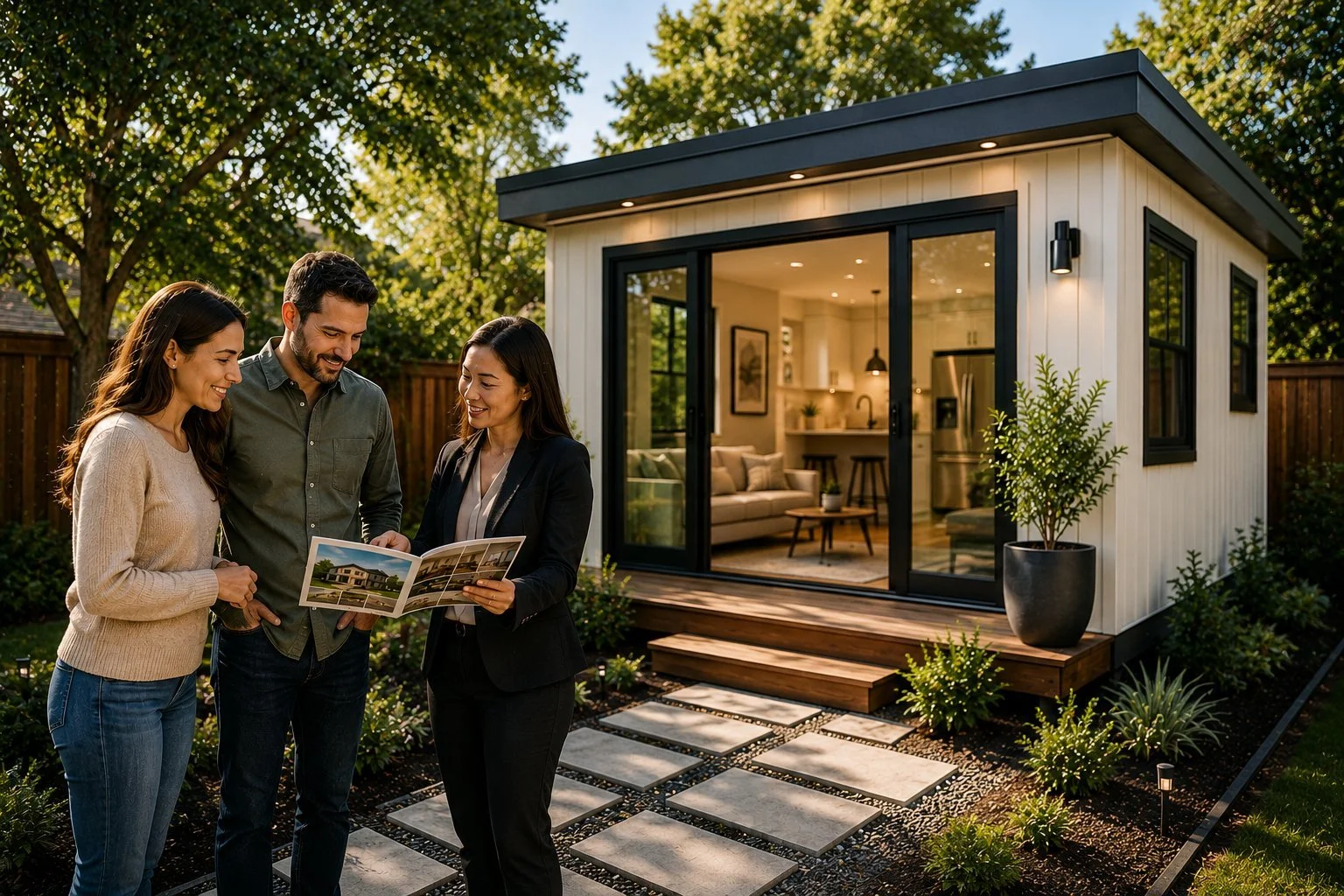
Buying an ADU home is a real housing investment. Done well, it adds usable square footage, supports family situations, and unlocks long term value on a property you already own. Done poorly, it ties up money in a unit that does not fit the lot, does not serve the intended use, and creates problems for years. The difference between the two outcomes comes down to preparation, the right questions, and a clear process.
This guide is a practical buying playbook for homeowners researching ADU homes for sale. It covers how to define what kind of ADU you actually need, how to compare models, how the financing and loan process works, how to think about placement and delivery, and a final checklist to run through before you sign.
Defining what kind of ADU you need
The first step in buying an ADU is being honest about what kind of unit serves your situation. The buyers who skip this step often end up with a home that does not match the use case. The buyers who do the work upfront tend to be the happiest with the result.
Start with the people who will live in the home. A home for an aging parent has different requirements than a guest house, a rental unit, or a primary residence for a downsizer. Daily living needs, accessibility considerations, storage requirements, and long term use all matter. Write down who will use the home and how, then let those answers drive the model decision.
Move from there to the lot. Setback rules in your jurisdiction determine where the home can sit. The size of the available area determines which models can fit. Access for the delivery truck affects what can reach the placement spot. Utility connections affect where the home is best placed. The lot tells you the boundaries of what is possible.
The combination of use case and lot constraints narrows the search quickly. A long term home for an aging parent on a standard suburban backyard with good access points you to a single story tiny home or HUD manufactured home. A guest house on a tight side yard points you to a smaller tiny home or lofted model. A primary residence for a downsizer on a larger lot points you to a premium single story or HUD manufactured home.
Model comparison basics
ADU homes from Tiny Home Cottages cover several distinct categories. Single story tiny homes offer modern layouts at an accessible price point with approximately nine foot ceilings throughout. Premium single story models add upgraded features and cement exterior siding for a more refined look. Lofted models include a second level loft and tend to fit buyers who want more usable space in a smaller footprint. Cabin series cottages feature natural cabin style finishes including tongue and groove pine walls and ceilings, metal roofing, and fiber cement siding. HUD manufactured homes are the larger end of the lineup, generally ranging from approximately 400 square feet to 1000 square feet.
Comparing models comes down to three areas. The first is layout. Does the floor plan support how the home will actually be used. Is there enough storage. Are the kitchen and bathroom sized for real daily use. Are the windows placed well.
The second is finish level. Standard single story models work for many use cases. Premium tiers add upgraded features that matter for long term residences. Cabin series finishes appeal to buyers who want a distinct look. HUD manufactured homes offer broader layout options.
The third is the total delivered cost. Not just the unit price, but everything required to get the home livable on your lot. A clear quote breaks all of this out so buyers can compare options on the same basis.
Financing and loan process
Most buyers finance an ADU home purchase. Tiny Home Cottages often recommends 21st Mortgage Corporation, which specializes in manufactured and mobile home loans and has been one of the leading lenders in the industry for many years. Down payment options range from zero percent for highly qualified buyers to higher percentages depending on credit profile and property conditions.
A typical loan application moves through a clear sequence. You choose the home model that fits your needs and budget. You complete a loan application through the lender. You receive loan approval and review the financing terms. You lock the interest rate and submit identification, income verification, and bank statements. You sign closing documents and finalize the loan. Once everything is signed, funds are distributed and the home purchase process moves forward.
The process is more straightforward than a traditional mortgage on a stick built house, but the documentation requirements are still real. Getting your paperwork organized before you apply speeds the timeline. Pre-qualifying early gives you a clear ceiling on your search and lets you focus on the models that fit your budget.
Placement and delivery
Placement starts with three questions. Where will the unit sit on the lot. How will the delivery truck reach that spot. How will utilities connect to the unit. Walking the property with these three questions in mind clarifies the placement decision.
The placement spot needs a flat, level pad properly sized for the model. The access path from the street needs to accommodate the truck and trailer, with enough overhead room and turning room. Utility stub-outs need to be in place where the home will receive them.
Delivery and set follow a clear sequence. The home is loaded at the factory, secured, and trucked to your address. A crew sets the home on the prepared pad, levels it, anchors it, and makes the basic connections to utilities. The whole process from arrival to ready for occupancy usually takes hours or a single day depending on the size of the home and the complexity of the site.
For most Northern California and Oregon residential lots, the process is straightforward. For lots with restricted access, steep slopes, or unusual conditions, a site review with the builder before ordering identifies any issues early.
Final checklist before purchase
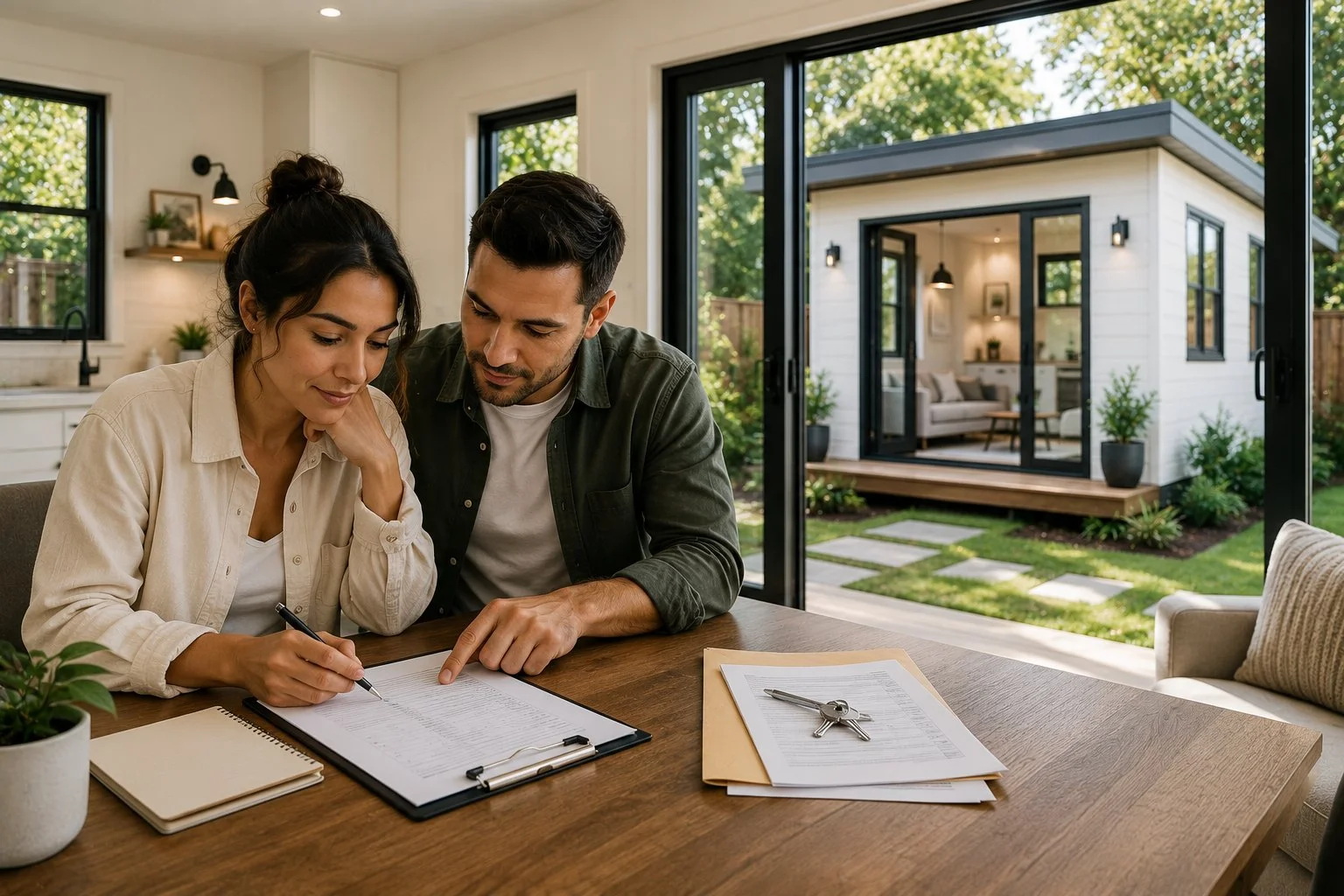
Before signing on a specific ADU home, run through a short checklist. Confirm the exact model, dimensions, and included features in writing. Confirm the total delivered price with all line items broken out. Confirm site prep estimates from a local contractor if separate. Confirm the delivery window and what happens if there are delays. Confirm the warranty terms and the process for service issues. Confirm the financing terms and the rate lock if you are using a loan. Confirm any local permitting requirements and the typical process in your jurisdiction.
This list is not exhaustive but it covers the items that matter most for avoiding surprises. Putting the important pieces in writing protects both sides and prevents misalignment as the project moves forward.
Common mistakes to avoid
A few common mistakes show up regularly in ADU purchases. Fixating on the lowest headline price without checking what is included. Underestimating site prep and utility extension costs. Buying based on pictures alone without seeing real models. Skipping the financing conversation until late in the process. Choosing a builder based on marketing alone rather than questions about manufacturing experience and process.
Avoiding these mistakes does not require expertise. It requires asking direct questions and getting written answers. A serious builder welcomes the questions and provides the documentation. A weaker one tries to redirect or rush past them.
Why factory-built ADUs win for most buyers
For most homeowners researching ADU homes for sale, the factory built option offers a better combination of cost, timeline, and quality than custom site built construction. The factory environment controls the variables that drive quality. The production schedule is predictable. The pricing is transparent. The financing path is established. The finished home reflects the consistency of the manufacturing process.
Site built construction can deliver excellent results when the right contractor handles a project well, but the variance is wide and the timeline is long. For families that need housing in months rather than years, with predictable cost and predictable quality, the factory built ADU is usually the right answer.
If you are ready to move from research to a real shortlist, you can explore ADU homes available now and review real floor plans, finish levels, and pricing context. Walking through the lineup is the fastest way to know which models actually fit your property and your situation.
Common buyer profiles for ADU homes
Different buyer profiles approach the ADU purchase differently. Homeowners adding space for an aging parent prioritize accessibility, comfortable square footage, and durable finishes for daily use. They tend to look at single story tiny homes and HUD manufactured homes depending on the lot and the parent's needs.
Homeowners adding space for an adult child often look at lofted models because the second level loft gives a private sleeping area while keeping the ground floor open for living. Price tends to matter more in this profile because the unit may be funded partly or entirely by the parent generation.
Downsizers buying for their own use focus on finish level and how the home feels as a long term residence. Premium single story models and cabin series cottages both perform well here because the finishes feel like a real home.
Investors and homeowners adding rental capacity care about durability, ease of maintenance, and broad appeal to renters. The right model in this case is less about personal style and more about long term wear and consistent tenant appeal.
How to handle the first vendor conversation
The first conversation with an ADU vendor sets the tone for the rest of the project. Come prepared with a basic lot sketch, your budget range, your use case, and your financing approach. Ask direct questions about the manufacturer, the included features, the warranty, and the typical timeline. Pay attention to whether the vendor listens to your situation before pitching a model.
A serious operator welcomes the questions and provides specific written answers. A weaker one tries to redirect to features and pricing without addressing the substance. The first conversation tells you most of what you need to know about how the rest of the relationship will run.
Bringing it all together
Buying an ADU home well comes down to preparation, the right questions, and a clear process. Define what you need. Compare models on the right criteria. Understand the financing path. Plan placement and delivery carefully. Confirm the important pieces in writing before signing. The buyers who follow this path tend to be happy with the result. The ones who rush past the steps often regret it.