
ADU vs Tiny Home: What’s the Difference for California Homeowners?
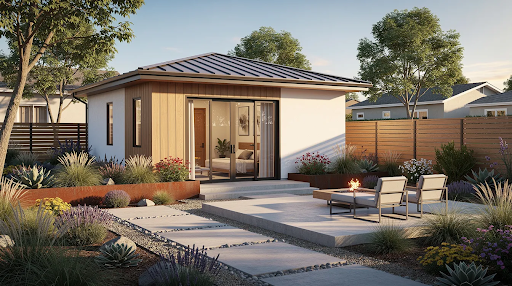
If you’re exploring backyard housing options in California or Oregon, you’ve probably encountered two terms that seem similar but carry very different implications: ADU and tiny home. Understanding what separates these housing options can save you months of confusion and help you make a decision that fits your property, budget, and long-term goals.
Key Takeaways
An ADU in California is a legally defined secondary dwelling on a residential lot, while a tiny home is a broader term describing compact living spaces that may or may not qualify as an ADU.
Factory-built tiny homes placed on a permanent foundation can often qualify as detached ADUs, adding appraised value and rental income potential to your property.
Movable tiny homes on wheels are typically classified as RVs, which limits full-time residency on standard residential lots and offers no boost to property value.
California allows detached ADUs up to 800 square feet by-right in many cities, with some local jurisdictions permitting up to 1,200 square feet or more.
Tiny Home Cottages specializes in factory-built cottage-style tiny homes and detached ADU models designed specifically to meet California and Oregon building requirements.
ADU vs Tiny Home: Quick Answer for California and Oregon Homeowners
So which makes more sense for your backyard—an ADU or a tiny home? The honest answer is that these categories overlap more than most homeowners realize.
An accessory dwelling unit is a legal term defined by California and Oregon law. It refers to a secondary dwelling on a lot with an existing primary residence. Think of it as a detached backyard cottage, granny flat, or small manufactured home that includes independent living facilities like a kitchen, bathroom, and sleeping area. The key distinction is that ADUs are recognized by your local government as legitimate residential structures.
A tiny home, on the other hand, is a lifestyle term describing very small houses—typically ranging from 200 to 400 square feet. Some tiny homes sit on permanent foundations and can be permitted as ADUs. Others are built on trailers and function more like RVs. The tiny home movement emphasizes minimalist living, innovative storage solutions, and multi functional furniture to maximize limited space.
Here’s what matters for your decision: Tiny Home Cottages offers factory-built tiny homes that can be installed as detached ADUs, backyard cottages, granny flats, or even primary small homes depending on your property and local regulations. The first step is deciding whether you want a permitted, long-term dwelling structure on a foundation or a more flexible but less regulated mobile unit.
What Is an ADU in California and Oregon?
An accessory dwelling unit is a self-contained home providing complete independent living facilities—including cooking, sleeping, eating, and sanitation—located on the same property as a primary residence. California defines this clearly in Government Code sections 65852.2 and 65852.22, and Oregon follows similar principles under ORS 197.493.
Common detached ADU types relevant to homeowners include:
Backyard cottages
Granny flats
Small manufactured homes
Cottage-style units separate from the main house
Garage conversions (when fully renovated with proper permits)
California state law allows detached ADUs up to 1,200 square feet or 50% of the primary dwelling’s living area, whichever is smaller. However, a statewide exemption mandates approval for ADUs up to 800 square feet, 16 feet high, with 4-foot side and rear setbacks—overriding local denials based on lot coverage or minimum lot size. Oregon has been equally flexible since legalizing ADUs statewide in 2019, with cities like Portland permitting detached ADUs up to 800 square feet by right.
ADUs must be permanent structures on a foundation, tied into utilities, and built to residential building codes. In California, this means compliance with the California Residential Code or HUD standards for manufactured homes. Because they meet the same building codes as a traditional home, permitted ADUs count as finished square footage and can increase your appraised property value.
What Is a Tiny Home Today?
The tiny home movement emerged strongly after the 2008 recession, driven by homeowners seeking affordable housing alternatives and a minimalist lifestyle. A typical tiny home ranges from 200 to 400 square feet, though many definitions extend to homes under 500 square feet.
There are two main categories of tiny homes:
|
Type |
Foundation |
Legal Status |
Property Value Impact |
|
Foundation tiny homes |
Permanent slab, crawlspace, or piers |
Can qualify as ADU if permitted |
Adds to appraised value |
|
Movable tiny homes (THOWs) |
Trailer/wheels |
Usually classified as RV |
Minimal to no impact |
In California and Oregon, a factory-built tiny home installed on a permanent foundation and permitted locally can function the same way as a detached ADU. These homes offer the compact efficiency of tiny living with the legal security of a compliant secondary dwelling.
The lifestyle appeal of tiny homes centers on downsizing, efficient floor plans with features like sleeping lofts, open-concept living areas, and all the amenities needed for comfortable daily life packed into a small space.
Tiny Home Cottages offers several product families that fit this category:
Single story tiny homes with modern layouts and approximately nine-foot ceilings
Premium single story models with upgraded features and cement exterior siding
Lofted tiny homes with steep roof pitches and large stacked windows
Cabin series cottages with tongue-and-groove pine walls and metal roofing
HUD manufactured homes ranging from approximately 400 to 1,000 square feet
ADU vs Tiny Home: Key Differences That Matter for Homeowners
The real-world differences between ADUs and tiny homes come down to law, location, mobility, size, and value—not just square footage.
Understanding the key differences starts with recognizing that an ADU is mainly a legal and zoning concept, while tiny home describes size and style. One home can be both a tiny home and an ADU at the same time when it meets code requirements and sits on a permanent foundation.
Here’s what separates them in practice:
Permanence: ADUs must be fixed on a foundation, while tiny homes can be either permanent or movable depending on construction
Size: Many tiny homes cluster around 200-400 square feet, while ADUs can legally reach 800-1,200+ square feet in California
Regulation: ADUs follow local zoning laws and residential building codes; movable tiny homes often fall under RV regulations
Value: Permitted ADUs typically boost property value; mobile tiny homes function as personal property with minimal impact
These differences affect long-term use significantly. ADUs work better for stable family housing, multigenerational living, and generating rental income. Mobile tiny homes suit those prioritizing flexibility and travel but come with tighter placement and residency rules.
Legal Classification and Building Codes
California and Oregon define ADUs in state law, requiring compliance with local zoning, setbacks, height limits, and residential building codes. Factory-built homes from established manufacturers are constructed under national building codes or HUD standards in controlled factory environments, then installed on-site to meet local ADU requirements.
Movable tiny homes on wheels tell a different story. They’re often classified as RVs or park model units, subject to different safety and occupancy rules. Most local codes restrict full-time use of RVs on standard residential lots—Los Angeles County, for example, limits backyard RV stays to 72 hours in many areas.
This classification affects more than just where you can live. It determines:
Whether you can secure a building permit
What inspections are required
Whether you can legally rent the unit as a dwelling
How lenders view the property for financing
Size, Layout, and Everyday Comfort
The difference in living area between a 280 square foot lofted tiny house and a 440 square foot single-story cottage isn’t just about numbers—it’s about daily comfort and long term living practicality.
Ultra-compact tiny homes in the 200-350 square foot range often rely on lofted sleeping areas with ladder access and lower ceiling heights. This works well for short-term minimalism or vacation rental use but can challenge families or those with mobility concerns.
Tiny Home Cottages’ single story tiny homes typically feature approximately nine-foot ceilings and modern open layouts that feel more spacious than their square footage suggests. Models in the 400-800+ square foot range support comfortable long-term living for couples, multigenerational families, or long-term renters.
Consider this comparison:
|
Feature |
280 sq ft Lofted Tiny Home |
440 sq ft Single-Story Cottage |
|
Sleeping area |
Loft with ladder access |
Dedicated bedroom |
|
Ceiling height |
7-8 ft main, lower in loft |
9 ft throughout |
|
Best for |
Singles, couples, guests |
Families, aging parents, rentals |
|
Accessibility |
Limited |
Better for all ages |
Mobility and Placement
Permitted ADUs are always fixed structures on permanent foundations. This isn’t a limitation—it’s what allows them to be legally occupied full-time and counted as real property for valuation and financing.
Movable tiny homes offer the flexibility to relocate, but homeowners must find legal parking. Options include RV parks, designated tiny home communities, or specific local jurisdictions that allow them in backyards. Mobile units work well for those who don’t yet own property or want to change locations every few years.
Factory-built tiny homes from Tiny Home Cottages are typically designed to be transported to a site and then set in place as permanent housing—not moved frequently like an RV or mobile home. For most suburban lots in California and Oregon, a foundation-based detached ADU remains the most straightforward path to legal full-time backyard living.

Can a Tiny Home Be Used as an ADU in California and Oregon?
Many tiny homes can qualify as detached ADUs if they’re built to residential or HUD standards and installed on a permanent foundation with proper permits.
California’s general approach allows tiny homes on permanent foundations that meet the California Building Code and local ADU ordinances to be approved as ADUs by city or county planning departments. Some local jurisdictions—such as select cities in Los Angeles County or the Bay Area—have specific rules for movable tiny homes as ADUs, while others prohibit RV-style units from qualifying as official ADUs entirely.
Oregon has been a leader in flexible ADU policies since passing SB 626 in 2019, which prohibited local bans on ADUs and capped fees. Some Oregon communities are beginning to address tiny homes more directly, but rules still vary significantly city to city.
Before purchasing any tiny home, homeowners should confirm with local planning and building departments whether a specific model can be permitted as an ADU on their parcel. This verification step prevents costly surprises later.
Foundation vs Movable Tiny Homes
The distinction between foundation and movable tiny homes determines everything from financing eligibility to property tax treatment.
A tiny home placed on a permanent foundation—such as a concrete pad, slab, or piers—connected to utilities, and permitted as an ADU will typically be treated as part of the real property. This means it’s eligible for conventional financing, adds to your home’s appraised value, and can be legally rented as a dwelling.
Contrast this with tiny homes on wheels. These remain personal property, similar to a vehicle or RV. They usually cannot be counted as an ADU unless your city has adopted a specific movable tiny home ordinance—and fewer than 5% of California cities have such rules according to 2024 HCD data.
Consider this example: A 399 square foot factory-built cottage installed on a slab foundation in a Sacramento backyard can be permitted as an ADU, adding approximately $250,000 to property value according to case studies. The same size unit on a trailer parked in an RV resort has no property value impact but may cost $500 per month in lot fees.
Tiny Home Cottages works with manufacturers that design homes specifically for permanent residential use, making it easier for homeowners to secure permits and pass inspections.
Cost, Financing, and Long-Term Value
While tiny homes often have a lower sticker price than full site-built ADUs, permitted factory-built ADUs typically offer stronger long term value and easier financing.
Factory tiny homes start around $80,000-$150,000 for 200-400 square foot models, while ADUs range from $150,000-$400,000 for 400-1,200 square foot units including site work, utility connections, and fees. Site-built construction often runs $300-$500 per square foot, making factory construction 20-30% more cost-effective.
ADUs on permanent foundations generally increase appraised property value—Zillow analysis of 5,000 California sales showed permitted ADUs boosting appraisals by 10-20%. They can also deliver steady rental income, averaging $2,000-4,000 per month in the Bay Area or around $36,000 per year net in many markets.
HUD manufactured homes in the 400-1,000 square foot range offer a cost-effective path to creating an ADU-style residence with more space and traditional layouts for future buyers who value square footage.
When comparing options, consider not just build cost but also:
Long-term maintenance expenses
Insurance requirements
Potential rent as a rental unit
Resale implications for your property
Whether the unit creates additional living space that counts as real property
Financing Options for Tiny Homes and ADUs
The financing landscape differs significantly between permanent ADUs and mobile units. Most banks readily finance permanent ADUs treated as real property through conventional mortgages, FHA 203(k) loans, or VA loans with down payments as low as 0-10%.
Movable tiny homes typically require personal loans or specialty lenders since they’re classified as personal property rather than real estate.
Tiny Home Cottages often refers buyers to 21st Mortgage Corporation, a national lender that has specialized in manufactured and mobile home loans for decades. The typical loan process follows these steps:
Choose the specific home model that fits your needs and budget
Submit a loan application through the lender
Receive approval and review financing terms
Lock your interest rate and provide documentation (ID, income verification, bank statements)
Sign closing documents and finalize the loan
Proceed with home order and installation once funds are distributed
Qualified buyers may see down payment options as low as zero percent, with higher down payments for more complex properties or lower credit scores. Interest rates typically range from 6-10% with terms of 15-25 years.
Talk with your lender early to understand how using a tiny home as an ADU on your particular property will be treated for loan purposes.
Which Is Better for You: ADU or Tiny Home?
The better choice depends entirely on your goals: multigenerational living, rental income, downsizing, or flexible travel-oriented living.
Consider these homeowner scenarios:
|
Goal |
Better Option |
Why |
|
Aging parents moving in |
Foundation ADU |
Permanent, accessible, adds value |
|
Adult child needs space |
Foundation ADU |
Legal rental potential later |
|
Backyard vacation rental |
Foundation ADU |
Meets local codes for short-term rental |
|
Travel lifestyle |
Movable tiny home |
Relocate to different locations |
|
Don’t own property yet |
Movable tiny home |
Can move to purchased property later |
|
Downsizing primary home |
HUD manufactured home |
More space, traditional layouts |
For homeowners who want long-term, code-compliant backyard housing to house family members or generate rental income, permitted ADUs using factory-built homes on foundations make the most sense.
Movable tiny homes work better for those prioritizing mobility, wanting to experience tiny living before committing to a permanent structure, or not yet owning property in California or Oregon.
Evaluate your lot size, local zoning laws, budget, and willingness to navigate permitting when making your decision.
Common Use Cases for Factory-Built Tiny Homes and ADUs
Detached ADUs and tiny home ADU configurations serve many purposes for California and Oregon homeowners:
Multigenerational housing: Private space for aging parents or adult children on the same property as the main dwelling
Guest accommodations: A dedicated guest house for visiting loved ones
Rental income: Long-term or vacation rental units where local regulations allow
Home office or studio: Separate creative or work space distinct from the primary home
Downsizing residence: A small primary home for empty nesters who want to sell their larger main house
Single story tiny homes work well for accessibility-focused layouts, featuring approximately nine-foot ceilings throughout and no stairs to navigate. Lofted tiny homes add extra sleeping or storage without expanding the building footprint—ideal for pool houses or guest cottages.
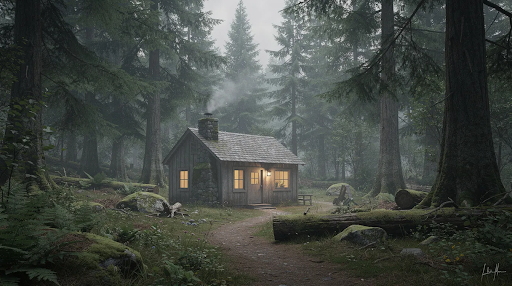
Cabin series cottages suit vacation properties, wooded lots, or more rustic settings common in Oregon and Northern California. HUD manufactured homes in the 400-1,000 square foot range serve homeowners wanting more traditional space while keeping construction plans efficient.
Why Many Homeowners Choose Factory-Built Detached ADUs
Factory-built homes offer distinct advantages over traditional site-built backyard ADUs. Construction occurs in a controlled factory environment where weather delays don’t exist and quality standards remain consistent from one home to the next.
Building under national building codes or HUD standards allows every home to follow the same quality checks and inspections. Industry data shows factory-built homes average around 2% defect rates compared to 15% for site-built construction according to NAHB studies.
Tiny Home Cottages works with experienced manufacturers that have decades of small-home and cottage construction experience. This expertise shows in modern designs, durable materials, and layouts optimized for compact living.
Homeowners can select from multiple model families to match their architecture preferences and lifestyle needs:
Modern single story homes for contemporary settings
Premium models with upgraded cement exterior siding
Lofted designs for those wanting additional living area without expanding footprint
Cabin-style cottages for rustic or wooded properties
Factory-built ADU-style homes let you enjoy both tiny homes and the legal security of a compliant detached ADU—without choosing between them.
FAQs About ADUs and Tiny Homes
These frequently asked questions cover practical concerns not fully addressed above, aimed at California and Oregon homeowners navigating the adu vs tiny home decision. Answers reflect typical rules, but always verify details with your local planning department before making purchases.
Can I live in a movable tiny home full time in my California or Oregon backyard?
This depends heavily on local codes. Many cities treat movable tiny homes as RVs and prohibit full-time residential use on standard single family home lots. Some urban areas have adopted movable tiny home as ADU rules with specific conditions, but these remain uncommon. If full-time backyard living is your goal, a permitted tiny home on a permanent foundation as a detached ADU is usually the most reliable option under current local laws.
How long does it usually take to get a factory-built tiny home or ADU installed?
Timelines vary, but factory-built homes typically move faster than site-built projects. Manufacturing takes approximately 8-12 weeks while permitting and site prep happen in parallel. Total timeline from contract to move-in often ranges from 4-8 months, compared to 12+ months for traditional construction. Factor in both manufacturing time and your city or county’s permit review period when planning.
Do I need separate utility hookups for an ADU in my backyard?
Detached ADUs require safe, code-compliant utility connections for water, sewer or septic, electricity, and sometimes gas. These can be separate meters or extensions from the main house, depending on local building requirements and your preference. Utility trenching and connection costs typically run $20,000-$50,000. Consult with local building officials and your home provider early to understand likely costs.
Can I customize the floor plan of a factory-built tiny home or ADU?
Most factory-built models offer predefined floor plans optimized for small-space living, with options for finish upgrades and certain layout modifications. Structural changes may be limited by factory engineering and building codes, but buyers can usually choose among multiple models and upgrade packages. Review model catalogs from Tiny Home Cottages to find the closest match, then discuss available customizations with the team.
Will adding a detached ADU or tiny home affect my property taxes?
In most cases, a permitted detached ADU on a permanent foundation will trigger a reassessment of the new structure’s value, which increases property taxes. Under California’s Proposition 13, your original primary residence’s assessed value remains protected—only the new construction adds to your assessment. Expect roughly 1-1.5% of the ADU’s assessed value annually, or approximately $2,000-3,000 per year for a $200,000 unit. Speak with your county assessor or a tax professional in California or Oregon to estimate the specific impact before building.
Ready to explore factory-built tiny homes and detached ADU options for your California or Oregon property? Browse available models, view the gallery of completed homes, and learn about financing options through Tiny Home Cottages. Contact the team to discuss which home model fits your backyard, budget, and long-term goals.