
Detached ADU vs Attached ADU: Which One Is Best for Your Property?

Key Takeaways
Attached ADUs share at least one wall and utilities with the main home, while detached ADUs like factory-built tiny homes and backyard cottages are completely separate building structures with their own foundation and entrance.
Attached ADUs usually cost less upfront and fit well on smaller lots, but offer less privacy and design freedom due to structural connections with the primary dwelling.
Detached ADUs cost more and require more yard space, but provide better privacy, flexibility, and long term value for rental income—especially in California and Oregon markets.
Factory-built detached homes can reduce construction uncertainty, weather delays, and onsite disruption compared to traditional site-built projects.
Tiny Home Cottages focuses on factory-built detached ADU-style homes and tiny home cottages, making them best suited for homeowners leaning toward detached solutions.
Introduction: Why Choosing Between Detached and Attached ADUs Matters
An accessory dwelling unit is a self contained living space with its own kitchen, bathroom, and sleeping area located on the same property as a primary residence. In California and Oregon, ADUs have become one of the most practical ways to add housing—whether for family members, rental income, or simply creating more space on an existing property.
The key decision most homeowners face is whether to build an attached ADU that connects to their main house or a detached ADU that stands as a separate structure in the backyard. Each approach comes with different costs, timelines, privacy levels, and long term plans implications. Tiny Home Cottages specializes in factory-built detached ADU-style tiny homes and cottages, constructed under national building code standards in a controlled environment.
Common reasons homeowners research this topic:
Housing for aging parents or adult children who need independence but want to stay close
Generating rental income from a separate living space
Creating a guest house or in law suite for visiting family
Downsizing into a smaller primary residence while keeping the main house for rental
Adding a home office or studio that stays separate from daily household activity
What Is the Difference Between a Detached ADU and an Attached ADU?
Understanding the structural distinction between these two types of ADUs is the foundation for making the right choice. While both must function as complete dwelling units with independent living facilities, how they connect to your existing home changes everything about cost, construction, and daily life.
Attached ADU defined:
A secondary dwelling unit that shares at least one wall with the main home
Common examples include converting an existing garage into living space, building a new wing off the side or rear of the house, or constructing a unit over an attached garage
Typically ties into the primary home’s existing utility connections for water, sewer, and electrical
Must match the main house roofline and architectural style in most jurisdictions
Detached ADU defined:
A freestanding building physically separated from the primary home by at least 4-10 feet depending on local setbacks
Examples include backyard cottages, tiny homes on permanent foundations, converted detached garages, or small HUD manufactured homes
Requires its own foundation, complete roofing, and often separate or submetered utility connections
Offers more flexibility in design, orientation, and placement on the lot
Both attached and detached units must include a full kitchen, bathroom, and sleeping area to qualify as accessory dwelling units ADUs under California and Oregon regulations. Some jurisdictions also permit Junior ADUs up to 500 square feet entirely within the main home’s footprint, but this article focuses on full attached versus detached configurations.
Design rules, setbacks, and utility requirements differ between the two options, which means the choice affects your permitting process, construction budget, and project timeline.
Pros and Cons of Attached ADUs
Attached ADUs work well for certain situations, particularly when budget constraints or lot limitations guide the decision. Understanding both the advantages and limitations helps homeowners make informed choices.
Cost advantages:
Lower construction costs because the attached unit can share walls, roofing, and foundation elements with the existing home
Utility connections often cost 20-40% less than detached builds since water, sewer, and electrical lines are already nearby
Garage conversions in particular can range from $100-$200 per square foot when no major retrofits are needed
Less foundation work required compared to building an entirely new structure
Space efficiency:
Works well on smaller urban lots in cities like Los Angeles, San Diego, Portland, and Eugene where rear-yard setbacks limit detached structures
Lots under 5,000 square feet with 20-30% coverage caps may not have room for a separate building
Vertical builds over attached garages maximize available space without expanding the property footprint
Permitting and design:
Some building departments treat attached ADUs similarly to large additions, which can simplify structural engineering
The ADU process may move faster since the attachment to the main residence is already established
Inspectors can reference existing construction standards already in place
Privacy limitations:
Shared walls mean more noise transfer between the primary dwelling and the ADU
Sound transmission can drop 10-20 decibels without added insulation, creating challenges for both occupants
Better suited for close family members than for unrelated renters who expect complete separation
Design constraints:
Must closely match the main home’s structure, height, and roofline under most local zoning laws
Limited floor plans creativity compared to a standalone backyard cottage
Often capped at 50% of the primary home’s floor area or 1,200 square feet maximum under California law
Best-fit use cases:
Caregiving situations where aging parents need easy access to family members
Budget-conscious projects under $150,000
Small lots where setback requirements eliminate detached options
Homeowners who prioritize extra living space over full independence
Pros and Cons of Detached ADUs (Backyard Cottages & Tiny Homes)
Detached ADUs offer advantages that attached units simply cannot match, particularly for homeowners who value privacy, design flexibility, and rental potential. As specialists in factory-built detached structures, Tiny Home Cottages has seen firsthand how these standalone units serve diverse homeowner needs.
Privacy and independence:
Complete separation from the main house creates distinct living space with its own entrance and outdoor area
Separate structures reduce neighbor conflicts by approximately 40% according to builder observations
Ideal for long-term renters, adult children, or family members who want autonomy while staying close
No shared walls means no noise transfer between households
Design flexibility:
Custom adu orientations allow optimal placement for natural light, views, and privacy
Freedom to choose different roof pitches, window configurations, and exterior finishes
Lofted designs can add 20-30% more usable space without expanding the footprint
No requirement to match the main house architecture in most cases
Use cases:
Backyard guest house for visiting family
Rental unit generating consistent monthly income
Downsized primary residence for empty nesters who want to age in place
Home office or creative studio separated from daily household noise
Cost considerations:
Higher construction costs ranging from $150,000-$300,000 for 500-800 square feet in Los Angeles area
Requires full foundation work typically costing $20,000-$40,000
Separate utility connections including trenching ($5,000-$15,000) and potential solar requirements
Factory-built options can reduce costs to $120-$250 per square foot by prefabricating offsite
Property impact:
Well-designed detached ADUs boost property value 15-25% compared to 10-15% for attached units
In high-demand California and Oregon markets, detached units often add $100,000-$200,000 to home values
Superior appeal for Airbnb and short-term rentals despite local restrictions
Detached 600 square foot units in Los Angeles command $2,500-$3,500 monthly rent versus $1,800-$2,500 for attached
Factory-built advantages:
Homes constructed in controlled environments avoid weather delays common in rainy Oregon winters
Predictable timelines with factory construction happening while site preparation proceeds
Reduced onsite disruption lasting only 2-4 weeks for foundation and utility work
How Factory-Built Detached Tiny Homes Compare to Site-Built ADUs
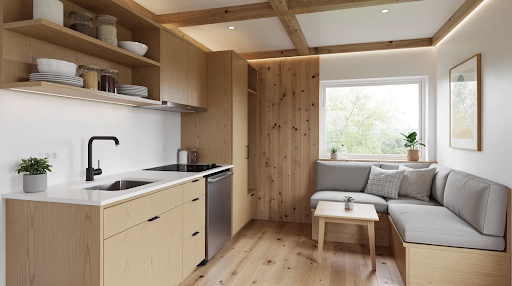
The construction method matters as much as the type of ADU you choose. Factory-built homes offer distinct advantages over traditional site-built construction, particularly for detached units where the entire structure must be created from scratch.
Controlled environment:
Homes built indoors under national building codes avoid weather delays, material damage, and moisture problems
No rain, wind, or temperature extremes affecting construction quality or timeline
Reduced risk of the hidden costs and schedule overruns common with backyard construction
Quality assurance:
Factory production uses repeatable processes with multiple inspection points
Consistent framing, R-21 insulation, and energy-efficient windows (U-factor 0.30) across every unit
99% defect-free assembly compared to 15-20% variability in site-built projects
70% less construction waste than traditional building methods
Timeline predictability:
Factory construction takes 4-8 weeks while site preparation happens simultaneously
Total project timeline of 4-7 months compared to 8-12 months for purely site-built detached ADUs
Onsite work compressed to foundation, delivery, and utility connections
Home types offered by Tiny Home Cottages:
|
Model Type |
Key Features |
Typical Size |
|
Single Story Tiny Homes |
Modern layouts, ~9-foot ceilings |
Entry-level |
|
Premium Single Story |
Upgraded finishes, cement exterior siding |
Mid-range |
|
Lofted Tiny Homes |
Second-level loft, steep roof pitch, stacked windows |
Maximized square footage |
|
Cabin Series Cottages |
Tongue and groove pine walls, metal roofing |
Rustic character |
|
HUD Manufactured Homes |
Larger floor plans, full certification |
400-1,000 sq ft |
Detached focus:
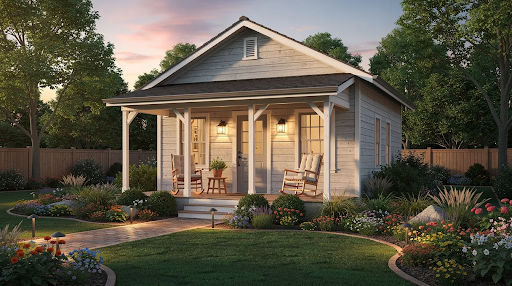
These homes are typically placed as detached units in backyards or on separate pads
Function as independent self contained living spaces with full kitchens, bathrooms, and sleeping areas
Suitable as one bedroom adu or two bedroom adu depending on model selection
Onsite work still required:
Foundation or anchoring system preparation ($15,000-$30,000 depending on slope)
Utility hookups coordinated with local requirements
Crane delivery for factory-built modules ($2,000-$5,000)
Final walkthrough and inspections with the local jurisdiction building department
Key Factors to Consider: Detached ADU vs Attached ADU
Choosing between attached and detached depends on your specific situation. Walking through these decision factors helps clarify which option aligns with your goals, budget, and property constraints.
Lot size and layout:
Larger suburban lots (7,000+ square feet) in Sacramento, Redding, Salem, or Bend often accommodate detached ADUs easily
Tight urban lots in Portland or Los Angeles may only have room for an attached unit due to setback and coverage limits
Delivery access matters for factory-built homes—12-16 foot wide paths needed for trucks
Evaluate rear and side yard space before committing to a detached design
Budget and financing:
Attached ADUs typically cost $80,000-$180,000; detached units run $150,000-$300,000
Budgets under $150,000 generally lean toward attached solutions
Budgets over $200,000 can achieve 7-12% rental yields with detached units
Tiny Home Cottages often refers buyers to 21st Mortgage Corporation for financing, with down payments starting at 0% for well-qualified buyers
Privacy needs:
Attached ADUs suit situations where close family oversight is desired, such as caring for elderly parents
Detached ADUs work better for independent adult children, long-term tenants, or quiet home offices
Surveys indicate 70% of tenants prefer standalone entrances and separate structures
Consider whether occupants need extra space that feels truly independent
Timeline and construction disruption:
Attached ADU construction happens directly on your main residence, causing daily disruption
Factory-built detached homes minimize onsite noise since most work occurs offsite
Attached projects take 4-9 months; factory-built detached can complete in 4-7 months total
Weather delays affect site-built projects more significantly
Future flexibility:
Detached ADUs adapt more easily to changing needs—rental today, family housing later, or a new adu primary residence eventually
A completely separate building can serve as office, studio, guest house, or income property over different life phases
Attached units remain tied to the main structure permanently
Local regulations:
Los Angeles allows 1,200 square feet detached with no parking requirements near transit
San Jose caps detached ADUs at 800 square feet with 4-foot setbacks
Portland mandates 6-foot separation but removed owner-occupancy requirements in 2022
Check your local zoning laws early in the adu project planning
When a Detached ADU (Tiny Home Cottage) Is the Better Fit
Certain situations clearly favor a detached solution. These scenarios highlight where the additional investment in a standalone structure pays off in privacy, functionality, and long term value.
Multigenerational living with privacy:
Parents or in-laws get their own quiet space while remaining on the same property
Full kitchen and bathroom plus separate entrance creates genuine independence
No shared walls eliminates noise concerns between households
Close enough for family connection without daily intrusion
Rental income strategy:
Detached units with their own entrance and potentially separate utilities appeal more to tenants
2024 Zillow data shows detached 600 square foot ADUs command 20-30% higher rents than attached
Separate address or metering simplifies rental management
Strong cap rates of 8-10% possible in high-demand California and Oregon markets
Downsizing on your own property:
Move into a single story or lofted tiny home in the backyard while renting out the main house
Factory-built cottages offer comfortable, lower-maintenance living space
Maintain ownership of the property while generating income from the existing home
Create a stress free experience of aging in place without leaving familiar surroundings
Lifestyle spaces:
Creative studios, remote work offices, or guest houses benefit from separation
Keep work traffic and household noise completely apart
Visitors enjoy true guest house experience rather than feeling like they are in someone else’s home
Design options:
Modern lofted tiny homes with tall stacked windows suit contemporary tastes
Cabin series with pine interiors and metal roofs create rustic retreats
Premium cement siding options blend seamlessly with upscale properties
Design freedom that attached additions simply cannot match
How Tiny Home Cottages helps:
Assistance selecting the right model based on your lifestyle and property
Coordination with lenders familiar with manufactured and tiny home financing
Connection with installers and local contractors for site preparation and utility connections
Exceptional customer service throughout the entire process
How Financing Typically Works for Factory-Built Detached ADUs
Financing a detached ADU differs from traditional home improvement loans. Working with lenders experienced in manufactured and tiny homes simplifies what might otherwise be a confusing process.
Financing context:
Many traditional banks remain unfamiliar with tiny homes and detached ADU-style factory-built units
Specialized lenders understand these property types and can offer appropriate loan products
Getting pre-qualified early helps you understand your budget before selecting a model
Recommended lender:
Tiny Home Cottages often refers buyers to 21st Mortgage Corporation
One of the leading manufactured home lenders since 1995
Experienced with the specific requirements of factory-built homes and ADU projects
Down payment options:
Well-qualified buyers with 680+ FICO scores may see options starting around 0%
Higher down payments expected for lower credit scores or complex property situations
Typical loan terms of 15-20 years at competitive rates (5-7% range as of 2024)
Example: $150,000 loan at approximately $1,100/month
Typical financing steps:
Choose a home model that fits your needs and budget
Complete a loan application through the lender
Receive conditional approval and review financing terms
Submit required documentation (ID, income verification, bank statements)
Lock interest rate and sign closing documents
Finalize the loan and proceed with ordering the home
Site costs to plan for:
The loan typically covers the home itself
Site preparation, permits, foundation, and utility connections may be separate expenses
Budget $30,000-$60,000 for site work depending on complexity
Plan early to avoid surprises during the project
Planning Your Next Steps: From Research to a Backyard Cottage
Moving from research to reality requires a clear action plan. These steps help you unlock your property’s potential and determine whether a detached ADU makes sense for your situation.
Clarify your main goal:
Family housing, rental income, downsizing, or lifestyle space each point toward different solutions
A clear purpose helps you ultimately select between attached and detached options
Consider both immediate needs and how those needs might change over 5-10 years
Confirm local ADU rules:
Contact your city or county planning department to understand size limits, height caps, and setbacks
Check whether your local jurisdiction allows both an ADU and Junior ADU on the same lot
Review parking requirements and design standards that may affect your project
Sketch a site plan:
Map your main house, property lines, and available space for a potential detached unit
Identify access routes for delivery trucks if considering factory-built homes
Note slopes, trees, or other features that might affect placement
Create a realistic budget:
Include the home cost, delivery, foundation or anchoring, permits, and utility connections
Add allowances for site grading, driveway work, or landscaping
Factor in a contingency for unexpected site preparation requirements
Consider financing options early in the planning
Explore your options:
Review Tiny Home Cottages’ model lineup to see adu floor plans and design possibilities
View photos of completed backyard cottages in California and Oregon
Reach out with questions about fit, sizing, and financing to create a cost effective path forward
Whether you need a guest house for visiting family, a rental unit for income, or a comfortable downsized primary residence, the choice between attached and detached shapes everything that follows. For homeowners with adequate lot space and a desire for privacy, flexibility, and strong rental potential, a detached ADU often represents the smart investment. Factory-built options from Tiny Home Cottages can make that goal achievable with predictable timelines, quality construction, and support through the entire process.
FAQ
These questions address details homeowners commonly ask when comparing detached and attached ADU options.
Are detached ADUs legal on every residential lot in California and Oregon?
State laws in both California and Oregon strongly support ADUs, but individual cities and counties set specific rules for lot size, setbacks, and maximum unit size. California’s 2024 updates mandate ministerial approval for compliant projects up to 1,200 square feet, while Oregon requires cities over 10,000 population to permit at least one ADU per lot. However, corner lots, flag lots, and hillside properties may face special conditions. Check with your local planning department or zoning website to confirm whether your specific parcel qualifies for a detached ADU and what limits apply.
Can a factory-built tiny home count as an official ADU for permitting?
Many jurisdictions allow properly certified factory-built homes to be permitted as ADUs when they meet local building, foundation, and utility requirements. The home typically needs installation on a permanent foundation or approved anchoring system and must connect to utilities according to local codes. HUD manufactured homes and other factory-built units can often serve as ADUs, but requirements vary by city and county. Confirm with your building department early in the planning process to ensure your chosen model qualifies.
Will a detached ADU increase my property taxes?
Adding an ADU generally increases the assessed value of improvements, which raises annual property taxes. In California, Proposition 13 still applies to the original property value, but the ADU itself is assessed as new construction at current market rates. Detached ADUs typically add $1,500-$3,000 annually in California counties depending on size and value. Attached additions can trigger broader reassessment of the main home under certain circumstances. Consulting a local tax professional or county assessor’s office provides the clearest estimate for your specific situation.
How long does it typically take to add a detached, factory-built ADU to my property?
Timelines vary based on local permitting speed and site conditions, but many projects complete in 4-7 months total. Factory construction takes 4-8 weeks and can happen while site preparation proceeds simultaneously. Onsite work compresses to foundation installation, utility connections, and final inspections—often just 2-4 weeks once the home arrives. Permitting may take 2-4 months depending on your local jurisdiction, with California’s ministerial approval rules helping to streamline compliant projects. Discuss schedule expectations early with Tiny Home Cottages and any local adu builders or contractors involved.
Can I put a detached ADU on a sloped or irregular lot?
Many sloped or irregular lots can support a detached ADU, though they may require additional engineering and specialized foundation solutions. Helical piers or stepped foundations can accommodate grade changes at 10-20% added cost. Retaining walls may be necessary in some cases. Site access for delivery trucks or cranes is an important consideration for factory-built tiny homes and cottages—12-16 foot wide paths are typically needed. A geotechnical report ($2,000-$5,000) can determine feasibility and guide foundation design. Schedule a site evaluation with a local professional before finalizing your model or adu design to understand costs and optimal placement.