
How ADUs Can Create Rental Income for Homeowners in California

Key Takeaways
Detached ADUs, backyard cottages, and tiny homes can generate $1,500–$4,000+ per month in many California markets, depending on city, unit size, and finishes.
California laws since 2020 (including AB 68, AB 881, and SB 9) have made it faster and easier for property owners to add rental ADUs on most single-family lots.
Factory-built tiny homes and cottages from Tiny Home Cottages can be used as detached backyard ADUs, often with lower build times and more predictable costs than site-built options.
ADU rental income can both offset mortgage payments and increase overall property value, but owners must comply with local zoning, rent control, and long-term rental requirements.
This article walks through what counts as an ADU, current California rules, potential rental income ranges by region, ROI examples, and practical steps to get started.
What Is an ADU in California and How Does It Generate Rental Income?
An accessory dwelling unit is a self-contained secondary home featuring its own kitchen, bathroom, and sleeping area, all situated on the same lot as a primary residence in California. Under California Government Code Section 65852.2, these units function as independent living spaces while remaining part of the original property.
To legally qualify as an ADU rental unit, the structure must have a separate entrance, meet building codes including Title 24 energy efficiency and local fire safety standards, and secure a final Certificate of Occupancy from local authorities before any rental activities can begin. This certification confirms the unit is habitable and code-compliant.
Common detached ADU formats that work well as rental properties include:
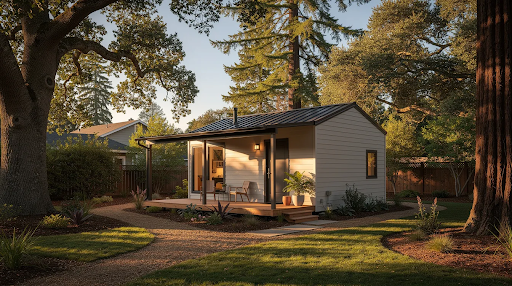
Backyard cottages (300–600 sq ft) with modern open layouts
Single-story tiny homes (400–800 sq ft) optimized for one-bedroom efficiency
Lofted tiny homes incorporating vertical sleeping space under steep roof pitches
Cabin-style cottages with natural wood interiors and rustic aesthetics
HUD-approved manufactured homes (400–1,000 sq ft) configured as full 1–3 bedroom units
Rental income from these units comes primarily from long term leases of 30 days or more. Many California cities restrict or prohibit vacation rentals and short term rental platforms for ADUs to prioritize long term housing availability. This means most homeowners should plan for steady monthly rent from reliable tenants rather than nightly bookings.
Factory-built ADUs from Tiny Home Cottages are constructed in a controlled environment following national building code standards, then transported to your property and connected to utilities. This approach delivers a complete rental home with consistent quality and predictable construction timelines.
Current California ADU Rental Rules Homeowners Should Know (2024–2025)
California state law has transformed dramatically since 2016, with a series of legislation specifically designed to reduce local barriers and boost housing supply. These changes have resulted in over 100,000 ADU permits issued statewide from 2017 to 2024.
Key statewide provisions that benefit property owners include:
|
Legislation |
Key Provision |
|
AB 68 (2019) |
Ministerial approval (no discretionary hearings) for ADUs up to 800 sq ft |
|
AB 881 (2020) |
Allows up to 1,200 sq ft detached ADUs with reduced setbacks, no replacement parking |
|
SB 9 (2021) |
Enables lot splits for two primary units plus ADUs on parcels up to 10,000 sq ft |
|
AB 1033 (2023) |
Facilitates subdivision and separate sale of ADU-equipped parcels |
While state law sets the baseline, local jurisdictions can still establish height limits, design standards, and objective development criteria. San Francisco caps ADU heights at 16 feet while Sacramento allows a more lenient 25 feet. Always verify local ordinances and building permits requirements before ordering your ADU.
Most California jurisdictions require ADUs to be rented for minimum rental periods of 30 days or longer. This effectively prohibits short term adu rentals through platforms like Airbnb in many areas including Los Angeles and San Diego. However, local rules vary significantly, so check with your city planning department.
Regarding rent control, California’s AB 1482 (Tenant Protection Act of 2019) caps increases at 5% plus local inflation (maximum 10% annually) for qualifying rental properties. New ADUs built after 2005 often enjoy initial flexibility for 15 years before these caps apply, though cities like Santa Monica maintain stricter local ordinances.
Types of Detached ADUs That Work Well as Rentals
Detached ADUs typically command higher rents than attached conversions or converted spaces like garage units. The separation from the main house provides privacy that both you and your tenants will appreciate, often translating to a 10–20% rental premium over attached alternatives.
Single-Story Tiny Homes
These entry-level homes feature modern layouts with approximately nine-foot ceilings throughout, creating a spacious feel within 300–600 square feet. The open floor plans work exceptionally well for studio or one-bedroom rentals in urban and suburban backyards where many homeowners want to maximize lot usage.
Premium Single-Story Tiny Homes
Upgraded finishes, cement exterior siding, and contemporary floor plans define this category. These units appeal to higher-income tenants in markets like Los Angeles, Orange County, and the Bay Area where renters expect modern amenities and quality construction.
Lofted Tiny Homes
Sleeping lofts accessed by stairs or ladders, steep roof pitches, and large stacked windows create additional living space without expanding the building footprint. This design effectively adds bedroom capacity while staying within local square footage limits that might otherwise trigger higher impact fees.
Cabin Series Cottages
Natural tongue-and-groove pine walls and ceilings, metal roofing, and fiber cement siding create a cozy cabin aesthetic. These units rent particularly well in foothill, mountain, or wine country communities where rustic charm aligns with neighborhood character.
HUD Manufactured Homes
Larger units ranging from roughly 400 to 1,000 square feet function as full one to three bedroom detached homes. These are often suitable as long-term rental ADUs in suburban or rural California settings where lot sizes accommodate bigger structures.
All of these unit types can be configured with full kitchens, bathrooms, and living areas. Strategic positioning for privacy from the primary home—using fencing, landscaping, or natural lot features—significantly increases rental appeal and allows you to charge higher rents.
California ADU Rental Income Potential by Region
Actual ADU rents fluctuate yearly and depend on neighborhood desirability, square footage, number of bedrooms, parking availability, and finishes. The following ranges reflect typical 2024 market conditions, but always verify current local listings before finalizing your ADU investment plans.
Coastal Southern California
Los Angeles metro: Detached one-bedroom ADUs (500–800 sq ft) average $2,000–$3,500 monthly
Premium locations (Santa Monica, Venice, Newport Beach, La Jolla): Units with high-end finishes can reach $3,500–$4,500+
San Diego County: Standard one-bedrooms run $1,900–$2,900, with two-bedrooms reaching $3,800
Inland Southern California
Inland Empire and Riverside: Detached ADUs typically rent for $1,700–$2,700 monthly
San Bernardino County: Similar ranges, with rents varying based on proximity to employment centers
Steady demand from working families drives consistent occupancy rates
San Francisco Bay Area and Silicon Valley
San Jose, Mountain View, Palo Alto: One-bedroom detached ADUs frequently achieve $2,500–$3,800+ monthly
Oakland and Berkeley: Comparable ranges due to tech-driven housing shortages
Two-bedroom units: Often command $4,000+ in prime locations
Sacramento and Central Valley
Sacramento metro: Well-designed detached ADUs rent for approximately $1,500–$2,400 monthly
Stockton, Modesto, Fresno: Similar ranges for units with full kitchens and laundry
Newer ADUs with quality finishes consistently achieve the upper end of these ranges
Factory-built modern designs with in unit laundry, dedicated outdoor space, and quality finishes help owners increase rental income toward the upper end of local ranges. These features reduce vacancy to under 5% while attracting tenants willing to pay premium rates for private outdoor spaces and amenities.
How to Estimate ADU Return on Investment (ROI) in California
Before ordering an ADU, running basic ROI calculations helps you understand whether the investment makes financial sense for your specific situation. This is especially important in higher-cost California markets where total project budgets can range from $150,000 to $400,000+ depending on size and location.
Basic ROI Framework
Start by estimating your total project cost, which typically includes:
Factory-built home purchase price
Delivery and crane/setup fees
Site preparation and foundation
Utility connections (water, sewer, electrical, gas)
Permits and inspection fees
Contingency buffer (10–15%)
Next, project your annual rental income based on local market research, then subtract operating expenses:
|
Expense Category |
Typical Annual Cost |
|
Landlord insurance |
$1,200–$2,000 |
|
Property taxes (on added value) |
1–1.5% of improvement value |
|
Maintenance allowance |
5–8% of gross rent |
|
Vacancy allowance |
5% of gross rent |
ROI Calculation
The cash-on-cash return formula works well for evaluating ADU investments:
Annual Net Cash Flow ÷ Total Cash Invested = Cash-on-Cash Return
For financed purchases, your cash invested equals your down payment plus closing costs, while monthly mortgage payments become an additional expense reducing net cash flow.
Common payback periods for California ADUs range from 7 to 15 years depending on city, loan terms, and rent levels. Properties with ADUs appreciate approximately 9.34% annually compared to 7.65% for comparable properties without ADUs, adding $150,000–$300,000+ in value over time.
Factory-built ADUs offer more predictable upfront costs and timelines, helping owners more accurately project ROI compared to custom site-built projects that may experience weather delays and cost overruns of 20–40%.
Sample California ADU Rental ROI Scenario
Let’s walk through a concrete example for a detached ADU placed behind a primary home in Riverside, using realistic 2024 cost and rent estimates.
Project Parameters
Unit type: 600 sq ft factory-built one-bedroom tiny home from Tiny Home Cottages
Total project cost: $200,000 (includes home at $120,000, foundation at $30,000, utilities and permits at $50,000)
Financing: 20% down ($40,000), 7% interest on $160,000 loan over 20 years
Monthly mortgage payment: Approximately $1,240
Income and Expenses
|
Item |
Annual Amount |
|
Gross rental income ($2,000/month) |
$24,000 |
|
Insurance coverage |
-$1,500 |
|
Property taxes (on improvement) |
-$1,800 |
|
Maintenance and repairs |
-$1,500 |
|
Net operating income |
$19,200 |
|
Annual mortgage payments |
-$14,880 |
|
Net cash flow |
$4,320 |
Returns Analysis
Monthly cash flow: Approximately $360 after all expenses and debt service
Cash-on-cash return: 10.8% ($4,320 ÷ $40,000 down payment)
Payback on down payment: Under 10 years from cash flow alone
Property damage protection: Built into insurance coverage
Over 10–15 years, the combination of monthly stable income, mortgage paydown by tenants, and increased property value from a permitted ADU can build substantial long-term wealth. Many homeowners later transition the unit to family members or personal use when rental needs change, maintaining flexible living arrangements.
Financing Options for a Rental ADU in California
Many California homeowners use financing rather than cash to add an income-producing ADU. The financing structure you choose has a major impact on monthly cash flow and your ability to begin generating positive returns quickly.
Common Financing Paths
Home equity line of credit (HELOC): Leverages existing home equity, typically at 8–10% variable rates
Cash-out refinancing: Blends ADU costs into your primary mortgage at current rates (6.5–7.5% in 2024)
Construction loans: Convert to permanent financing after completion
Specialized manufactured home loans: Designed specifically for factory-built structures
21st Mortgage Corporation
Tiny Home Cottages often recommends 21st Mortgage Corporation for financing factory-built homes. This lender specializes in manufactured and mobile home loans and has been one of the leading lenders in this industry for many years.
Typical loan terms include:
Down payments ranging from 0% for well-qualified buyers to 20%+ depending on credit profile
Loan terms up to 20–25 years
Interest rates in the 6–9% range for 2024
Credit score requirements typically 660+
Debt-to-income ratios under 45%
Loan Application Process
Choose the Tiny Home Cottages model that fits your needs and budget
Complete a loan application through the lender
Receive loan approval and review financing terms
Lock the interest rate and submit required documentation (identification, income verification, bank statements)
Sign closing documents and finalize the loan
Funds are distributed and the home purchase moves forward
Speak with a loan officer and a tax professional to understand how monthly payments, interest deductions, and depreciation interact with rental income on your taxes. Rental income must be reported to both the IRS and California Franchise Tax Board.

Designing and Outfitting a Detached ADU for Strong Rental Demand
Thoughtful design directly affects how quickly an ADU rents and how much tenants are willing to pay. In competitive California rental markets, the difference between average and premium rents often comes down to layout efficiency and finish quality.
Layout Considerations
Space-efficient floor plans with open living areas, eat-in kitchen islands, and standard-size bathrooms create the feeling of a full apartment rather than a cramped studio. Tiny Home Cottages’ modern floor plans emphasize this approach with approximately nine-foot ceilings and generous window placement.
Size breakpoints that matter in California:
Under 500 sq ft: Avoids higher impact fees in some cities
500–600 sq ft: Ideal for efficient one-bedroom units
750 sq ft: Enables efficient two-bedroom layouts
1,000–1,200 sq ft: Maximum allowed in most jurisdictions
Finishes That Attract Tenants
|
Feature |
Why It Matters |
|
Luxury vinyl plank flooring |
Durable, waterproof, easy to clean between tenants |
|
Quartz or solid-surface counters |
Premium appearance, low maintenance |
|
Easy-clean shower surrounds |
Reduces turnover cleaning time and costs |
|
Stainless appliances |
Modern look expected by California renters |
|
Full-size refrigerator |
Essential for long-term tenants |
Renter Priorities
Screen tenants carefully based on what features drive demand:
Privacy from the main house (fencing, landscaping, separate walkway)
In-unit or onsite laundry capabilities
Full kitchen with real cabinet storage
Good natural light through larger windows
Small private patio or outdoor space
The different Tiny Home Cottages series—modern tiny homes, lofted homes, and cabin series—can each be configured to maximize rental appeal for your specific target market. Premium finishes in high demand areas like Los Angeles justify the additional investment through significantly higher rents.
Legal, Management, and Tax Considerations for ADU Rental Income
Becoming an ADU landlord in California requires attention to permits, leases, tenant screening, and basic tax planning to keep your new income stream compliant and sustainable.
Permitting Requirements
A fully permitted ADU must complete final inspections and receive a Certificate of Occupancy before being legally rented. Many homeowners attempt to rent unpermitted structures, risking fines up to $10,000+ and potential enforcement actions requiring removal.
Verify your local rules by checking:
City planning department website
Zoning maps for your parcel
Local fire department requirements
Any owner occupancy requirements in your jurisdiction
Rental Agreements and Leases
Your rental contract should clearly specify:
That the unit is an ADU on a property with a primary residence
Minimum rental term (typically 30+ days per California state law)
Rent increase procedures compliant with applicable rent control
Maintenance responsibilities split between both the landlord and tenant
Utility arrangements (separate meters are ideal but not always required)
Parking allocation
Security deposits limits (currently two months’ rent maximum in California)
Fair housing laws compliance
Tax Implications
ADU rental income is taxable and must be reported on Schedule E of your federal return. Common deductions include:
Mortgage interest on ADU financing
Landlord insurance premiums
Necessary repairs and maintenance
Property management fees
Depreciation (27.5-year straight-line for residential rental)
Property taxes attributable to the ADU
Standard homeowners insurance typically doesn’t cover rental activities, so you’ll need specific landlord insurance or an umbrella policy addressing liability claims from tenants.
Property Management Options
Some owners self-manage to maximize returns, while others hire professional managers (typically 8–12% of monthly rent) to handle marketing, tenant screening, rent collection, and maintenance coordination. If you manages corporate housing or other rental properties already, adding an ADU to your portfolio may require minimal additional effort.
Review local ordinances about short term rental restrictions, rent control applicability, and tenant protections in your specific city before listing. Cities like Los Angeles have just-cause eviction protections while Santa Monica maintains some of California’s strictest rental regulations.
How Factory-Built Tiny Homes Simplify the ADU Rental Process
Factory-built tiny homes and cottages offer an efficient path to rental ADU ownership compared to fully custom site-built construction. In regulation-heavy California, where construction management challenges and labor shortages can derail projects, controlled manufacturing environments provide significant advantages.
Consistent Quality and Timelines
Tiny Home Cottages partners with experienced manufacturers that build homes in controlled factory settings under IRC and IBC building codes. This approach delivers:
4–8 week factory construction timelines versus 6–12 months for site-built
Protection from weather delays that plague traditional construction
Repeated, standardized building processes with frequent inspections
Accountability through factory quality assurance protocols
Faster Path to Rental Income
Factory-built homes arrive largely complete, requiring only foundation placement and utility connections. This reduces onsite construction time and neighborhood disruption, often allowing homeowners to begin renting within 4–6 months of permit approval rather than waiting a year or more.
The cost predictability also matters for potential buyers calculating ROI. Factory pricing remains stable throughout your project, unlike site-built estimates that can increase 20–40% during construction.
Model Selection for Your Market
Tiny Home Cottages offers multiple series so homeowners can select a design matching their lot size, city requirements, and target renter profile:
Single-story models for straightforward permitting in most cities
Premium series for high-rent coastal markets
Lofted designs maximizing bedroom count within size limits
Cabin series for rural and mountain aesthetics
HUD manufactured homes for larger family-sized rentals
Industry projections suggest prefab will capture 30% of the ADU market share by 2030 as homeowners increasingly recognize the construction management and timeline benefits over traditional building methods.
Ready to explore your options? Browse available models, view photos of completed backyard cottages, learn about financing options, and contact Tiny Home Cottages to discuss which factory-built ADU best fits your rental income goals.
Frequently Asked Questions About ADU Rental Income in California
How much can a detached ADU increase my California property value?
While exact figures vary by city and appraiser, permitted detached ADUs in strong markets like Los Angeles, San Diego, and the Bay Area commonly add $150,000–$300,000+ to property value. This reflects both construction cost recovery and capitalization of the additional rental income stream. Potential buyers often pay premium prices for properties with income-producing ADUs already in place, as it saves them the time and complexity of adding one themselves.
Can I rent my California ADU to family members and still treat it as rental income?
Renting to family members is generally allowed if the ADU is fully permitted and a real lease with market-rate or near-market-rate rent is in place. However, tax treatment differs if rent charged is substantially below fair market value. The IRS may limit your ability to deduct expenses if the arrangement qualifies as personal use rather than a true investment property. Document the arrangement thoroughly and consult a tax professional about potential limitations on deductions.
Are all California ADUs exempt from rent control laws?
New ADUs are often treated differently from older rent-controlled housing, but not every ADU is automatically exempt. Under AB 1482, properties built within the last 15 years are generally exempt from statewide rent caps, but local ordinances may apply stricter rules. Cities like Santa Monica and Los Angeles have their own regulations that may cover newer properties. Check with your city’s housing department or an attorney before assuming full exemption from rent control.
Can I use my ADU as a home office or guest suite instead of a rental, and switch later?
Yes, permitted ADUs can typically be used flexibly as long-term rentals, housing for family members, guest suites, corporate housing, or personal workspace. Many homeowners initially use the unit for relatives or a home office and later transition it into a long-term rental when needs change. The flexibility is one key advantage of adding an ADU to your property—it serves multiple purposes over the life of your ownership.
How long does it typically take to go from ADU planning to collecting rent with a factory-built unit?
A general timeline includes 3–6 months for local permitting and site preparation (foundation, utility work), with factory construction proceeding in parallel during this period. Once permits are approved and the site is ready, installation and final connections typically take 1–2 months. Many homeowners can start collecting steadier income from their ADU within 4–8 months total, depending on city permitting speed and site complexity—significantly faster than the 12–18 months common with traditional site-built construction.