
The Step by Step Process of Building an ADU in California

Key Takeaways
Most detached ADUs in California take about 6–12 months from initial planning to move-in, with permitting often consuming 1–3 months under the state’s 60-day review rule when applications are complete.
California allows at least one detached ADU up to 800 square feet and 16 feet tall by right on most single-family lots with an existing home, and up to 1,200 square feet where local codes permit larger units.
Homeowners can choose between site-built units and factory-built options such as tiny homes, cottages, and small manufactured homes that are built off-site and installed in the backyard.
Tiny Home Cottages focuses on detached, factory-built tiny homes and cottages, helping homeowners through model selection, financing referrals, permits coordination, and delivery/installation.
Recent legislation like SB 543 clarifies that ADU size refers to interior livable space only, excluding wall thicknesses, effectively allowing larger usable homes.
What Is an ADU in California and Why Build One?
An accessory dwelling unit represents one of the most practical ways California homeowners can add housing to their existing property. These self-contained secondary homes have become increasingly popular as the state streamlines regulations and homeowners seek flexible housing solutions.
An accessory dwelling unit is a self-contained secondary home on a residential property with its own kitchen, bathroom, and sleeping area, separate from the primary residence.
Common names California homeowners use include backyard cottage, granny flat, in-law unit, casita, tiny home, and backyard guest house.
This article focuses on detached ADUs—separate small homes in the backyard—rather than interior conversions, garage conversions, or additions to the main house.
Main reasons Californians build ADUs include:
Generating rental income from long-term tenants
Housing for aging parents or adult children
Downsizing into the backyard while renting the main house
Creating a comfortable guest house with full amenities
Factory-built tiny homes and cottage-style units can serve as fully compliant detached ADUs once properly permitted and installed on a permanent foundation or approved support system.
Who Can Build a Detached ADU in California?
California law has made ADU development accessible to most residential property owners, though specific eligibility depends on your lot characteristics and local zoning rules.
In 2026, most single-family homeowners in California with an existing primary dwelling may build at least one detached ADU, subject to local zoning and lot-specific constraints.
Many duplexes and larger multifamily properties can add one or more detached ADUs in rear or side yards, as long as open-space and access rules are met.
Recent state laws (including updates to Government Code §65852.2 and SB 543) limit local barriers, require ministerial approval, and generally prohibit minimum lot size requirements for ADUs.
Special areas require extra attention:
Coastal Zones may need additional permits (though AB 462 streamlines this process)
Historic districts have design considerations (AB 1061 expands eligibility for non-contributing properties)
Very High Fire Hazard Severity Zones require defensible-space rules and may need larger setbacks
Owner-occupancy requirements have largely been relaxed for new ADUs through at least January 1, 2030, but local regulations should still be checked for any exceptions.
Understanding California ADU Rules: Size, Height, and Placement
California’s state standards create a floor of rights that all local jurisdictions must honor. Understanding these minimums helps you know what you’re entitled to build, regardless of where you live.
California guarantees homeowners the right to build at least one detached ADU up to 800 square feet, 16 feet tall, with 4-foot side and rear setbacks, regardless of lot coverage or floor-area ratio, as long as building codes and fire safety requirements are met.
Many cities and counties allow larger detached ADUs up to 1,000–1,200 square feet, especially for 2-bedroom layouts:
|
Jurisdiction |
Maximum Detached ADU Size |
Notable Features |
|
Los Angeles |
1,200 sq ft |
Pre-approved ADU plans available |
|
San Diego |
1,200 sq ft |
Companion Units program |
|
Sacramento |
1,200 sq ft |
Streamlined approval process |
|
State Minimum |
800 sq ft |
Available by right |
Front-yard placement is often restricted; most jurisdictions require detached ADUs to be in the rear or side yard with specified setbacks from property lines, easements, and existing structures.
Parking rules work in homeowners’ favor: one off-street space may be required for a new detached ADU, but parking is often waived when:
The property is within a half-mile walking distance of a major transit stop
Located in designated historic districts meeting certain criteria
Converting existing structures like garages
Confirm your city or county’s ADU ordinance to verify exact size, height, and setback allowances before finalizing your design, as local rules may be more generous than state minimums.
Choosing Your ADU Type: Site-Built vs. Factory-Built Tiny Homes
When planning your ADU project, one of the most important decisions involves how the structure will be constructed. Site-built and factory-built approaches each offer distinct advantages, and understanding the differences helps you choose the right path for your situation and budget.
A traditional site-built ADU is constructed entirely on the property from the ground up, involving excavation, foundation work, framing, and full on-site finishing over many months. This approach requires coordinating multiple trades and managing potential weather delays.
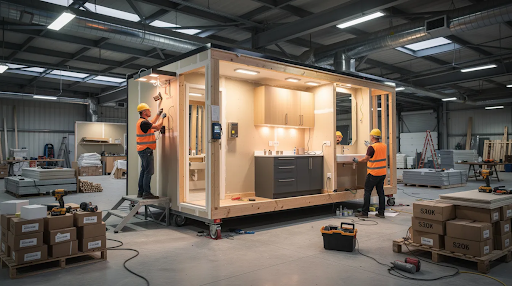
Factory-built or manufactured tiny homes and cottages are constructed in a controlled indoor factory under national building codes (such as HUD or modular codes), then transported to the property for installation and utility connections.
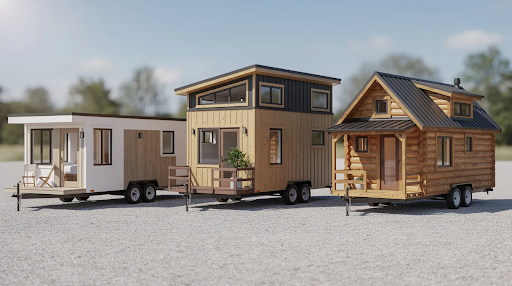
Tiny Home Cottages specializes in detached, factory-built options including:
Single-story tiny homes with modern nine-foot ceilings
Premium single-story cottages with upgraded finishes and cement exterior siding
Lofted tiny homes with a second-level sleeping loft and large stacked windows
Cabin-style cottages with pine interiors and metal roofing
HUD manufactured homes typically ranging from about 400 to 1,000 square feet
Benefits of factory-built ADUs for California homeowners include:
Consistent quality due to indoor construction under controlled conditions
Fewer weather delays affecting the construction phase
More predictable pricing and timelines
Shorter disruption in the backyard during installation
When used as detached ADUs, these homes must still comply with local planning, foundation/anchoring, and utility requirements, but much of the craftsmanship is completed before the home ever arrives on the job site.
Step-By-Step Process of Building an ADU in California
This section walks you through each major phase of the California ADU construction process, from your first call to move-in day. Each step builds on the previous one, helping you understand what to expect and how to prepare.
The typical detached ADU journey includes: initial goals and budget, property feasibility check, selecting a home type or model, detailed design and site planning, permitting, site preparation, delivery or construction, utility hookups, final inspections, and move-in. The following steps assume a detached factory-built tiny home or cottage from Tiny Home Cottages, but the process broadly applies to other detached ADU approaches as well.
Step 1: Clarify Your Goals, Use Case, and Budget
Before contacting builders or designers, take time to decide your “why” for building an ADU. Understanding your primary motivation shapes every decision that follows.
Common use cases for detached ADUs include:
Long-term rental to a tenant for generating rental income
Private home for a parent or adult children returning home
Downsizing into the ADU while renting the main house
Dedicated guest house with full kitchen and bath
Housing extended family members who need independent living space
Estimate a realistic budget range based on current California costs. Detached ADUs often land in the low- to mid-six figures when including site work, utilities, and permits, even when using factory-built options. ADU construction costs vary significantly by region, with coastal areas typically running higher than inland locations.
Think about target size based on your intended use:
400–600 square feet works well for a studio or 1-bedroom for a single occupant
750–1,000+ square feet suits small families or strong rental demand
Consider features that matter most, such as a full kitchen, accessible bathroom design, additional storage, or a loft space for extra square footage.
Prepare rough timelines—such as hoping to have the ADU ready before a specific school year or before elderly parents move in—because this affects model selection and construction approach.
Step 2: Property Feasibility and Local ADU Rules
Understanding what your specific lot can accommodate is essential before investing significant time or money in design work.
Contact your local building department or city planning department to confirm allowed ADU size, height, and setback rules for your exact address and zoning designation. Many jurisdictions now offer online ADU portals with this information.
Sketch your lot with approximate property lines, main house footprint, existing garage or sheds, and any major trees or slopes. Pencil in a possible ADU location that respects 4-foot rear and side setbacks as a starting point.
Note potential limitations that may affect ADU placement:
Utility easements running through the yard
Existing plumbing lines or electrical service locations
Septic systems in rural areas
Protected trees requiring permits for removal
Site conditions like significant slopes, poor drainage, or limited access can increase site prep costs. A simple site evaluation with an experienced ADU contractor or professional is especially valuable at this stage.
Tiny Home Cottages can help homeowners evaluate whether a selected tiny home or cottage model will physically fit within the buildable envelope of the yard and meet access requirements for delivery and installation.
Step 3: Select a Factory-Built Tiny Home or Cottage Model
Choosing the right home model early streamlines design, permitting, and financing. With factory-built homes, you’re selecting from established floor plans rather than designing from scratch.
Homeowners typically choose among several factory-built options:
Single-story tiny homes with modern nine-foot ceilings—ideal entry-level options
Premium cottages with upgraded exteriors like fiber cement siding
Lofted tiny homes with a second-level sleeping or storage area, steep roof pitches, and dramatic windows
Cabin-style cottages with tongue-and-groove pine interiors and metal roofing
HUD manufactured homes up to around 1,000 square feet for maximum living space
Align the model with your use case:
Compact lofted units work well for singles or couples
Single-story accessible layouts suit aging parents or those with mobility concerns
Larger HUD manufactured homes accommodate multigenerational living or maximize potential rental income
Factory-built homes come with predefined floor plans and option packages, making it easier to understand upfront pricing and visualize final interior finishes through photos and completed project galleries.
Tiny Home Cottages can walk buyers through model comparisons, standard and premium finish options, and any customizations that still fit within factory and code requirements.
Step 4: Design, Site Plan, and Pre-Permit Preparation
Clear construction drawings and documentation reduce back-and-forth with the city and help your ADU project move through the permitting phase more smoothly.
Homeowners (or their designer) will need a scaled site plan showing:
Property lines and dimensions
The primary residence location and footprint
Proposed ADU location with exact dimensions
Parking arrangements
Access paths from the street
Utility connection points
Foundation and utility plans must reflect how the factory-built home will be supported, anchored, and connected to water, sewer or septic, and electrical service in compliance with local building codes and national standards.
Some California jurisdictions accept standard manufacturer drawings and structural engineering documents for HUD or modular homes when combined with locally prepared site-specific documents. This can reduce architectural design costs.
Decide on finish materials at this stage—such as siding color, roofing style, windows, and interior cabinetry—so that both the factory and the city review exactly what will be built. This prevents delays from mid-process changes.
Step 5: Permitting Your ADU in California
California’s ADU approval process is designed to be straightforward, with state law requiring ministerial review rather than discretionary hearings for qualifying projects.
ADUs are approved through a ministerial process, meaning staff must apply objective standards and cannot require discretionary hearings when projects meet state and local rules. This represents a significant streamlining compared to traditional residential construction permitting.
State law requires cities and counties to approve or deny complete ADU permit applications within 60 days. If they deny, they must cite specific reasons so homeowners can revise and resubmit.
Common permit components include:
Planning/zoning review
Building permits
Separate grading or utility permits (sometimes)
Fire department review (when applicable)
Some jurisdictions reduce or waive impact fees for smaller ADUs. Under SB 543, units under 500 square feet are exempt from school impact fees, and those 750–800 square feet and under often qualify for reduced fees.
Tiny Home Cottages can coordinate with designers, engineers, and local officials to ensure compliance with the chosen model’s plans and that the site plan satisfies all submittal requirements, easing the permit process for homeowners.
Step 6: Financing and Ordering Your ADU
Securing financing before ordering your factory-built home is essential. Understanding your financing options early prevents delays once permits are approved.
Many California homeowners use several financing options for ADU building:
Specialized manufactured home lenders
Home equity loans or lines of credit
Cash-out refinances
Construction loans
Tiny Home Cottages often refers buyers to 21st Mortgage Corporation, a lender with extensive experience financing manufactured and tiny homes, including options that may offer low or even zero percent down for well-qualified borrowers.
Typical loan steps follow this sequence:
Choose a specific home model
Request a detailed price quote including delivery
Apply with a lender
Receive conditional approval
Submit income and identification documents
Lock the interest rate
Sign closing documents
Once financing is finalized and ADU permits are on track or approved, the factory orders materials and schedules the build of the chosen tiny home or cottage, with a predictable production timeline typically ranging from 6–12 weeks.
Step 7: Site Preparation, Foundation, and Utilities
While your home is being built in the factory, critical site prep work happens on your existing property. This parallel timing is one of the key advantages of factory-built ADUs.
Clear the ADU footprint by:
Removing old sheds, shrubs, or small trees (subject to any local tree-protection ordinances)
Grading the area to create a level pad
Ensuring proper drainage away from structures
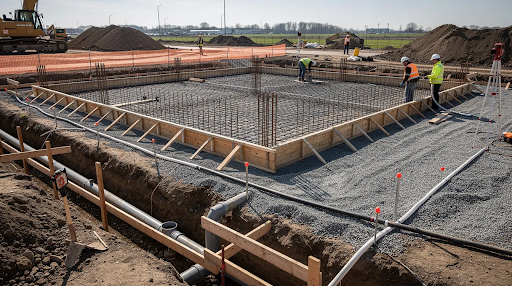
A foundation system must be installed according to structural engineering and building codes before the factory-built home is delivered. Options include:
Concrete slab foundations
Pier systems with perimeter skirting
Other locally approved foundation designs
Trenching for utility connections (water, sewer or septic, electrical, possibly gas) is typically performed during this phase, coordinated with inspections from the local building department or public works department.
Utility upgrades to your existing service may be required depending on the capacity of your existing property’s electrical panel and water supply.
Factory-built ADUs can shorten the messy on-site construction period because framing, roofing, drywall installation, and interior finishes are already completed indoors while foundation and utility work is being finished in the yard.
Step 8: Delivery, Installation, and Exterior Connections
Delivery day marks a major milestone in your ADU project. The new unit arrives substantially complete, transforming your backyard within hours rather than months.
The tiny home or cottage is transported by truck, maneuvered into the backyard using specialized equipment, and set onto the prepared foundation or support system by an experienced installation crew.
Installers complete several critical tasks:
Anchor the structure to meet wind and seismic requirements
Secure the home to the foundation for structural integrity
Begin tying in exterior utilities at pre-planned locations
Exterior details typically finished after the home is set include:
Stairs and entry decks
Skirting around the foundation
Final grading and pathways
Exterior lighting
Plan for temporary access impacts, such as removing a section of fencing or protecting landscaping during delivery. Tiny Home Cottages helps coordinate these logistics with the delivery team to minimize disruption.
Step 9: Final Inspections and Certificate of Occupancy
Local approval is required before anyone moves into the ADU. The final inspection process verifies that all work meets code requirements and the unit is safe for occupancy.
Inspectors verify several key elements:
Structural anchoring to foundation
All utility connections (plumbing systems, electrical, gas)
Smoke and carbon monoxide alarms
Egress windows meeting size requirements
Safety rails on stairs and decks
Compliance with Title 24 energy efficiency requirements
Any required corrections—such as adding a handrail, adjusting a step height, or installing additional smoke detectors—must be completed before final sign-off.
Once all final inspections are approved, the city or county issues a Certificate of Occupancy (or equivalent document), officially allowing the ADU to be used as a dwelling.
At this stage, homeowners can:
Set up rental listings for generating rental income
Move in a family member
Relocate into the ADU themselves and lease out the primary residence
Step 10: Furnishing, Landscaping, and Long-Term Use
The last phase focuses on comfort and long-term value. Thoughtful finishing touches transform your new unit from a completed construction project into a welcoming home.
Furnish the ADU with space-saving pieces to make smaller footprints feel open and livable:
Wall-mounted shelves
Compact dining tables that fold or extend
Under-bed storage solutions
Multi-functional furniture
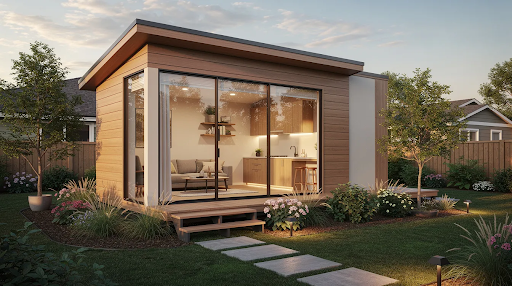
Modest but thoughtful landscaping integrates the new unit into the backyard:
Pathways connecting to the main house
Low-maintenance plants appropriate for California’s climate
Privacy fencing or hedges
A small patio or outdoor seating area
Clearly define how the ADU will be used, as this affects:
Lease documents and rental agreements
Insurance policies and coverage
Tax planning and property tax implications
Tiny Home Cottages showcases completed ADUs and tiny homes in a gallery so future buyers can see how finished units look once fully furnished and landscaped, helping you envision possibilities for your own existing space.
Cost, Timeline, and Ongoing Financial Considerations
Understanding the full financial picture helps you budget realistically and avoid surprises. ADU construction costs vary based on several cost factors, from location to finish quality.
Total cost of a detached ADU in California includes:
The home itself (factory-built or site-built)
ADU permits and fees
Foundation and site work
Utility connections and any utility upgrades
Decks, fencing, or landscaping
Factory-built tiny homes and cottages often provide more predictable pricing than fully custom site-built ADUs because much of the material and labor is standardized in the factory environment.
Typical project scope and timeline breakdown:
|
Phase |
Duration |
Notes |
|
Planning & Design |
1-2 months |
Goal clarification, model selection |
|
Permitting Phase |
1-3 months |
60-day state review requirement |
|
Factory Production |
6-12 weeks |
Concurrent with site prep |
|
Site Prep & Foundation |
4-8 weeks |
Grading, foundation, utilities |
|
Delivery & Installation |
1-2 weeks |
Setting and connections |
|
Final Inspections |
1-2 weeks |
Corrections if needed |
|
Total |
6-12 months |
Varies by project scope |
Account for added property taxes based on the new improvement value, assessed when the ADU receives its Certificate of Occupancy. However, weigh this against ongoing rental income or housing cost savings.
Build a contingency buffer into your budget—often 10–15 percent of projected project costs—to cover surprises such as extra trenching depth, tree removal, soil issues, or minor code-driven changes.
Why Many California Homeowners Choose Factory-Built ADUs
California’s housing market moves fast, and homeowners increasingly value predictability and quality when adding living space to their properties. Factory-built ADUs deliver advantages that traditional site-built construction often cannot match.
Building in a controlled factory environment protects materials from rain and sun, allows consistent workmanship under national building standards, and supports strict quality checks at each stage of construction.
Factory schedules are less affected by weather delays, subcontractor shortages, or on-site logistics, often resulting in more predictable delivery dates and fewer surprises during the construction phase.
Tiny Home Cottages offers several model lines to match different styles and budgets:
Modern single-story units with clean lines
Upgraded premium cottages with high-end finishes
Lofted homes with dramatic windows and extra square footage
Cabin series cottages with warm wood interiors
HUD manufactured homes for maximum space
Many buyers appreciate the simplified process: choose a model, arrange financing, handle permits and site work, then take delivery of a nearly completed home rather than managing dozens of on-site trades.
Homeowners who want a detached ADU primarily for housing loved ones, generating long-term rental income, or downsizing into a lower-maintenance space find that factory-built tiny homes and cottages can meet their needs with less stress and greater peace of mind.
How Tiny Home Cottages Helps You Through the ADU Journey
Navigating the ADU construction process works best with experienced guidance. Tiny Home Cottages positions itself as a helpful resource rather than a high-pressure sales operation, supporting homeowners at each stage.
The team helps homeowners clarify their needs, compare models, and understand how different homes fit within California’s ADU regulations and local zoning limits.
Assistance includes connecting homeowners to experienced lenders like 21st Mortgage Corporation, explaining loan basics, and providing the documentation lenders expect for factory-built homes.
Tiny Home Cottages coordinates with manufacturers that have decades of experience building small homes and cottages, ensuring consistent quality and adherence to national building codes.
The team works closely with homeowners and their local professionals during site planning and the permitting process, aligning factory building plans with local building and foundation requirements.
Homeowners are encouraged to:
Explore model catalogs to see available options
View completed project galleries for inspiration
Reach out with questions about timelines, costs, or how a specific model could function as a detached ADU on their existing property
FAQs About Building a Detached ADU with a Factory-Built Home
Can a factory-built tiny home legally count as an ADU in California?
Many California jurisdictions allow HUD manufactured homes or modular factory-built units to serve as detached ADUs when they are installed on an approved foundation, permitted through the local building department, and meet all zoning and utility standards.
Confirm with your specific city or county whether HUD-code homes, modular units, or both are accepted for ADU use. Tiny Home Cottages can help homeowners navigate these details with local officials to ensure compliance.
Do I need an architect if I choose a factory-built ADU model?
For one-story detached ADUs built from factory-supplied plans, many California cities do not require a separate architect because the manufacturer provides engineered drawings and specifications that satisfy plan review requirements.
Some properties with complex grading, retaining walls, or unusual foundations may still require a local engineer or designer for the site plan and structural details, even when the home itself is factory-built.
How is a factory-built ADU inspected if it’s built off-site?
The home is inspected multiple times in the factory under national building standards, with quality checks at each construction stage.
After installation, the local city or county inspects the foundation, utility connections, anchoring, and final life-safety items on the property.
This dual inspection process results in thorough oversight: factory inspections ensure construction quality, while local inspections verify safe installation and code compliance on the lot.
Can I rent out a detached ADU built with a tiny home or cottage?
In most California cities, once a new unit is fully permitted as an ADU and receives a Certificate of Occupancy, it can be rented out as a long-term dwelling subject to local rental regulations.
Some jurisdictions limit short-term rentals (stays under 30 days), so homeowners interested in vacation rentals should check local ordinances before relying on short-term rental income. Long-term rentals are generally permitted without additional restrictions.
What if my backyard is small or oddly shaped?
California’s by-right allowance for at least an 800 square feet, 16-foot tall detached ADU with 4-foot rear and side setbacks still requires adequate buildable area, but compact and narrow tiny home models can often fit into tighter backyards than traditional wide floor plans.
Work with Tiny Home Cottages to review lot dimensions, sketch potential placements, and choose a model with a footprint and roofline that fits the available space while meeting local design standards. Lofted models can maximize livable space within smaller footprints.
How does an attached ADU differ from a detached ADU?
An attached ADU shares at least one wall with the main house or is built as an addition to the primary residence, while a detached ADU is a completely separate structure in the backyard or side yard.
Attached ADUs and ADU conversions (like a garage conversion or converting existing space) have different size limits and may require different structural engineering considerations than detached units.
What is a junior ADU and can I build one along with a detached ADU?
A junior ADU is a smaller unit (up to 500 square feet) created within the footprint of the existing primary residence, often by converting an existing garage or bedroom.
California law allows homeowners to build both one junior ADU and one detached ADU on a single-family lot, potentially adding two income-generating or family housing units to one existing property.