
Tiny Homes and Prefab ADUs: Which One Is Right for You?
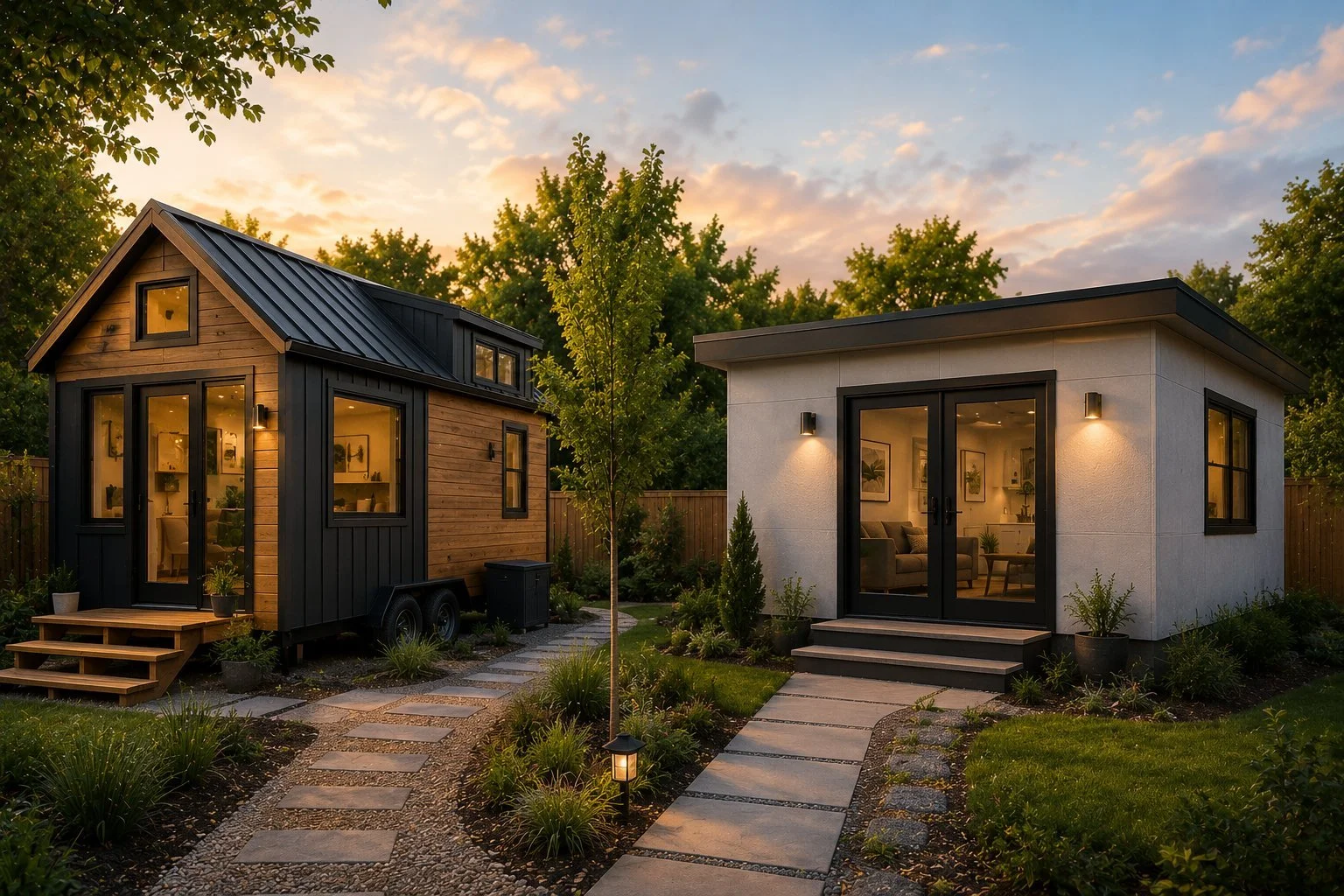
Tiny homes and prefab ADUs are often discussed in the same breath, which makes sense because they share a lot of common ground. Both are factory built. Both serve as compact, livable structures on residential property. Both offer faster timelines and more predictable cost than traditional site built construction. The differences come into focus when you look at the use case, the lot, and the long term plan for the home. Knowing which one is right for your situation makes the decision much easier.
This guide walks through how tiny homes and prefab ADUs differ, the best use cases for each, the cost and financing comparison, placement and permit considerations, and how to choose your path between the two.
How tiny homes and prefab ADUs differ
The tiny home label covers a broad category of small homes that range from movable units on wheels to factory built small cottages designed to sit on a permanent pad. Prefab ADU is more specific. It refers to a factory built accessory dwelling unit placed on residential property as a second living space. There is overlap between the two terms because many prefab ADUs are also tiny homes, and many tiny homes function as ADUs when placed on a residential lot.
The practical difference comes from the intent. A tiny home is built to be a small home, sometimes movable, sometimes for primary residence, sometimes for recreational use. A prefab ADU is built specifically to function as a second housing unit on someone else's property. The construction standards, the design priorities, and the typical use cases follow from those starting points.
Tiny Home Cottages builds and sells factory built homes that serve both purposes well. The lineup includes single story tiny homes, premium single story models, lofted models, cabin series cottages, and HUD manufactured homes. Each can serve as a tiny home for primary residence or as a prefab ADU on someone's property depending on how it is placed and used.
Best use cases for each
Tiny homes shine when the buyer wants a small home as a primary residence or a secondary recreational property. Buyers who want to downsize, simplify their housing, or own a smaller home outright often gravitate to tiny homes. The smaller footprint, lower cost, and reduced maintenance appeal to a wide range of buyers.
Prefab ADUs shine when the buyer already owns a property and wants to add a second housing unit. The unit might house an aging parent, an adult child, a renter, a guest, or a workspace. The ADU serves the main household by adding usable square footage without forcing anyone to sell or move.
A single home can serve both purposes depending on placement and use. A single story tiny home from Tiny Home Cottages might be a primary residence for one buyer and a backyard ADU for another. The home itself is the same. The use case and placement determine which label fits.
Cost and financing comparison
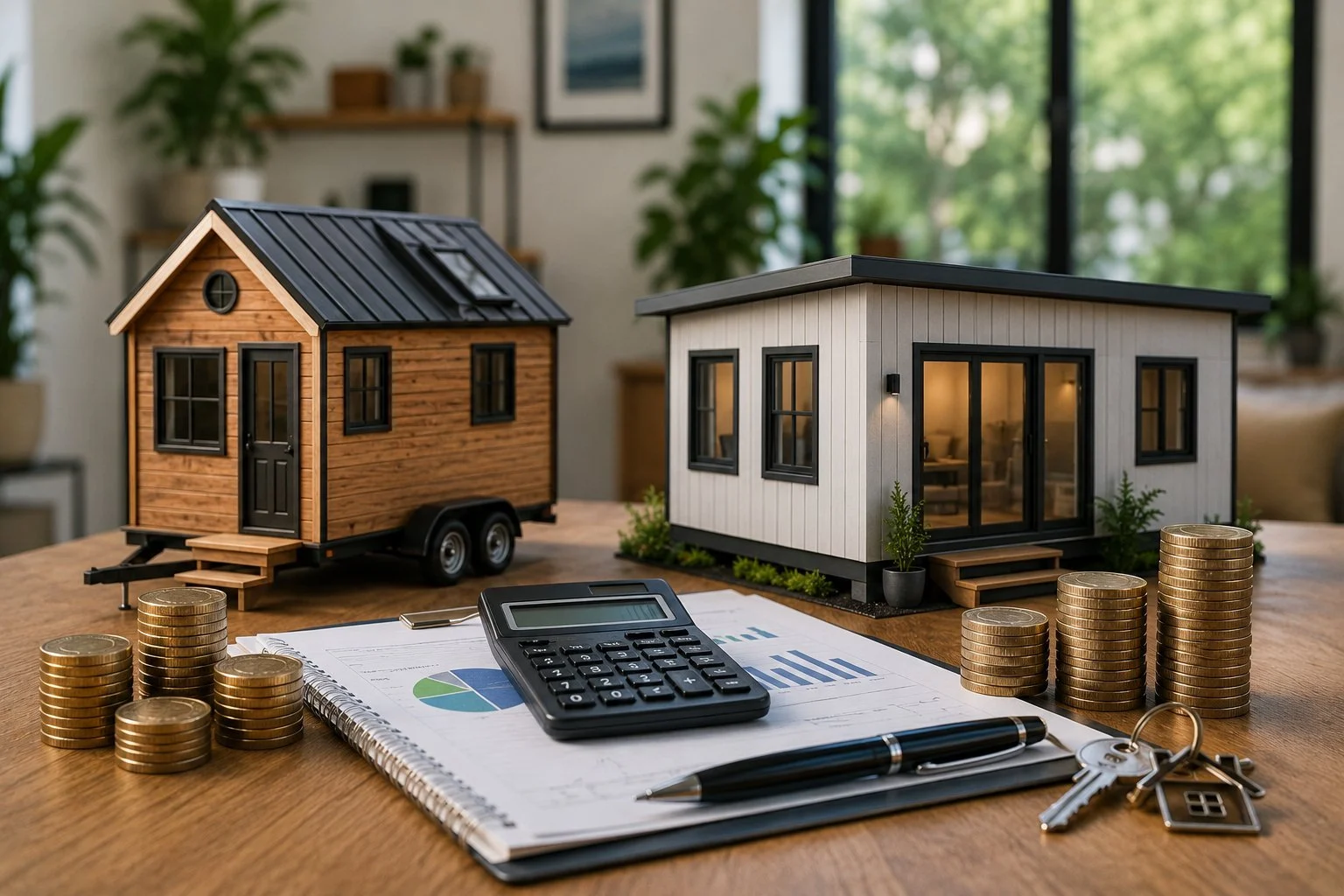
Cost and financing on tiny homes and prefab ADUs follow similar patterns because both come from the factory built category. Pricing depends on the series, the size, the finish level, and the included features. Entry level single story models price at the lower end. Premium single story, lofted, cabin series, and HUD manufactured models price higher based on size and finish.
The total delivered cost matters more than the unit price. A real quote should include the home itself, delivery, set, anchoring, and the basic work needed to make the unit livable. Quotes that leave out delivery or set make the headline number misleading. Comparing options on a total delivered cost basis gives you the honest picture.
Financing for both categories often comes through 21st Mortgage Corporation, which Tiny Home Cottages frequently recommends. They specialize in manufactured and mobile home loans and have been one of the leading lenders in the industry for many years. Down payment options range from zero percent for highly qualified buyers to higher percentages depending on credit profile and property conditions.
The loan application process is similar regardless of whether the home will serve as a tiny home or a prefab ADU. The model gets selected, the application moves through approval, the rate gets locked, and closing happens once documentation is complete. The end use of the home matters less than the financial profile of the buyer and the specifics of the property.
Placement and permit considerations
Placement on a tiny home varies depending on whether the buyer owns land where the home will sit. For a tiny home as a primary residence, the buyer needs land or a tiny home community that allows the unit. For a prefab ADU, the buyer already owns the property where the home will be placed.
Permit considerations also vary. A tiny home community handles much of the permitting for placement and connection. An ADU on private property requires the homeowner to work through local ADU rules, setback requirements, and utility connection permits. California has worked to make ADU permitting more predictable, but local jurisdictions still vary in their specific processes.
For either path, the factory built unit itself is constructed to applicable code standards before it arrives. The permit work generally focuses on the site, the pad, the utility connections, and the placement rather than the construction of the home. Working with a builder who has delivered in your area saves time and helps coordinate with your contractor on the site work.
Choosing your path
The decision between a tiny home and a prefab ADU often comes down to what you already own. Buyers who own a residential property with room for a second unit typically lean toward the prefab ADU path. The home goes on existing land. The main household stays in place. The ADU serves a specific need.
Buyers who do not own land or who want a smaller standalone home lean toward the tiny home path. They find a lot, a tiny home community, or a property where the home can sit as a primary residence. The home becomes their address, not a second unit.
For homeowners who fit either profile, the factory built lineup from Tiny Home Cottages covers the practical options. Single story tiny homes serve as compact primary residences or efficient backyard ADUs. Premium single story models add upgraded finishes for either use case. Lofted models pack more space into a smaller footprint. Cabin series cottages bring a more rustic look. HUD manufactured homes deliver more square footage when the use case calls for it.
Common questions
A few questions come up regularly when buyers compare tiny homes and prefab ADUs. Does the home meet code where I want to place it. Quality factory built units from Tiny Home Cottages are constructed to recognized national standards. Local placement rules still apply but the home itself meets the construction requirements.
Can I move the home later. Most factory built tiny homes and prefab ADUs can be relocated, though the cost and logistics depend on the size and the distance. Knowing the option exists adds flexibility years down the road.
What kind of support comes after purchase. Quality manufacturers stand behind the home with a warranty and a clear service process. Tiny Home Cottages works with manufacturers that have decades of experience producing small homes and cottage style dwellings. That experience shows up in the support and the long term performance of the home.
How does financing actually work. Most buyers finance through a lender like 21st Mortgage Corporation. The process is more straightforward than a traditional mortgage on a stick built home, with documentation requirements similar to other home loans.
How to start your search
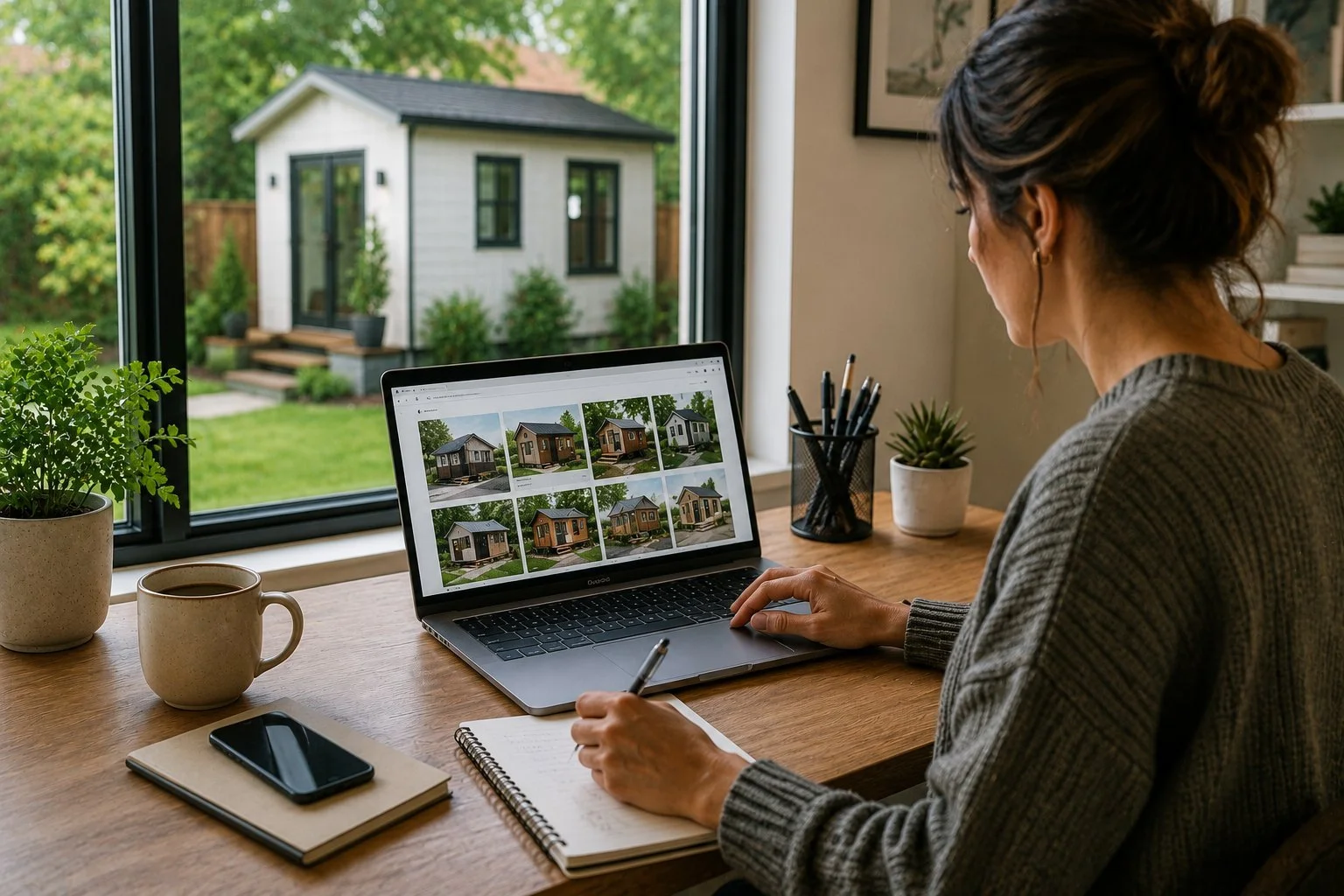
Whether you are leaning toward a tiny home as a primary residence or a prefab ADU on your existing property, the starting point is the same. Walk through the real models. Compare floor plans, finish levels, and pricing context. Talk to a builder about your specific situation. Get a realistic sense of timeline and cost.
If you want to see the lineup of factory built homes that work as either tiny homes or prefab ADUs, you can see tiny home and prefab ADU models and review real options side by side. Starting with real models is the fastest way to know which path fits your situation and which specific home matches your needs.
How factory built quality applies to both categories
Both tiny homes and prefab ADUs benefit from the same factory built quality advantages. The home is constructed indoors under controlled conditions. The same crews use the same materials and the same processes every day. Inspections happen continuously. Materials are protected from weather and stored consistently. The finished home arrives with the kind of quality consistency that site built construction struggles to match.
Tiny Home Cottages partners with manufacturers that have decades of experience producing small homes and cottage style dwellings. That manufacturing experience shows up in the finished product regardless of whether the home becomes a tiny home for primary residence or a prefab ADU on someone's property. Quality construction is quality construction, and it serves both use cases equally well.
Long term ownership for both paths
Long term ownership on either a tiny home or a prefab ADU follows similar patterns. Routine maintenance keeps the home in good condition. Periodic inspections of the roof, the seals, the anchoring, and the mechanical systems catch small issues before they become larger. Quality manufacturers stand behind the home with a warranty and a clear service process.
For tiny homes used as primary residences, the long term ownership experience mirrors a small house. The home is the address, the homeowner handles the property, and the routines of homeownership apply. For prefab ADUs on someone else's property, the long term experience involves coordinating with the main household on shared property considerations like landscaping, access, and utility billing.
Either way, the factory built foundation delivers a home that performs well over years of real use with normal maintenance.
Where buyers usually land
Buyers who start out unsure between tiny home and prefab ADU usually land based on their land situation. If they own a property with room for a second unit, the ADU path makes sense. If they need a new primary residence or a smaller home, the tiny home path makes sense. The home itself is similar. The use case is the differentiator.
For California and Oregon homeowners who already own a residential property, the prefab ADU path is the more common landing point. The home goes on existing land, serves a specific household need, and adds value to the property over time. Walking through the factory built lineup with a builder familiar with both paths makes the decision much easier.