
Comparing ADU Mobile Homes: Models, Sizes, and Features to Look For

ADU mobile homes cover a wider range of sizes, layouts, and feature levels than most buyers realize. Walking into the conversation expecting one type of home and ending up with another is more common than it should be. The buyers who do well in this category take the time to compare options carefully, ask the right questions, and match the home to the lot and the use case. The buyers who skip the comparison often end up paying for features they do not need or living without features they do.
This guide walks through how to compare ADU mobile homes effectively. It covers the common size ranges to consider, the difference between single story and lofted layouts, the cabin series and premium finish options, a feature checklist that matters for daily living, and how to shortlist your options for a real conversation.
Size ranges to consider
ADU mobile homes from Tiny Home Cottages come in several size ranges. At the smaller end, single story tiny homes offer compact, efficient living space designed for guest housing, long term homes for individuals or couples, and starter homes for adult children. The footprint fits on tighter lots while still delivering a real living experience inside.
Mid sized models, including lofted designs, deliver more usable square footage in a still-modest footprint. The lofted second level adds sleeping space without expanding the ground floor, which works on lots where setback rules limit the available area.
Larger models include HUD manufactured homes that generally range from approximately 400 square feet to 1000 square feet. These work as primary residences on smaller lots or as substantial detached units for extended family living. The added square footage opens up layout possibilities like separate bedrooms, larger kitchens, and dedicated living areas that smaller tiny homes cannot match.
The right size depends on the use case. A guest house used occasionally can be smaller. A long term home for a parent or adult child needs enough room for daily living, storage, and personal space. A primary residence for a downsizer often calls for the larger end of the lineup. Walking through the lot with the actual model dimensions in mind helps you decide what fits.
Single story vs lofted layouts
Single story layouts put the entire living space on one level. Kitchen, living, bath, and bedroom all sit on the ground floor. The interior feels open and accessible. Most single story models from Tiny Home Cottages have approximately nine foot ceilings throughout, which makes the space feel larger than the footprint suggests. For aging parents, accessibility needs, or buyers who prefer not to climb stairs daily, single story is the right answer.
Lofted layouts add a second level loft above the main living area. The loft is usually used for sleeping, which frees up the lower level for living, kitchen, and bath. Lofted floor plans pack more usable space into a smaller footprint, which matters when lot size or setback rules are tight. Steep roof pitches and large stacked windows give the home a distinctive look and a strong vertical presence.
Both styles work as long term residences. The right choice depends on who will live in the home and what they value. Younger residents and downsizers who appreciate space efficiency often prefer lofted models. Older residents and buyers focused on accessibility often prefer single story. Walking through both styles, if possible, or carefully comparing real floor plans is the fastest way to know which one fits.
Cabin series vs premium finishes
Beyond the size and layout decision, finish level is the next major comparison. Tiny Home Cottages offers standard single story models, premium single story models, and cabin series cottages, each with its own aesthetic and feature set.
Standard single story models offer modern layouts at an accessible price point. The finishes are clean and functional, the materials are durable, and the result is a home that works well for many use cases without the cost of upgraded features.
Premium single story models add upgraded interior finishes, modern floor plan refinements, and cement exterior siding. The upgrades show up in everyday touch points like cabinetry, countertops, fixtures, and trim. For buyers using the home as a primary residence or long term housing, the premium tier is usually worth the cost.
Cabin series cottages take a different aesthetic direction. The interior uses tongue and groove pine walls and ceilings. The exterior features metal roofing and fiber cement siding. The look is warmer and more rustic, which suits buyers who want the cottage to feel distinct from the main house or sit naturally on a property with natural surroundings.
The right finish level depends on the use case and the buyer's preferences. A short term guest house can do well with a standard finish. A long term home benefits from a premium or cabin finish. A primary residence for a downsizer usually calls for the upgraded finishes that match daily life expectations.
Feature checklist
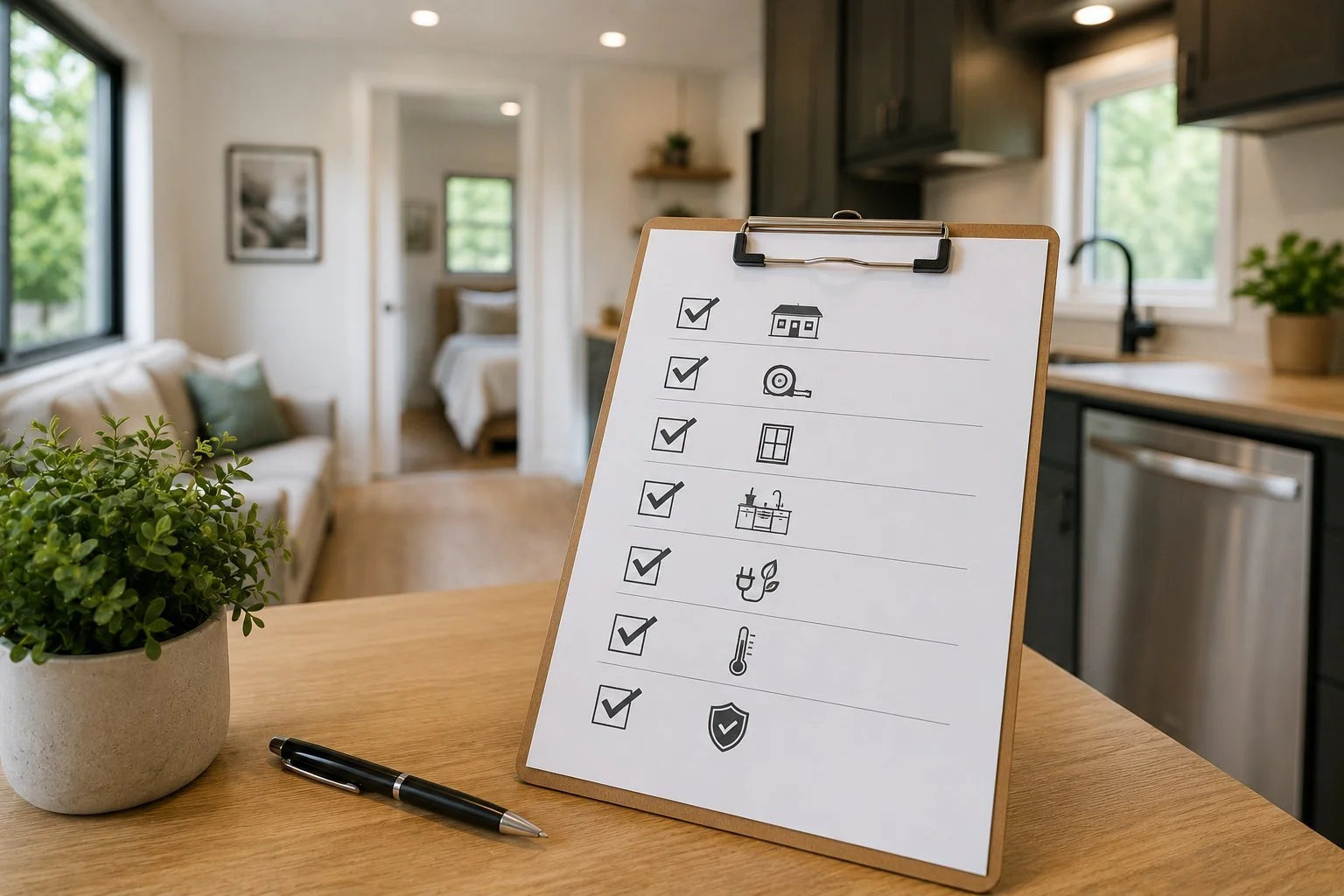
A feature checklist helps buyers compare ADU mobile homes on the same basis. The key items include the kitchen layout and storage, the bathroom design, the bedroom sizing, the closet space, the windows and natural light, the HVAC system, the water heater, the flooring throughout, and the exterior finishes.
Kitchens vary widely in usable counter space, cabinet storage, and appliance options. Bathrooms vary in shower size, sink configuration, and storage. Bedrooms vary in dimensions, closet placement, and window access. Closet and storage space is one of the most under-evaluated features and one of the most important for daily livability.
Windows and natural light matter for how the home feels day to day. More windows generally mean a brighter, more open feel. Window placement affects privacy as well as light. Larger windows facing the right direction transform the interior experience.
Mechanical systems matter for long term cost. A quality HVAC system handles heating and cooling efficiently. A reliable water heater meets daily needs. Energy efficient features reduce ongoing utility costs over years of use.
Exterior finishes affect both appearance and durability. Cement exterior siding is more durable than standard siding. Metal roofing on cabin series cottages handles weather differently than asphalt shingles. The exterior is the part of the home you see every day, so getting it right matters.
How to shortlist your options
Shortlisting ADU mobile home options goes faster when you follow a clear process. Start with the lot. Confirm the setback rules, the access path, and the utility connections. This eliminates models that simply cannot fit. Move from there to the use case. Match the size and layout to who will live in the home and how. This usually narrows the options to a small set.
Compare the remaining models on finish level and features. Look at floor plans side by side. Read through the included features. Note the upgrades available. Look at real photos of finished homes if available. Visit a display unit if possible.
Get itemized quotes for the final two or three models. Make sure each quote includes the home, delivery, set, anchoring, and any included options. Compare on a total delivered cost basis, not just unit price.
Talk through the financing path for the final candidates. Tiny Home Cottages often recommends 21st Mortgage Corporation, which specializes in manufactured and mobile home loans. Down payment options range from zero percent for highly qualified buyers to higher percentages depending on credit and property.
By the end of this process, the right model usually becomes obvious. The buyers who run through the comparison carefully tend to make confident decisions. The buyers who skip steps often find themselves second-guessing the choice later.
If you want to see the full lineup of ADU mobile home models with finish levels and floor plans, you can compare ADU mobile home models side by side and start your shortlist. Walking through real models is the fastest way to know what fits your property and your situation.
Common comparison mistakes
A few common mistakes show up when buyers compare ADU mobile homes. The first is comparing on unit price alone. The total delivered cost is what matters, and unit prices can hide significant differences in what is included.
The second is fixating on square footage without considering layout. A 400 square foot home with a smart layout often lives larger than a 500 square foot home with a poor layout. Walking through the actual floor plan, picturing where furniture goes, and thinking about daily routines tells you more than the raw number.
The third is underestimating finish level differences. A standard finish and a premium finish in the same model can feel like very different homes despite identical dimensions. Buyers who plan to use the home daily for years tend to be happier with upgraded finishes even though they cost more upfront.
The fourth is skipping the placement and delivery conversation. A model that looks great on paper might not fit your specific lot or might require expensive site work. Confirming placement and delivery details before locking in a model avoids surprises later.
How to make the final decision
The final decision usually comes down to which model best fits the combination of lot, use case, budget, and personal preference. Buyers who walk through the comparison carefully tend to know which model is right before they finish the process. The clarity that comes from systematic comparison is one of the most underrated parts of the buying experience.
A short consultation with a builder helps confirm the decision. The builder can review the shortlist, ask any final questions about your situation, and confirm that the chosen model actually fits before the order goes in. That last check protects against late-stage surprises.
Why comparing matters
Comparing ADU mobile home options before committing matters because the home is going to live on your property for years. A few hours of careful comparison upfront translates into a much better long term result. The buyers who put in the work tend to be the happiest with the home they end up living with day to day.