
ADU Builder Bend Oregon: Cost, Permits, and Property Requirements
Key Takeaways
Detached ADUs in Bend, Oregon typically cost in the low-to-mid six figures, often starting around $150,000–$200,000+ for a quality factory-built tiny home plus foundation, utilities, and site work.
The City of Bend allows one ADU per eligible residential lot, with specific setback, height, and parking rules that differ from Deschutes County or nearby communities like Redmond and Sisters.
Factory-built tiny homes and cottage-style ADUs from Tiny Home Cottages meet national building standards, speed up timelines, and reduce on-site disruption compared to traditional site-built construction.
The Bend permit process involves site feasibility, ADU design selection, building permit application, utility approvals, and inspections, with total timelines often running 6–12 months.
Financing options through lenders like 21st Mortgage Corporation can help Bend homeowners fund their ADU project with down payments as low as zero percent for well-qualified buyers.
Introduction: Building a Detached ADU in Bend, Oregon
A detached accessory dwelling unit is a smaller, independent home built on the same property as an existing home. In Bend, these structures go by many names: backyard cottages, tiny homes, granny flats, or simply ADUs. Property owners across Central Oregon are adding them to create extra living space for family members, generate rental income, or provide a comfortable place to downsize without leaving their neighborhood.
This article focuses specifically on Bend, Oregon and nearby Central Oregon communities, covering the costs, permits, and property requirements you need to understand before building a detached ADU. Whether you want to house aging parents, provide a guest house for visitors, or add a long-term rental to your property, the information here will help you plan your project with confidence.
Tiny Home Cottages specializes in factory-built tiny homes and cottage-style structures that work well as detached ADUs in Bend and throughout Oregon. This guide is written for homeowners who may be building an ADU for the first time, so we avoid overly technical construction jargon and focus on practical, actionable guidance.
What Is an ADU in Bend, Oregon?
An accessory dwelling unit in Bend is a smaller, independent home located on the same lot as a primary residence. It includes its own kitchen, bathroom, and sleeping area, making it a fully functional living space separate from the main house. Unlike a guest room or studio without a kitchen, an ADU is designed to support independent daily life.
Detached ADUs are freestanding structures positioned in a backyard or side yard. They include backyard cottages, tiny homes, and small manufactured homes. Attached ADUs, by contrast, involve converting a basement, garage, or adding onto the existing home. This article focuses on detached units because they offer the most flexibility for design, placement, and privacy.
Bend’s Development Code treats ADUs differently than simple additions or home improvements. The city sets specific size limits, requires utility connections, and regulates how the space can be used. These rules ensure that ADUs function as safe, code-compliant homes rather than informal structures.
Bend currently allows one ADU per eligible residential lot within city limits. However, rules differ significantly in Deschutes County outside city boundaries and in nearby towns like Redmond. Before you begin planning, confirm which jurisdiction governs your property and review the applicable regulations.
Property Requirements for ADUs in Bend
Before choosing a floor plan or contacting an ADU builder in Bend Oregon, you need to confirm that your property meets key zoning and lot standards. Not every lot qualifies, and understanding the requirements early saves time and money.
Zoning and Lot Standards
Most residential zones in Bend allow detached ADUs. The city’s RS (single-family residential) zones typically permit ADU construction on lots over 5,000 square feet without minimum size mandates. This means standard residential lots in established Bend neighborhoods often qualify. However, Deschutes County outside city limits may require larger minimum lot sizes, sometimes starting at 10,000 square feet or more.
Setback, Height, and Coverage Rules
Bend applies specific setback, height, and lot coverage standards to detached ADUs:
|
Requirement |
Typical Range in Bend |
|
Front setback |
20 feet |
|
Side setback |
5 feet (aggregate 12 feet) |
|
Rear setback |
10–15 feet |
|
Maximum height |
20–24 feet |
|
Lot coverage |
35–50% depending on zone |
These standards preserve neighborhood character while allowing homeowners to add functional square footage to their property. Your ADU design must fit within these parameters.
Access and Emergency Requirements
The city requires a safe path from the street to the ADU, typically a minimum 10-foot wide emergency vehicle access. Driveways and walkways may need adjustments around existing landscaping. Trees larger than 6 inches in diameter that obstruct required setbacks can complicate placement, so evaluate your site carefully.
HOA and Design Restrictions
Some Bend neighborhoods have homeowner associations that impose additional aesthetic requirements. Communities like Awbrey Butte may require matching siding, roofing materials, or color schemes. These covenants can add 10–20% to design costs. Always check CC&Rs and HOA rules in addition to city code before finalizing plans.
Bend ADU Permits and Approval Process
Building an ADU in Bend requires formal permits and inspections, even when using a factory-built tiny home or manufactured cottage. The permitting process confirms that your project meets local zoning, building safety, and utility standards.
Typical Permit Steps
The Bend permit process generally follows these stages:
Feasibility review – A free pre-application conference with the city to discuss your plans and confirm basic eligibility
Site plan preparation – Submit a survey and conceptual site layout showing the ADU placement, setbacks, and access
ADU design selection – Choose your floor plan and finalize construction documents or select a pre-approved city plan
Building permit application – Submit engineered plans with required fees (typically $2,000–$5,000 depending on project size)
Plan review – City staff reviews your application for code compliance (usually 4–8 weeks, faster with pre-approved plans)
Utility approvals – Coordinate with Bend Public Works for water and sewer connections and local providers for gas and electric
Inspections – Phased inspections during construction: foundation, framing, rough-in, and final
Certificate of occupancy – Once approved, you can legally occupy or rent the ADU
Factory-Built Homes and Local Compliance
Factory-built homes from Tiny Home Cottages are constructed under national building code standards in a controlled environment. However, Bend still reviews the foundation design, utility connections, and site work for local compliance. HUD-code manufactured homes require data plate verification plus local foundation sign-off.
Timeline Expectations
Plan on several weeks to a few months for permitting alone, depending on workload and plan completeness. Using Bend’s pre-approved ADU plans can cut review time to 2–4 weeks. The city’s Community Development Department processes applications in order, and winter months may add delays due to excavation restrictions.
Documents to Gather Early
Prepare these items before starting:
Property survey or recent site plan
Utility information (water, sewer, gas, electric locations)
Title or parcel number
HOA approval letter if applicable
ADU Cost in Bend, Oregon
Detached ADU projects in Bend typically land in the low-to-mid six figures. Total cost depends on structure type, site conditions, finishes, and utility connections. Understanding the cost breakdown helps you budget realistically.
Base Home Cost vs. Site Work
A factory-built tiny home or cottage from Tiny Home Cottages has a predictable base price for the structure itself. However, site-related costs in Bend are separate and can vary significantly:
|
Cost Component |
Typical Range |
|
Factory-built home (400–800 sq ft) |
$60,000–$200,000 |
|
Permanent foundation |
$15,000–$25,000 |
|
Utility connections (water, sewer, electric) |
$10,000–$25,000 |
|
Permits and engineering |
$5,000–$15,000 |
|
Delivery and set |
$5,000–$15,000 |
|
Site grading and driveway |
$5,000–$15,000 |
Cost by Size
Smaller studio or one-bedroom units around 400–600 square feet typically cost less overall, while larger cottages or HUD manufactured homes approaching 1,000 square feet require higher budgets:
Small studio ADU (300–500 sq ft): $120,000–$180,000 total
One-bedroom cottage (500–700 sq ft): $175,000–$275,000 total
Larger manufactured home (800–1,000 sq ft): $250,000–$400,000 total
These ranges include the home, foundation, utilities, and permits for a typical Bend lot.
Central Oregon Cost Drivers
Several factors specific to Central Oregon can push costs higher:
Long utility runs across large lots ($15,000–$25,000 for 100+ foot trenches)
Rocky volcanic soil requiring specialized excavation ($5,000–$15,000 for rock blasting)
High snow load requirements (47 psf ground snow load) adding structural costs
Sloped lots needing pier foundations instead of slabs ($15–$20/sq ft vs $8–$12/sq ft)
Premium materials like metal roofing and triple-pane windows for climate resilience
Budget for Contingencies
Experienced ADU builders recommend budgeting a 15–20% contingency for surprises uncovered during excavation or utility work. An early site visit and feasibility review help tighten cost estimates and reduce unexpected expenses.
Factory-Built Tiny Homes as Detached ADUs in Bend
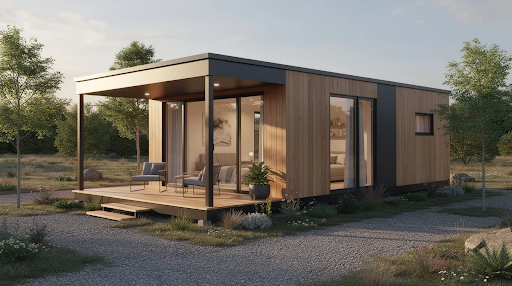
Factory-built construction offers significant advantages for Bend homeowners building accessory dwelling units. Tiny Home Cottages works with experienced manufacturers that construct homes in controlled environments under national building codes, delivering consistent quality and predictable timelines.
Why Factory-Built Works in Bend
Building ADUs on-site in Central Oregon means dealing with weather conditions that can halt construction for months. Snow typically stops excavation and foundation work from November through March. Factory-built homes avoid these delays because the structure is completed indoors while site preparation happens simultaneously.
Key benefits include:
Consistent construction quality regardless of weather
Reduced on-site build time (often 3–6 months faster than site-built)
Less disruption to neighbors with shorter installation periods
Strict adherence to national building standards with quality assurance protocols
Home Models Available
Tiny Home Cottages offers several product lines suitable for Bend ADU projects:
Single story tiny homes – Entry-level homes with modern layouts and approximately nine-foot ceilings throughout. Base prices start around $50,000–$80,000.
Premium single story cottages – Upgraded features including cement exterior siding, modern floor plans, and enhanced finishes. Typically $70,000–$100,000.
Lofted tiny homes – A second-level loft provides extra sleeping or storage space. Features steep roof pitches and large stacked windows. $80,000–$120,000 range.
Cabin series cottages – Natural cabin-style finishes with tongue and groove pine walls and ceilings, metal roofing, and fiber cement siding. Ideal for wooded Bend lots. $90,000–$140,000.
HUD manufactured homes – Larger homes ranging from approximately 400 to 1,000 square feet, offering more space for multigenerational living arrangements. $120,000–$200,000.
Meeting Code Requirements
When placed on a permanent foundation and properly permitted, these factory-built structures function as code-compliant detached ADUs in Bend. They include full kitchens, bathrooms, and independent living areas that meet all requirements for occupancy.
Consider how each style fits your property: cabin series for a wooded lot in Bend or Sisters, lofted designs for capturing mountain views, or HUD manufactured homes for larger family setups.
Design Considerations for Bend ADUs
Smart ADU design is critical in Bend, where lot constraints, views, and snow loads all influence how your new construction will feel and function throughout the year.
Choosing the Right Size
Your ADU’s purpose drives size selection:
Studio or efficiency (300–450 sq ft): Best for single occupants, home office, or guest house
One-bedroom (450–650 sq ft): Suitable for couples, long-term rentals, or downsizing homeowners
Two-bedroom (650–1,000 sq ft): Ideal for families, multigenerational living, or higher rental income potential
Interior Design for Small Spaces
Maximizing livability in smaller square footage requires thoughtful layout choices:
Open-concept main rooms combining kitchen, dining, and living areas
Built-in storage that saves 20% of usable floor space
Multi-use furniture like Murphy beds or convertible dining tables
High ceilings (9 feet or more) to create an airy, spacious feel
Large windows positioned for natural light and mountain views
Climate-Specific Choices
Bend’s climate demands durable materials and energy-efficient design:
Exterior siding rated for snow, sun, and temperature swings (HardiePlank or fiber cement)
Well-insulated building envelopes exceeding minimum R-values (R-21 walls vs R-19 minimum)
Roof designs that handle 50 psf live loads and shed snow effectively
South-facing windows for passive solar gain during cold winters
PEX plumbing for freeze protection
Tiny Home Cottages offers multiple layouts and finish levels so Bend homeowners can select models that balance function, style, and budget while meeting all local code requirements.
Utility Connections, Foundations, and Site Work
Beyond the ADU structure itself, every Bend project must include code-compliant foundation, utility connections, and site work tailored to Central Oregon conditions. These elements significantly affect your cost and schedule.
Foundation Options
Bend requires permanent foundations for ADUs. Common options include:
Monolithic concrete slab: $8–$12 per square foot, suitable for flat lots with good drainage
Frost-protected slab: Required at 36-inch depth minimum for freeze protection
Pier foundation: $15–$20 per square foot, better for sloped lots common on Bend’s west side
Your general contractor or installer will recommend the best approach based on soil conditions and terrain.
Utility Connections
Most ADUs in Bend connect to city water and sewer, which reach approximately 80% of lots within city limits. Typical connection costs:
Water and sewer tap fees: $8,000–$15,000
Trenching for 100-foot utility runs: $10,000–$20,000
Electric service (200A split or 100A subpanel): $3,000–$5,000
Natural gas connection where available, or propane tank installation: $3,000–$5,000
Properties outside sewer service areas may require septic system expansion, adding $20,000–$40,000 to the project.
Site Work Elements
Prepare for these additional site work costs:
Grading for proper drainage (2% minimum slope away from structures)
Driveway or parking area if required by code
Walkways connecting the ADU to the main house and street
Permeable pavers or gravel pads for parking ($2,000–$5,000)
Landscaping restoration after construction
Snow management planning for roof drainage and access paths
An early site visit with your ADU builder or consultant identifies these factors before they become budget surprises.
Financing Options for ADUs and Tiny Homes in Bend
Most Bend homeowners use financing to build a detached ADU or purchase a factory-built tiny home. Several options exist depending on your credit profile, equity position, and property type.
21st Mortgage Corporation
Tiny Home Cottages commonly refers buyers to 21st Mortgage Corporation, a lender specializing in manufactured and factory-built home loans. This lender has decades of experience financing small homes and cottage-style dwellings.
Typical terms include:
Interest rates around 6–9% depending on credit and down payment
Loan terms of 15–20 years
Down payments ranging from 0% for well-qualified buyers (credit scores above 720) to 10% or more
Loans available for homes on permanent foundations
Loan Application Process
The financing process follows a straightforward path:
Choose a home model that fits your needs and budget
Complete a loan application through the lender
Receive loan approval and review financing terms
Lock your interest rate and submit required documentation (ID, income verification, bank statements)
Sign closing documents and finalize the loan
Once completed, funds are distributed and the home purchase moves forward
Alternative Financing
Other options to consider:
Home equity line of credit (HELOC): 5–7% variable rates for equity-rich homeowners
Cash-out refinance: Access equity in your existing home
Construction loans: For site-built ADUs or complex projects
Personal loans: Higher rates but faster approval for smaller amounts
Always consult a financial professional for personalized advice on which option fits your situation.
Rental Income Potential
Strong rental demand in Bend can help offset ADU payments. Long-term rentals for 400–800 square foot units typically command $1,800–$2,500 monthly in Central Oregon. Many owners recoup their ADU investment in 5–8 years through rental income, though you should factor in local regulations and any short-term rental restrictions.
How to Choose an ADU Builder or Tiny Home Provider in Bend
Partnering with experienced professionals who understand Bend and Central Oregon permitting, snow load requirements, and local construction practices makes the difference between a smooth project and a frustrating one.
Evaluation Criteria
When selecting ADU builders or a factory-built home provider, look for:
Local experience: Track record of completed detached ADUs or factory-built home installations in Bend
Licensing and insurance: Active CCB license in Oregon, $1M+ liability coverage
Warranty coverage: 1–2 year warranties on workmanship and coordination services
Code familiarity: Knowledge of Bend’s Development Code, setback requirements, and utility processes
Clear communication: Responsive team that answers questions and provides regular updates
Questions to Ask
Before signing any contract:
How many ADU projects have you completed in Bend?
Do you coordinate with factory manufacturers for delivery and set?
What does your written scope of work include?
How do you handle cost overruns or unforeseen site conditions?
Can you provide references from recent Bend clients?
Transparent Pricing
Look for contractors who provide itemized cost breakdowns separating the home unit from all site-related work. Understand whether pricing is cost-plus (typically 10–15% markup) or fixed bid, and what contingencies are included.
Working with Tiny Home Cottages
Tiny Home Cottages serves as a resource for Bend homeowners navigating the ADU process. The team can assist with choosing the right home model, coordinate with installers and site contractors, and answer questions about feasibility, permitting, and financing throughout your project.
Steps to Get Started on Your Bend ADU Project
Ready to move forward? Here’s a simple roadmap to launch your ADU project:
Step 1: Confirm Jurisdiction and Zoning
Verify whether your property falls under City of Bend or Deschutes County jurisdiction. Check your zoning designation to confirm ADU allowance. Gather basic property information including your parcel number and existing utility locations.
Step 2: Schedule a Site Review
Arrange a site visit or feasibility discussion to evaluate access, slopes, large trees, and available space for a detached unit. This is especially important on smaller Bend lots where placement options are limited.
Step 3: Define Your ADU Goals
Narrow down your intended use:
Family housing for aging parents or adult children
Multigenerational living with separate but nearby spaces
Downsizing while staying on your property
Long-term rental for supplemental income
Your goals affect floor plan selection and size requirements.
Step 4: Select a Home Model
Browse Tiny Home Cottages’ gallery of factory-built tiny homes and cottage-style ADUs. Create a shortlist of models that appeal to you, then work with the team to confirm that your chosen design fits Bend’s property requirements and setback rules.
Step 5: Contact Tiny Home Cottages
Reach out to discuss your project, explore financing options through lenders like 21st Mortgage Corporation, and get expert guidance on next steps. The team can help you understand costs, review your property’s feasibility, and connect you with qualified local installers.
Building a detached ADU in Bend starts with understanding your property, your goals, and your options. With the right preparation and the right team, you can add valuable living space to your home while meeting all local requirements.
Contact Tiny Home Cottages today to explore models, view photos of completed cottages and tiny homes, learn more about costs, and discuss next steps for your Bend ADU project.
FAQ About ADU Builder Bend Oregon
Can I place a factory-built tiny home in my Bend backyard as a legal ADU?
In many cases, yes. A factory-built tiny home or HUD manufactured cottage can serve as a legal detached ADU in Bend when installed on a code-compliant permanent foundation and fully permitted by the City of Bend. The city reviews the structure’s certification, foundation plans, utility connections, and site layout to ensure it meets local zoning and building standards. Plan your project as a full ADU, not as a temporary RV or park model. Contact local planning staff or Tiny Home Cottages early to verify that your specific model and installation approach align with current regulations.
How long does it take to complete a detached ADU project in Bend?
Timelines vary, but many Bend ADU projects require several months for planning and permits plus several more months for site work and installation. Factory-built construction can shorten the on-site phase since the home is built in the factory while foundation and utility work happens simultaneously. Plan on a total window of roughly 6–12 months from initial feasibility conversation to move-in, depending on complexity, weather conditions, and permitting workload.
Are there rental restrictions for ADUs in Bend, Oregon?
Bend allows long-term rental of ADUs in residential zones, which is why many property owners build them for supplemental income or workforce housing. Short-term rentals like nightly vacation rentals face stricter regulation under Bend’s 2023 ordinance, which limits them to owner-occupied properties in residential zones. Check Bend’s current short-term rental rules and any HOA covenants before planning to operate an ADU as a vacation rental.
Do I need extra parking when I add an ADU in Bend?
Bend’s parking requirements for ADUs have evolved and may depend on location, access to transit, and zoning district. Properties within a quarter mile of transit corridors may not require additional parking, while others may need at least one off-street space per ADU bedroom. Confirm parking expectations with Bend’s planning department early in the design process so any driveway or parking changes can be included in your site plan.
Can I live in the ADU and rent out my main house in Bend?
In many situations, Bend does not require owners to live in the primary home specifically, allowing flexibility to occupy the ADU and rent the main house on a long-term basis. However, rules can change and may differ for certain zoning districts or overlay areas. Confirm current owner-occupancy rules before finalizing plans, and discuss your long-term vision with both your builder and the City of Bend to ensure your ADU investment aligns with your intended use.