
ADU Builder Eugene Oregon: The Ultimate Guide for Homeowners
Key Takeaways
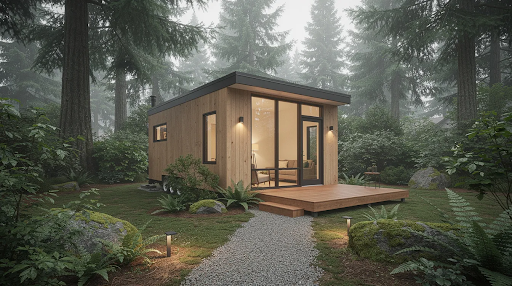
Eugene, Oregon is an excellent market for detached ADUs, tiny homes, and backyard cottages, especially for multigenerational living and rental income opportunities driven by University of Oregon students, healthcare workers, and local professionals.
Tiny Home Cottages offers factory built detached ADU-style homes including tiny homes, cottages, and HUD manufactured homes that can be placed on Eugene-area properties.
Factory construction provides significant advantages for Eugene homeowners: consistent quality, fewer weather delays in Oregon’s rainy climate, and predictable timelines compared to site-built projects.
Eugene’s ADU rules are generally supportive under Oregon state law, but homeowners must still navigate zoning, permits, and utility connections with professional guidance.
Homeowners should review Tiny Home Cottages’ models, explore financing through lenders like 21st Mortgage Corporation, and request a consultation for their Eugene property.
Why Eugene, Oregon Homeowners Are Turning to ADU Builders
Eugene faces a housing shortage where inventory lags population growth significantly, fueled by over 24,000 University of Oregon students, major employers like PeaceHealth Sacred Heart Medical Center with more than 4,500 employees, and a growing tech and creative sector. For homeowners looking to create space on their existing property, working with an ADU builder in Eugene, Oregon has become one of the most practical solutions to address these housing pressures.
A detached accessory dwelling unit is essentially a separate, self-contained home on the same lot as your primary home. Unlike a room addition or basement conversion, a backyard cottage or tiny home operates independently with its own kitchen, bathroom, and sleeping area. This privacy and flexibility is what makes detached ADUs so appealing for Eugene homeowners.
Top reasons Eugene homeowners seek an ADU builder:
Housing aging parents who need proximity to family but value independence
Providing a home for adult children saving for their own property
Creating guest homes for visiting family or long-term visitors
Generating rental income from university-related tenants or local professionals
Accommodating caregivers who need to live close to those they support
Downsizing while keeping the main house as an income-producing asset
Detached ADUs, Tiny Homes, and Backyard Cottages in Eugene
When Eugene homeowners explore their ADU options, detached backyard units consistently stand out as the most flexible choice. These include tiny homes, cottage-style ADUs, granny flats, and small manufactured homes that sit separately from the main house.
Main detached options relevant to Eugene properties:
|
Home Type |
Typical Size |
Key Features |
|
Single-story tiny homes |
200-400 sq ft |
Open layouts, ~9 ft ceilings, accessibility-friendly |
|
Lofted tiny homes |
400-600 sq ft total |
Second-level loft, steep roofs, stacked windows |
|
Cabin series cottages |
400-800 sq ft |
Tongue-and-groove pine, metal roofing, rustic charm |
|
HUD manufactured homes |
400-1,000 sq ft |
Multi-bedroom, full kitchens, larger storage |
Each of these structures can serve as a full independent living space with a private kitchen, bathroom, sleeping area, and sometimes laundry. This makes them ideal for full-time occupancy rather than just occasional guest use.
In Eugene’s neighborhoods like Friendly Area and South Eugene, homeowners use these units for everything from guest suites to student rentals pulling $1,200-1,800 monthly. River Road and Santa Clara properties often accommodate multigenerational arrangements where grandparents maintain independence while staying close to family.
Compared to attached ADUs or garage conversions, detached backyard cottages offer superior privacy, more design flexibility, and often higher resale appeal. The trade-off is that they typically require more yard space and separate utility connections.
Factory Built ADUs vs. Site-Built Construction in Eugene’s Climate
Eugene receives over 40 inches of annual rainfall, with most concentrated during fall and winter months. For traditional site-built construction, this translates to schedule slips, material damage, and unpredictable timelines that frustrate homeowners and inflate budgets.
Factory built homes are constructed indoors under national building codes, completely protected from weather conditions that would otherwise halt or compromise an on-site project. This controlled environment allows for consistent craftsmanship regardless of what’s happening outside.
Key benefits for Eugene homeowners choosing factory construction:
Fewer weather delays since building happens inside climate-controlled facilities
Reduced material damage from rain exposure during framing and finish work
Consistent quality checks at multiple stages of construction
More predictable completion dates, often 8-12 weeks for factory completion
Minimized neighborhood disruption with only 1-2 days of on-site installation
Traditional site-built ADU projects in Lane County often face 20-30% delays due to weather-induced issues like material warping, mud-compacted foundations, and labor shortages during rainy seasons. Industry reports indicate 15-25% material waste from moisture exposure alone on many site-built projects.
Once a factory built unit is complete, it’s transported to your property and installed on a prepared foundation or support system. The result is far less noise, traffic, and construction chaos compared to months of on-site building.
How Tiny Home Cottages Builds for Quality and Consistency
Tiny Home Cottages specializes in factory built tiny homes and detached ADU-style cottages designed for Oregon homeowners. These homes are constructed in controlled factory settings under national building standards by manufacturers with decades of experience in small-home construction.
The factory process delivers quality-focused details that matter for long-term durability:
Consistent framing with tolerances often within 1/8 inch
Precise cuts using automated equipment
Climate-controlled material storage preventing warping and moisture damage
Standardized inspection checkpoints at multiple stages
Sealed windows and weather-stripped doors designed for moisture resistance
For Eugene’s wet winters and mild summers, this approach translates to solid doors that seal properly, straight walls that stay straight, tight windows that prevent moisture intrusion, and fewer callbacks after move-in. Factory-built units typically show warranty claims 40% lower than their site-built counterparts.
ADU Models and Styles That Work Well in Eugene
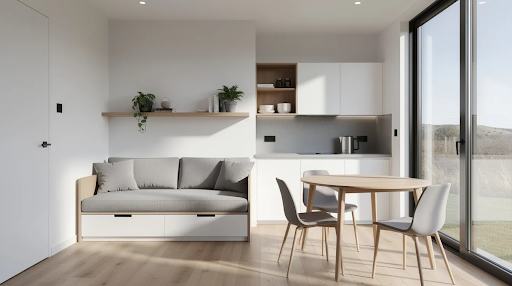
Choosing the right ADU model depends on your lifestyle, lot size, and budget. Eugene homeowners have several distinct options, each suited to different needs and property configurations.
Tiny Home Cottages offers five main categories:
Single story tiny homes – Entry-level with modern layouts and approximately nine-foot ceilings
Premium single story tiny homes – Upgraded finishes, cement exterior siding, contemporary kitchens
Lofted tiny homes – Second-level loft, steep roof pitches, large stacked windows
Cabin series cottages – Natural tongue-and-groove pine, metal roofing, fiber cement siding
HUD manufactured homes – Larger units from roughly 400-1,000 square feet
Eugene-style aesthetics work well with these designs: Northwest modern with large windows for overcast days, steep roofs that shed rain efficiently, or cabin finishes that complement wooded backyards near Spencer Butte or the Willamette River.
Single Story and Premium Single Story Tiny Homes
Single story tiny homes typically feature approximately nine-foot ceilings, modern open layouts, and easy accessibility for older adults or family members with mobility challenges. These barrier-free designs make them ideal for aging-in-place scenarios.
Premium single story models add upgraded features that perform well in Oregon weather:
Cement exterior siding (like James Hardie plank) for durability and low maintenance in rain
Enhanced dual-pane windows with low U-factors for energy efficiency
Contemporary kitchens with upgraded counters and fixtures
Eugene-specific use cases include:
Long-term rentals for university staff seeking quiet, private housing
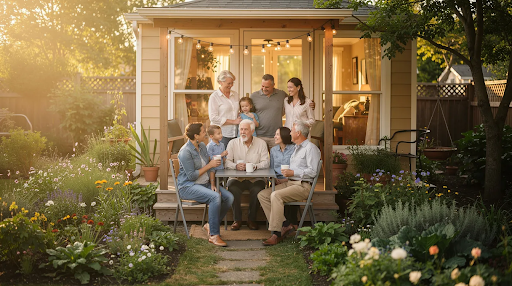
Comfortable homes for grandparents wanting independence near family
Downsized primary residences for empty nesters
Guest suite for regular visitors
These floor plans work particularly well on modest city lots where height and massing need to blend with existing Craftsman or traditional homes in established neighborhoods.
Lofted Tiny Homes and Cabin Series Cottages
Lofted tiny homes add a second-level loft, steep roof pitches, and stacked clerestory windows that boost natural light by approximately 30% even on overcast Eugene days. These bright, airy spaces appeal to younger residents, students, or small families.
The lofted layout works best for:
Sleeping quarters in the upper loft, freeing main floor for daily living
Flexible storage space above the main living area
Maximizing livable square footage on smaller footprints
Cabin series cottages feature tongue-and-groove pine interiors, metal roofing with 50+ year lifespans, and fiber cement siding that resists moss and mold. These homes offer a cozy, cabin-in-the-woods aesthetic even within Eugene city limits.
Cabin cottages fit beautifully on larger, more wooded lots around the outskirts of Eugene and in nearby communities like Springfield or Creswell where rustic style complements the natural surroundings.
HUD Manufactured Homes as Larger ADU-Style Units
HUD manufactured homes typically range from roughly 400 to 1,000 square feet and function as substantial detached ADU-style residences. These homes follow federal HUD standards including wind resistance ratings and energy efficiency requirements that meet or exceed current codes.
For homeowners who want more extra space than a compact tiny home provides, HUD manufactured homes offer:
Multiple bedrooms for full-family use
Larger kitchens with more counter and storage space
Full-size laundry areas
More defined room layouts rather than open plans
Common placements include side yards or back portions of deeper lots in Lane County where space and access allow for larger units. These models work well for permanent multigenerational housing where grandparents or adult children need a complete home rather than a studio-style dwelling.
ADU Uses in Eugene: Real-World Scenarios for Homeowners
Eugene’s real housing pressures—limited inventory, rising rents, and constrained infill lots—drive practical ADU use cases that make financial and personal sense for local homeowners.
Realistic scenarios Eugene homeowners pursue:
Parents in a single-story cottage near Riverbend Hospital for easy medical access
University of Oregon student in a lofted unit, leasing at market rates around $1,400 monthly
Separate backyard office and guest suite in a 300 square foot cottage
Adult children living rent-free while saving for their own future home purchase
Downsizing homeowners living in a HUD manufactured home while renting the main house for $2,500+ monthly
Tiered multigenerational setup: grandparents in a single-story ADU, parents in the main home, adult kids in a lofted tiny home
These arrangements address real needs while building long-term value on the property.
Rental Income and Investment Potential
A detached ADU in Eugene can provide steady passive income, especially with consistent demand from university-related tenants and local healthcare professionals. Average one-bedroom rents in Eugene hover between $1,200 and $1,600 monthly, with vacancy rates around 2.5%.
Before pursuing rental strategies, homeowners should:
Check local regulations regarding long-term versus short-term rentals
Review any HOA limitations that may restrict rental terms
Understand that Eugene caps certain short-term rental arrangements under city code
Well-designed detached ADUs can increase overall property value by 15-25% according to appraisal data, adding a legal, self-contained second dwelling to your investment. Factory built units accelerate the path from concept to occupied rental compared with drawn-out site-built projects, enhancing your return timeline.
Rather than promising specific rental amounts, homeowners should research current Eugene rental rates and consult local professionals who understand the market.
Navigating Eugene ADU Rules, Zoning, and Permits
While Eugene and Oregon have generally supportive policies for ADUs under laws like Oregon HB 2001, each property still needs careful review for setbacks, height limits, and utility access before moving forward with your dream project.
The first step is confirming whether your property falls inside the City of Eugene limits or in unincorporated Lane County, as rules may differ between jurisdictions.
Typical zoning considerations for detached ADUs:
Maximum ADU size relative to the primary home (often 1,000 sq ft or 50% of main house)
Required setbacks from property lines (typically 4-5 feet in residential zones)
Height limits for detached structures (generally 20-25 feet)
Lot coverage maximums that include all structures on the property
Main permit types usually required:
|
Permit Type |
Purpose |
|
Planning/Land use review |
Confirms zoning compliance and placement |
|
Building permit |
Covers the structure itself |
|
Electrical permit |
For wiring and panel connections |
|
Plumbing permit |
For water and drain connections |
|
Mechanical permit |
For HVAC systems |
Working with professionals familiar with Eugene’s current ADU regulations is essential. The city offers nearly a dozen pre-approved plans including a free “Reach Residence” option that can streamline the permitting process for qualifying projects.
How a Factory Built Approach Fits into the Local Permitting Process
Even though a factory built home is constructed under national standards, site work in Eugene still requires local review and permits. The city or county typically reviews:
Foundation or support systems
Utility connections (water, sewer or septic, electrical)
Site access for delivery
Any grading or driveway changes
Using standardized, pre-engineered home designs can make reviews more predictable than completely custom site-built plans. Many pre-certified designs reduce approval times by 20-30% compared to custom submissions.
Experienced ADU partners who understand local requirements can coordinate with officials, keeping your adu project organized and on schedule. Early conversations about utilities—especially septic systems in unincorporated Lane County—help homeowners understand any upgrade costs before committing to a specific unit size.
The ADU Builder Process in Eugene: From Idea to Move-In
The journey from initial idea to move-in typically follows a predictable sequence: site review, model selection, financing, permitting, site preparation, delivery, and final inspections. Understanding this streamlined process helps homeowners set realistic expectations.
Factory built detached ADUs can simplify and shorten the actual building phase, while planning and permits remain critical early steps that require attention and patience. Timelines vary depending on jurisdiction workload, site complexity, and chosen model.
Step 1: Property Evaluation and Site Feasibility
The first step is reviewing your Eugene or Lane County parcel to assess feasibility:
Lot size and configuration
Access for delivery trucks (typically requiring 20x40 ft clear zones)
Slopes, trees, and other obstacles
Distance to existing utilities (under 100 ft is ideal)
Homeowners should gather basic information including their address, zoning designation if known, and any existing surveys or site plans. A provider like Tiny Home Cottages can review aerial imagery, basic measurements, and local zoning information to suggest feasible placement options.
Early feasibility checks prevent surprises like easements, steep grades, or limited access for home delivery. Many typical Eugene lots can support a detached ADU or tiny home with proper planning.
Step 2: Selecting the Right Tiny Home or Cottage Model
Once site feasibility is confirmed, homeowners compare floor plans, sizes, and styles to match their goals, budget, and site constraints.
Focus on practical factors:
Number of bedrooms needed
Accessibility requirements (stairs vs. no stairs)
Storage needs
Natural light priorities for Eugene’s often overcast days
Lot shape (narrow lots need different footprints than deep backyards)
If the ADU will house relatives or long-term guests, include their input to ensure the chosen layout truly fits their needs. Review photos, example layouts, and when available, in-person or virtual tours of similar units before making your final decision.
Step 3: Financing Your Eugene ADU
Detached factory built homes are often financed differently than standard site-built additions. Tiny Home Cottages frequently recommends 21st Mortgage Corporation, a lender that specializes in manufactured and tiny home financing with decades of industry experience.
Basic loan application journey:
Choose a home model that fits your needs and budget
Complete a loan application through the lender
Receive loan approval and review financing terms
Lock the interest rate and submit required documentation
Sign closing documents and finalize the loan
Down payments can range from zero percent for well-qualified buyers to higher amounts depending on credit profile and property conditions. Homeowners should discuss total project costs with their lender, including site work, permits, and utilities—not just the home itself.
Step 4: Permitting, Site Work, and Delivery
The permitting process involves submitting required plans and documents to the City of Eugene or Lane County, paying applicable fees, and waiting for approval. Current permit fees typically run $5,000-10,000 depending on project scope.
Site work includes:
Foundation or support system installation ($10,000-20,000 typical range)
Trenching for utility connections
Preparing access routes for home delivery
Any necessary grading adjustments
Once the factory built unit is complete, it’s transported to the property and installed—usually requiring only 1-2 days on-site compared to months for traditional construction. Final inspections cover both the home installation and local site work, after which the ADU can be occupied.
Maintaining clear communication with your builder or home provider keeps scheduling and required inspections on track for the final touches.
Choosing an ADU Builder or Tiny Home Provider in Eugene
Selecting the right partner for your adu project is as important as choosing the right floor plan. The team you work with will guide you through decisions that affect your budget, timeline, and final results.
Key qualities Eugene homeowners should seek:
Experience with ADUs or factory built units in Oregon
Familiarity with Eugene and Lane County codes
Transparent pricing without hidden fees
Responsive communication throughout the process
Positive reviews from recent clients
For detached factory built homes, homeowners typically work with both a home provider and local contractors for foundation, utilities, and site finishes. Trusted adu builders understand this coordination and can help connect the pieces.
Questions to Ask Prospective ADU Partners
Before committing to any general contractor or home provider, ask these practical questions:
What experience do you have with Eugene ADUs specifically?
What are typical timelines from start to move-in?
What is included in the base price, and what costs extra?
How do changes or upgrades affect the total cost?
How will you handle communication and project updates?
What warranties cover the home and the site work?
Who do I contact if issues arise after completion?
Request a written scope of work and clear explanation of any homeowner responsibilities like landscaping or driveway changes. Choose a partner who explains technical topics in plain language and demonstrates genuine passion for helping homeowners achieve their vision.
Working with Tiny Home Cottages for Your Eugene ADU
Tiny Home Cottages helps Eugene homeowners navigate model selection, factory builder coordination, financing referrals, and guidance through the entire process. Their construction services focus on delivering quality factory built homes designed for Oregon conditions.
Available home types include:
Modern single story tiny homes with open layouts
Premium models with cement siding and upgraded finishes
Lofted designs for maximizing living space
Cabin series cottages with natural wood interiors
HUD manufactured homes for larger space requirements
All homes are built under national building codes in controlled factory environments, supporting quality, consistency, and accountability that site-built projects often struggle to match. The craftsmanship reflects decades of small-home building experience.
Tiny Home Cottages can connect homeowners with lenders like 21st Mortgage Corporation and local contractors for site preparation and installation support. Whether you’re expanding your property’s potential for multigenerational living or exploring passive income opportunities, they can help you find the right path forward.
Ready to explore your options? Review available models, view photos of completed homes, and contact Tiny Home Cottages to discuss your Eugene property and start planning your project.

FAQ: ADU Builder Eugene Oregon
How long does it typically take to add a detached ADU or tiny home in Eugene?
Timelines vary, but a realistic range from initial planning through move-in might be four to twelve months depending on permitting workload, financing complexity, and site preparation needs. Factory built homes often shorten the construction phase significantly—typically 8-12 weeks for factory completion—because the unit is built indoors while site preparations can occur in parallel.
Local permit review times in Eugene fluctuate with city workload, so ask your provider for current estimates. Build in extra time for design decisions, utility coordination, and any necessary inspections. Sustainability in your planning approach helps avoid rushed decisions that could affect long-term satisfaction.
Can I live in a factory built tiny home or ADU full-time in Eugene?
Yes, many factory built tiny homes and HUD manufactured homes are designed for full-time living when placed and permitted correctly as a dwelling. Full-time use typically requires proper permits, code-compliant utility connections for electrical, plumbing, and HVAC, and adherence to local zoning requirements in Eugene or Lane County.
Clarify whether your home will be permitted as an ADU, manufactured home, or other classification, as this affects long-term use rules. Discuss your full-time living plans with both the home provider and local planning staff early in the process. Note that RV or temporary shelter rules don’t apply if you intend year-round permanent residence.
What kind of maintenance do factory built ADUs need in Oregon’s climate?
Maintenance needs are similar to any small house: periodic roof care, exterior siding upkeep, caulking around windows, and routine HVAC servicing. Durable materials commonly used on Tiny Home Cottages models—fiber cement siding and metal roofing—are specifically chosen to perform well in wet, cool Northwest conditions.
Recommend periodic inspections for moisture management: checking gutters, downspouts, and grading to ensure water drains away from the structure. Following manufacturer guidelines for finish care and mechanical equipment servicing preserves warranties and long-term performance. Modest, regular maintenance goes a long way through Eugene’s rainy seasons.
How much space do I need on my Eugene lot for a detached ADU or tiny home?
Usable space depends on your chosen home’s footprint plus required setbacks, access for delivery, and room for utilities and outdoor living. Even smaller city lots may accommodate a compact detached ADU if local zoning and setback requirements are met—lots of 3,000+ square feet are often viable with proper planning.
Obtain or sketch a basic site plan with dimensions of your yard and existing structures before a feasibility review. Early conversations with an ADU provider can reveal whether a narrow cottage, square footprint, or longer rectangular model best fits your site. Trees, existing garage structures, and easements may influence placement and size options.
Can I customize the interior and exterior of a factory built ADU for my Eugene property?
Many factory built models allow choices including exterior colors, siding options, flooring styles, cabinet finishes, and countertop materials within available selections. Structural changes are typically more limited than with fully custom site-built homes, but model lines usually offer several layouts and enhancement options.
Focus customization on details that impact daily life: storage solutions, lighting placement, appliance choices, and accessibility features. Exterior finishes and colors can be selected to complement existing homes in Eugene neighborhoods, from classic craftsman style to more modern aesthetics. Discuss your must-have features early so they can be matched with the best-fitting model from the following areas of the Tiny Home Cottages lineup.