
ADU Builder Los Angeles CA: The Complete Homeowner Guide
Key Takeaways
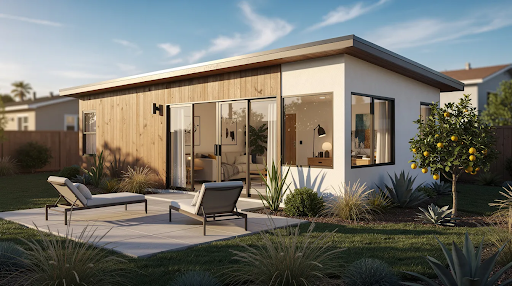
Los Angeles, from the San Fernando Valley to Santa Monica and Pasadena, offers some of the strongest conditions in the country for adding a detached ADU or tiny home for family housing or rental income.
This guide focuses on detached backyard cottages and factory-built tiny homes that qualify as accessory dwelling units when installed on a permanent foundation.
Factory-built tiny homes from Tiny Home Cottages can shorten build times compared to traditional site-built ADUs, with structures completed in controlled factory conditions while site work proceeds simultaneously.
Realistic 2026 cost ranges for detached ADUs in Los Angeles fall between $180,000 and $350,000+, with overall timelines typically spanning 7 to 13 months from first consultation to move-in.
Explore Tiny Home Cottages models and contact the team for help navigating Los Angeles ADU rules, design, permitting, and financing.
What Is an ADU in Los Angeles?
An ADU, or accessory dwelling unit, is simply a second home on your property. In Los Angeles, these backyard homes have become one of the most practical ways to add living space, create rental income, or keep family close without a major renovation to your main house.
Under California law and Los Angeles regulations, an ADU is a self-contained residential unit with its own kitchen, bathroom, and sleeping area on a lot that already has an existing home. The structure operates independently from the primary residence, with separate utility connections and its own entrance.
Detached ADUs stand completely separate from the main house, typically in the backyard, offering maximum privacy and flexibility
Attached ADUs share at least one wall with the primary residence
Garage conversions transform an existing garage into living space
Junior ADUs are smaller units (up to 500 sq ft) created within the existing footprint of the main home
This guide focuses primarily on detached ADUs and factory-built tiny homes that serve as independent backyard cottages.
California’s ADU-enabling legislation (AB 68, AB 881, and SB 13) became effective January 1, 2020, fundamentally expanding what homeowners can build. Los Angeles adapted these state laws into local rules that now make ADU development straightforward on most residential lots.
Common use cases for Los Angeles ADUs include:
Housing for aging parents who want independence while staying close to family
Living space for adult children facing LA’s expensive rental market
Multigenerational living arrangements that maintain privacy for everyone
Guest cottages for frequent visitors
Long-term rental units generating monthly income
Why Los Angeles Homeowners Are Adding ADUs in 2025
LA’s housing shortage is well documented. Rising rents, limited buildable land, and strong demand have made accessory dwelling units one of the most practical solutions for homeowners looking to add value to their property while addressing real housing needs.
The income potential is substantial. A well-designed one-bedroom ADU in neighborhoods like North Hollywood, Echo Park, or Culver City can generate consistent passive rental income that helps offset mortgage payments or funds retirement. With vacancy rates low across Los Angeles, finding quality tenants for a detached backyard cottage rarely takes long.
Property value impact is equally compelling. Recent LA sales data suggests that detached ADUs often add six figures to total property value. This combination of monthly cash flow plus asset appreciation creates returns that outpace many traditional investments.
Key benefits driving LA homeowner interest:
Keep family close while maintaining privacy and independence for everyone
Create dedicated home office or studio space separate from the main house
Downsize into the backyard cottage while renting the larger main house for income
Build a rental unit that can later transition to family housing as needs change
Minimize disruption to your primary residence compared to large interior remodels
Detached ADUs and factory-built tiny homes offer a particular advantage during construction. Unlike kitchen renovations or second-story additions that turn your home into a construction zone for months, backyard projects keep the chaos outside your main living space.
Detached ADUs vs. Garage Conversions vs. Tiny Homes
LA homeowners typically choose between three main paths: building a new detached ADU from scratch, converting an existing garage, or placing a factory-built tiny home as a detached ADU. Each approach has distinct advantages depending on your property, budget, and goals.
Detached ADUs (Traditional Site-Built)
Require new foundation, framing, and full construction on your lot
Offer maximum design freedom and custom architectural details
Ideal for larger backyards where setback requirements are easily met
Work well for long-term family housing or premium rentals in areas like Studio City or Mar Vista
Construction cost typically ranges from $220,000 to $350,000+ depending on size and finishes
Garage Conversions
Often the lowest cost entry point, typically $120,000 to $190,000
Limited by the footprint and structural condition of your existing garage
Common in neighborhoods with alley garages throughout older LA residential areas
Faster permitting in some cases since the basic structure already exists
May not be ideal if you need the garage for parking or storage
Factory-Built Tiny Homes as Detached ADUs
A factory-built tiny home or cottage from Tiny Home Cottages becomes a detached ADU when set on a permanent foundation and permitted as a residential unit. The home arrives largely complete, reducing on-site construction time and neighborhood disruption.
When each option makes the most sense:
Choose a detached ADU for larger backyards where you want full custom design control
Choose a garage conversion when your existing garage footprint works and budget is tight
Choose a factory-built tiny home ADU when schedule predictability, quality control, and reduced site disruption matter most
Factory Built ADUs: How Tiny Home Cottages Builds for Los Angeles
Factory-built construction differs fundamentally from traditional on-site building. Instead of assembling your ADU piece by piece in your backyard, the structure is built in a controlled factory environment, then transported and installed on your prepared foundation.
In LA’s busy urban environment, this approach solves several common problems. Dense neighborhoods like Silver Lake, Echo Park, and West LA present challenges for traditional construction: limited staging areas, noise restrictions, and parking constraints for construction crews. Factory-built homes minimize these headaches.
Tiny Home Cottages partners with experienced manufacturers that build under national building code standards, with strict quality assurance protocols. Homes are then installed to meet local LA code requirements, including LADBS or jurisdiction-specific standards.
Benefits for LA homeowners:
Predictable build times since weather delays and on-site variables are eliminated
Consistent quality through factory-controlled construction processes
Reduced on-site disturbance in tight urban lots
Parallel processing where site work and home construction happen simultaneously
Accountability through standardized manufacturing rather than variable subcontractor quality
Typical square footage ranges from approximately 250 to 1,000 sq ft, with most ADU-appropriate models clustering in the 400 to 800 square foot range to align with common LA size limits.
Important to understand: detached ADU projects still require local permits, utility connections, foundation work, and final inspection even when the home itself is factory-built. The factory-built approach streamlines the structure itself, not the site-specific requirements.
Types of Tiny Home Cottages for Los Angeles ADUs
Different families and lots in Los Angeles call for different types of backyard homes. Tiny Home Cottages offers several distinct product lines to match various needs, lot conditions, and aesthetic preferences.
Single Story Tiny Homes
Entry-level homes with modern layouts and approximately nine-foot ceilings throughout
Well-suited for narrow LA lots with 4-foot side setbacks
Clean, contemporary feel that works in most neighborhoods
Premium Single Story Tiny Homes
Upgraded features including modern floor plans and cement fiber exterior siding
Finishes that blend with Spanish, Modern, or Craftsman main homes common across LA
Designed for homeowners prioritizing rental appeal or family comfort
Lofted Tiny Homes
Second-level loft for sleeping or storage
Steep roof pitches and large stacked windows create dramatic interior volume
Work well where local height limits still allow vaulted spaces
Popular for maximizing square footage on compact footprints
Cabin Series Cottages
Natural cabin-style finishes including tongue-and-groove pine walls and ceilings
Metal roofing and fiber cement siding for durability
Strong appeal in areas like Topanga, Mount Washington, or hillside neighborhoods with rustic character
HUD Manufactured Homes
Larger footprints ranging from approximately 400 to 1,000 sq ft
Can serve as primary residences or spacious ADUs on bigger LA lots
More space for families who need room beyond typical tiny home dimensions

Los Angeles ADU Rules You Should Know Before You Build
Rules change periodically, so always confirm current requirements with the City of Los Angeles or your specific jurisdiction before finalizing plans. What follows represents general guidance based on regulations in place through 2024-2025.
Know your exact jurisdiction. The City of Los Angeles operates differently from Santa Monica, Burbank, Glendale, Pasadena, and unincorporated Los Angeles County. Each has slightly different workflows, approval timelines, and specific requirements. Verify which city or county planning department has authority over your property.
Common detached ADU size limits in the City of LA:
Up to approximately 800 sq ft by right in many cases
Larger options available under certain conditions
Junior ADUs limited to 500 sq ft within existing structures
Setback requirements:
Typical 4-foot side and rear setbacks for detached ADUs
These setbacks significantly impact site planning on narrow or shallow LA lots
Some lots may qualify for reduced setbacks under specific conditions
What most homeowners can build:
Most single-family lots can add at least one ADU
Some multi-family properties can add multiple units subject to zoning rules
Many homeowners can also add a Junior ADU in addition to a standard ADU
Parking rules vary by situation:
Replacement parking often not required after a garage conversion
ADUs near transit stops may have reduced or eliminated parking requirements
Specific parking mandates differ by jurisdiction and ADU type
Detached factory-built units must still meet fire access requirements, height limits, and utility connection standards set by LADBS or the applicable local building department. Hillside areas with high fire severity present additional constraints including restricted access standards and defensible space requirements.
How Much Does a Detached ADU Cost in Los Angeles?
ADU costs vary widely in Los Angeles based on site access, hillside conditions, utility proximity, and finish level. Anyone quoting a single number without understanding your specific property is guessing.
2026 ballpark construction cost ranges:
|
ADU Type |
Typical Cost Range |
|
Garage Conversion |
$120,000 – $190,000 |
|
Attached ADU |
$150,000 – $260,000 |
|
Detached ADU (site-built) |
$220,000 – $350,000+ |
|
Two-Story ADU |
$280,000 – $400,000+ |
|
Cost per square foot |
$350 – $600+ |
Factory-built tiny homes from Tiny Home Cottages can offer more predictable base pricing since manufacturing happens in controlled conditions with standardized processes. However, site-specific work adds to every project.
Separate your budget into categories:
Base home price (or base construction cost for site-built)
Foundation work, which varies significantly by soil conditions
Utility trenching and connections for water, sewer, and electrical
Grading and retaining walls if your lot has slope
Permitting fees and impact fees, typically $8,000 to $25,000 combined
Design and engineering costs
Hillside areas like Hollywood Hills, Mount Washington, or Eagle Rock often require additional engineering and can significantly increase budgets. Complex sites with poor access, challenging soil conditions, or long utility runs can push costs well above $650 per square foot.
Protect yourself with clear pricing:
Request a detailed written scope of work before signing any contract
Ask specifically what is included and excluded
Be cautious of quotes with hidden fees or vague allowances
Compare proposals on an apples-to-apples basis
Timeline: How Long a Los Angeles ADU Really Takes
Realistic expectations help homeowners avoid frustration during the entire process. Overpromises from contractors lead to disappointment; understanding actual timelines helps you plan appropriately.
Typical detached ADU or factory-built tiny home ADU timeline in LA:
|
Phase |
Duration |
|
Initial consultation and feasibility |
1-2 weeks |
|
Design development |
4-8 weeks |
|
Permitting through LADBS or local city |
2-4+ months |
|
Site work (foundation, utilities, grading) |
2-3 months |
|
Home build (factory) or construction (site) |
2-4 months (factory) / 4-7 months (site) |
|
Installation and hookups |
2-4 weeks |
|
Final inspection and occupancy |
1-4 weeks |
LADBS or local city permit review can range from a few weeks to several months depending on workload, completeness of plans, and jurisdiction. Delays usually come from design changes or permit revisions, not construction itself.
Factory-built homes are constructed in parallel with site and foundation work, often reducing total time compared to fully site-built projects where foundation must complete before framing can begin.
General timeline expectations:
Many LA homeowners can expect 7 to 13 months from first conversation to move-in
Complex hillside sites or projects requiring multiple permit revisions can take longer
Simple, straightforward projects on flat lots with available utilities may achieve shorter timelines
Build in schedule contingency for utility coordination, inspections, and material lead times. The company that promises unrealistic speed often delivers frustration.
Step-by-Step: Working With an ADU Builder in Los Angeles
This section walks through the major phases most Los Angeles ADU projects follow, whether site-built or factory-built. Understanding the entire permitting process and construction sequence helps you evaluate builders and set realistic expectations.
Key stages of an LA ADU project:
Feasibility review: Assess lot size, setbacks, access, utilities, and zoning constraints
Design: Develop plans that meet local requirements and your functional needs
Permitting: Submit plans to LADBS or local building department, respond to corrections
Site preparation: Foundation construction, utility trenching, grading as needed
Build/Installation: Factory construction and delivery, or on-site framing and construction
Final inspections: Obtain certificate of occupancy from the building department
A good ADU builder or provider should guide you through each step with clear timelines and responsibilities. Transparent pricing and communication at each phase prevents surprises.
Ask any builder you consider for a written process map or schedule. If they can’t explain their process clearly, that’s a warning sign.
Our Process at Tiny Home Cottages for Los Angeles ADUs
Tiny Home Cottages serves as a guide through model selection, financing options, permitting coordination, and installation for LA homeowners. The team handles the complexity so you can focus on how your new ADU will fit your life.
Initial consultation and model selection:
Discussion of family needs, rental goals, and lot constraints
Review of your property’s potential given local ADU regulations
Exploration of models that fit your budget and space requirements
Regulatory alignment:
Help align chosen models with Los Angeles ADU regulations
Address size limits, setbacks, and fire access requirements
Identify any jurisdiction-specific considerations for your city or Ventura County if applicable
Design customization:
Exterior style choices including modern, Spanish, or cottage aesthetics
Interior finish packages appropriate for LA rental markets or family use
Layout modifications within the structural parameters of your chosen model
Permit coordination:
Preparing documentation for submission
Working with local designers and engineers as needed
Submitting to LADBS or the appropriate city department
Managing corrections and resubmissions
Build and installation:
Factory construction under controlled conditions with quality oversight
Concurrent site work including foundation, utilities, and grading
Delivery, craning or placement onto prepared foundation
Utility hookups and connection to existing infrastructure
Final steps:
Coordination of final inspection with local building officials
Move-in preparation and homeowner orientation
Basic guidance on systems including HVAC, electrical panels, and plumbing fixtures
Financing a Los Angeles ADU or Tiny Home Cottage
Financing is often the biggest barrier for LA homeowners considering a detached ADU or tiny home. Understanding your options early helps you plan realistically and move forward with confidence.
Common financing approaches:
Cash payment for homeowners with available savings
Home equity lines of credit (HELOCs) using existing property equity
Specialized manufactured home and ADU lenders
Construction loans for site-built ADUs with larger scopes
Tiny Home Cottages often recommends 21st Mortgage Corporation for financing tiny homes and manufactured homes. This lender specializes in these products and has been a leader in the construction industry for many years.
Typical loan application process:
Choose the home model that fits your needs and budget
Complete a loan application through the lender
Receive loan approval and review financing terms
Lock the interest rate
Submit required documentation (identification, income verification, bank statements)
Sign closing documents and finalize the loan
Funds distributed and home purchase moves forward
Down payment possibilities range from zero percent for well-qualified buyers to higher percentages depending on credit profile and property conditions. Not everyone qualifies for the lowest down payment options, but affordable paths exist for many homeowners.
Important financing considerations:
Confirm whether your specific project can be included in the loan
Understand what site-specific costs (foundation, utilities, grading) are covered
Compare multiple financing options before committing
Ask about current interest rates and loan terms
How to Choose the Right ADU Builder or Provider in Los Angeles
LA has many ADU contractors, designers, and manufacturers, which can make comparison difficult. Taking time to evaluate options carefully protects your investment and reduces stress during the project.
Essential due diligence steps:
Check California CSLB license status and insurance coverage
Verify number of completed ADUs specifically in your jurisdiction
Ask about experience with LADBS or your local building department
Request detailed documentation:
Written scope of work specifying inclusions and exclusions
Clear breakdown of design, permits, utilities, landscaping, and appliances
Timeline with specific milestones and responsibilities
Evaluate past work:
Review completed LA ADU projects from each builder
Ask for references from recent clients
When possible, visit completed detached ADUs or tiny homes in person
Look for beautiful ADUs that demonstrate quality craftsmanship
Compare proposals effectively:
Get 3-5 proposals before making a decision
Normalize comparisons for square footage, finishes, and site work scope
Don’t choose on price alone without understanding what you’re getting
We highly recommend working with a provider focused on factory-built tiny homes and cottages. The consistency and predictable quality of controlled manufacturing creates less stress and fewer surprises than variable site-built approaches.
Design Tips for a Los Angeles Backyard ADU
Smart ADU design maximizes livability and rental appeal in smaller footprints. What works in a 2,000 square foot home doesn’t always translate to a 500 square foot cottage.
Maximize natural light:
Large windows appropriate for sunny LA climates
Strategic placement to capture morning or afternoon light
Skylights or clerestory windows where roof lines allow
Create visual spaciousness:
High ceilings (nine feet or more) make compact spaces feel open
Open floor plans that avoid unnecessary walls
Light color palettes that reflect available light
Match neighborhood character:
Modern finishes for contemporary areas like Silver Lake
Spanish-influenced details for traditional LA neighborhoods
Craftsman elements where that style dominates (Pasadena, Highland Park)
Embrace indoor-outdoor living:
Small decks or patios extending living space
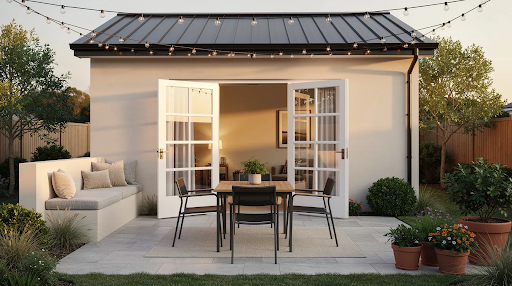
French doors or large sliders connecting interior to yard
Outdoor features appropriate for areas like Venice or Highland Park
Practical considerations:
Built-in storage solutions that maximize every square foot
Multi-use furniture where space is limited
Accessible design features for aging parents or multigenerational living
Wide doorways and minimal steps for long-term flexibility
Tiny Home Cottages offers multiple floorplans and finish levels aligned with these principles while staying within LA zoning limits.
Using Your ADU: Family, Guests, and Long-Term Rentals
How you plan to use your ADU should influence design, size, and finish level decisions from the beginning. Building for renters differs from building for aging parents.
Family housing scenarios:
Housing parents who want proximity without losing independence
Adult children saving for their own home while contributing rent
Caregivers who need private space close to those they support
Accessibility features like minimal steps, wider doorways, and grab bars
Long-term rental strategies:
Typical lease lengths in LA range from 12 months to multi-year agreements
Understand local rental regulations and registration requirements
Quality finishes attract better tenants willing to pay market rent
Design for durability and easy maintenance between tenants
Short-term rental considerations:
Los Angeles, Santa Monica, and Long Beach have restrictions on short-term rentals like Airbnb
Rules vary significantly by city and neighborhood
Verify specific local rules before planning income from vacation rentals
Some areas prohibit short-term ADU rentals entirely
Think long-term:
Your life will change over the coming decades. Build an ADU that can flex between family housing, home office, and rental use as your needs evolve. The investment you make today should serve you for 20, 30, or 40 years.
Next Steps: Planning Your Los Angeles ADU with Tiny Home Cottages
Detached ADUs and factory-built tiny homes can add income, flexibility, and property value to LA properties. Whether you’re planning housing for aging parents or building a rental unit for passive rental income, the right backyard cottage transforms what your property can do for your family.
Take action:
Browse Tiny Home Cottages model galleries and floorplans to see examples that fit typical Los Angeles lot conditions
Schedule a consultation to discuss your specific neighborhood, lot layout, budget, and timing goals
Ask about current lead times, 2026 pricing, and financing options
Before reaching out, gather:
Your property address
Rough lot dimensions (or a copy of your plot plan)
Photos of your backyard and existing utility locations
Notes on how you want to use the ADU
Having this information ready streamlines the conversation and helps the Tiny Home Cottages team give you accurate guidance from the start.
Frequently Asked Questions About ADU Builders in Los Angeles
Do factory-built tiny homes really qualify as ADUs in Los Angeles?
Factory-built tiny homes and cottages can qualify as detached ADUs in many Los Angeles jurisdictions when installed on a permanent foundation, connected to utilities, and permitted as a residential unit through LADBS or your local building department. The key is proper installation and permitting, not where the structure was built.
The local building department must approve plans and conduct inspections even though the structure arrives from a factory. Confirm early with your jurisdiction and ask Tiny Home Cottages how your preferred model can be configured to meet ADU requirements.
Can I live in the ADU and rent out my main house in Los Angeles?
In many parts of Los Angeles, owners can live in either the main home or the ADU as their primary residence. However, rules differ by city and by specific program. Some jurisdictions have owner-occupancy requirements for certain ADU types, while others have relaxed these requirements following California law changes.
Verify current owner-occupancy and rental rules with your city or county planning department before planning to move into the ADU and rent the main house.
How small can a detached ADU be in Los Angeles and still be legal?
California sets minimum habitability standards, and many Los Angeles area jurisdictions allow detached ADUs starting around 220-275 square feet, provided they include a full bathroom and kitchen. Tiny Home Cottages offers compact models that can meet these minimums while remaining livable and functional.
Confirm minimum size requirements with local planners, especially in smaller or historic-lot neighborhoods where additional restrictions may apply.
Will building a detached ADU increase my property taxes significantly?
Under California Proposition 13, your existing main house assessment generally stays the same. The new ADU triggers an additional, separate assessment for the value of the new construction only. Property taxes typically increase based on the ADU’s construction value, not a full reassessment of your entire property.
Speak with the Los Angeles County Assessor’s Office or a tax professional for project-specific estimates based on your planned construction cost.
Is a detached ADU or tiny home allowed in hillside areas of Los Angeles?
Hillside and high-fire-severity zones in and around Los Angeles (such as parts of Hollywood Hills or Bel Air) often have stricter access, foundation, engineering, and fire safety requirements. Detached ADUs may still be possible, but will require careful planning, fire department access review, and potentially higher construction costs.
Homeowners in hillside areas should schedule an early feasibility review with Tiny Home Cottages and their local building department before committing to a specific model or layout. The additional requirements don’t necessarily prevent building, but they do affect budget and timeline.