
ADU Builder Stockton CA: Everything You Need to Know Before Building
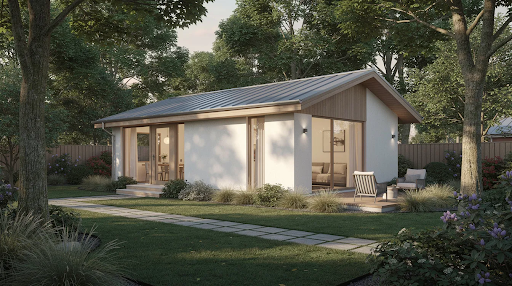
Adding a detached ADU, tiny home, or backyard cottage to your Stockton property can transform how your family lives—or create a valuable income stream. But before breaking ground, you need to understand local regulations, construction options, and the steps involved in making it happen.
Key Takeaways
Stockton homeowners can add accessory dwelling units to their residential lots, creating independent living spaces for family members, long-term renters, or guests. California state law establishes minimum ADU rights, while the City of Stockton applies local specifications covering setbacks, design compatibility, and utility connections. Understanding both layers of regulation is essential before selecting a builder or home model.
Tiny Home Cottages offers factory-built detached ADU-style tiny homes and cottages that can be installed on residential lots throughout Stockton and San Joaquin County. These homes range from compact single-story units to larger HUD manufactured homes, providing options for various lot sizes and family needs.
Stockton generally allows detached ADUs up to 1,200 square feet—notably higher than the state minimum of 800 square feet. Homeowners must still obtain permits, complete plan review, and secure utility approvals through the City of Stockton Planning Division. There are no minimum lot size restrictions and no off-street parking requirements for ADUs in Stockton, which removes significant barriers for many properties.
Factory-built construction offers predictable timelines, consistent quality, and fewer on-site disruptions compared with traditional site-built additions. Homes are constructed in a controlled indoor environment under national building standards, inspected before shipping, and then installed on prepared foundations with utility hookups.
Ready to explore whether your property can support a detached ADU or tiny home? Review the models available through Tiny Home Cottages and contact the team to discuss your specific Stockton lot and goals.
ADU Builders in Stockton, CA: How They Help Homeowners
ADUs have become increasingly popular in Stockton and the broader San Joaquin County region for good reason. The area faces genuine housing challenges—teachers, healthcare workers, and service employees seek smaller, manageable living spaces near employment centers along Interstate 5 and Highway 99. The University of the Pacific generates student and faculty housing demand, while Dameron Hospital and other regional employers add to the pressure.
Stockton’s cultural diversity and significant multigenerational household prevalence create demand for flexible housing solutions. Many families want elderly parents nearby without everyone sharing the same kitchen. Others see rental potential in a well-located backyard cottage. Whatever the motivation, experienced ADU builders and contractors in the Stockton area understand these local dynamics.
Working with professionals who know Stockton’s requirements helps homeowners navigate:
Feasibility checks to determine whether your lot can accommodate a detached structure
Basic site planning including setback measurements and access routes
Permit coordination with the City of Stockton Planning Division
Utility connections through PG&E and local water/sewer providers
Construction or installation of the detached unit itself
Partnering with a regionally experienced team reduces the risk of permit delays and costly redesigns. They understand Stockton zoning nuances, fire-access requirements, and how parking rules apply (or don’t apply) to different ADU configurations.
It’s worth noting the distinction between detached ADUs and garage conversions. While both are valid paths to adding housing, Tiny Home Cottages focuses specifically on detached factory-built tiny homes and cottage-style units rather than full-service remodeling of existing structures. This specialization allows for streamlined production and consistent quality.
Before selecting any ADU builder or specific home model, define your goal clearly. Are you housing aging parents who need privacy? Creating a rental unit for extra income? Building a guest space or home office? Your primary purpose will shape every decision that follows.
Detached ADUs and Tiny Homes in Stockton
Detached ADUs and tiny homes represent the most flexible option for Stockton homeowners who want privacy and a fully independent living space in their backyard. Unlike attached additions or garage conversions, detached units sit separately from the main house, creating distinct living environments for occupants of both structures.
A detached ADU is a standalone unit with its own entrance, sleeping area, bathroom, and kitchen—separated from the main house by open yard space, a driveway, or a side yard. This physical separation provides privacy that attached options simply cannot match.
Common detached ADU sizes in Stockton range from roughly 400 to 1,200 square feet, fitting different needs:
Compact studios (300-500 sq ft): Ideal for single occupants, couples, or part-time guests
One-bedroom units (500-700 sq ft): Comfortable for aging parents or long-term single renters
Two-bedroom configurations (700-1,200 sq ft): Suitable for small families or roommate situations
Factory-built detached ADUs from Tiny Home Cottages are constructed off-site in a controlled environment, transported to the Stockton property, and then installed on a prepared foundation or support system with utility hookups. This process differs fundamentally from traditional site-built construction, where framing, electrical, and plumbing work happens outdoors over many months.
Real-world use cases relevant to Stockton homeowners include:
Housing for parents aging in place near family
A rental unit near downtown Stockton or the University of the Pacific
A backyard cottage in established neighborhoods like Lincoln Village or Weston Ranch
A quiet home office away from the main household
A pool house or guest retreat for visiting family
Single Story Tiny Homes
Single-story tiny homes serve as entry-level detached ADUs in the 300-500 square foot range. These homes feature modern layouts with approximately 9-foot ceilings throughout and efficient open-concept living areas that make compact spaces feel larger than their footprint suggests.
These homes work particularly well as:
Backyard guest houses for visiting relatives
Starter rental units generating monthly income
Independent suites for one person or a couple
Home office or studio space separate from the main house
Key features that appeal to Stockton homeowners include compact footprints that fit smaller city lots, low-maintenance exteriors, and energy-efficient windows and insulation suitable for Central Valley heat. The hot, dry summers in the region make material selection important—factory-built homes allow for proper material storage and handling before outdoor exposure.
Single-story tiny homes from Tiny Home Cottages are built under national building standards in a factory environment, which can streamline the Stockton inspection process. Much of the construction work is pre-certified at the manufacturing facility, reducing the inspection burden at the installation site.
Premium Single Story Tiny Homes
Premium single-story tiny homes offer upgraded finishes and materials for Stockton homeowners who want a higher-end backyard cottage. These models go beyond basic functionality to create spaces that feel comfortable for permanent occupancy.
Typical upgrades include:
Cement or fiber-cement exterior siding suited to the Central Valley climate
Upgraded flooring materials with improved durability
Enhanced storage solutions throughout the living space
Energy-efficient HVAC systems for year-round comfort
Modern kitchen and bath fixtures with quality finishes
Premium models are ideal for long-term rentals or for family members who will live on the property permanently. When durability and comfort matter—especially for elderly parents or adult children establishing independent households—investing in upgraded features makes practical sense.
These homes can positively impact your property’s appraised value and perceived quality. Future buyers evaluating your home may see a well-finished, code-compliant detached unit as a significant asset, particularly those seeking multigenerational living arrangements.
Lofted Tiny Homes
Lofted tiny homes feature a main floor plus an upper loft level, steep roof pitches, and large stacked windows that flood the interior with natural light. This design maximizes usable space within a small footprint—an important consideration for tight Stockton backyards.
Common sizes range from roughly 350-600 square feet on the main level, plus additional loft space. Lofts typically serve as:
Sleeping areas for adults or children
Kids’ play spaces or study areas
Storage zones keeping the main floor uncluttered
Guest sleeping quarters for occasional visitors
Lofted designs can meet Stockton’s height and setback rules when properly planned. Stockton generally allows at least 16 feet for single-story construction, with potential for two-story configurations depending on zoning. Experienced professionals can confirm compliance early in the design process, avoiding surprises during permit review.
The aesthetic appeal of lofted homes shouldn’t be overlooked. Cottage-like or modern looks complement Central Valley residential neighborhoods while creating a visually interesting backyard focal point that enhances rather than detracts from the existing property.
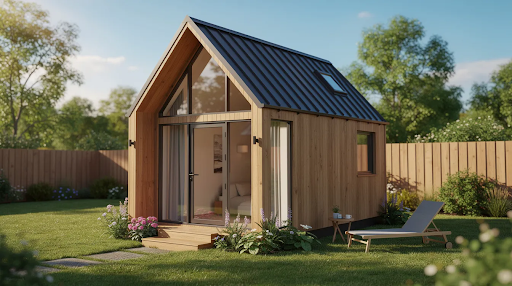
Cabin Series Cottages
Cabin series cottages from Tiny Home Cottages emphasize a warm, natural cabin aesthetic rather than an ultra-modern style. For homeowners who prefer wood textures and traditional design over contemporary minimalism, these cottages offer a distinct alternative.
Signature features include:
Tongue-and-groove pine walls and ceilings creating warm interiors
Metal roofing that handles Stockton’s hot summers and occasional winter storms
Fiber-cement siding providing durability and weather resistance
Natural wood finishes throughout the living space
Cabin cottages work particularly well for properties along the edges of Stockton, near the Calaveras River, or on larger lots where a rustic guest house or retreat complements the surroundings. The natural materials and design aesthetic create psychological appeal distinct from minimalist tiny home designs.
Common uses include family vacation cottages, art or music studios requiring quiet creative space, or cozy rentals for visitors who want a unique stay in the Central Valley.
HUD Manufactured Homes as Larger Backyard Units
Tiny Home Cottages also works with HUD manufactured homes ranging from roughly 400 to 1,000 square feet for homeowners who have adequate lot space and want a larger detached unit. These homes provide full residential functionality for permanent occupancy.
HUD manufactured homes are built under federal HUD code, inspected at the factory, and then transported to the Stockton site for installation on an approved foundation or support system. This federal oversight ensures consistent construction quality and safety standards.
These larger units can function as full-time residences for downsizing homeowners. Consider this approach: live in the backyard ADU while renting the main house, or keep the main house for yourself while housing family members or renters in the larger detached unit. Either configuration creates flexibility that standard homes lack.
Local planning and building departments must still approve placement. Setbacks, height limits, and access requirements apply regardless of where the home was built, so each Stockton parcel needs individual evaluation.
Stockton ADU Rules, Sizes, and Lot Considerations
California state ADU laws establish minimum rights that local jurisdictions cannot restrict below. The City of Stockton and San Joaquin County then apply local details—setback distances, design guidelines, and utility rules—that homeowners must navigate alongside state requirements.
Stockton’s most recent formally filed ADU ordinance with the California Department of Housing and Community Development dates from 2020, though the city has made updates to remain consistent with evolving state requirements. This means homeowners should verify current rules directly with the City of Stockton Planning Division rather than relying solely on older documentation.
At a high level, Stockton-size expectations align with current state law while allowing local flexibility:
|
ADU Type |
Maximum Size |
Notes |
|
Detached ADU |
Up to 1,200 sq ft |
Higher than state minimum of 800 sq ft |
|
Attached ADU |
1,200 sq ft or 50% of existing living area |
Whichever is less |
|
Junior ADU (JADU) |
500 sq ft |
Created within existing residence footprint |
Common lot requirements include:
Available backyard or side yard area sufficient for the chosen unit size
4-foot setbacks from rear and side property lines
Fire access for emergency vehicles
Space for utility connections (water, sewer, electrical)
Stockton imposes no minimum lot size restrictions—properties of any size may be eligible if they meet zoning and other requirements. This opens possibilities for homeowners in more densely populated urban neighborhoods who might assume their lot is too small.
Parking rules in Stockton are notably homeowner-friendly. There are no off-street parking requirements for ADUs, and if a garage is converted, replacement parking is not required. This removes a major barrier that exists in many California jurisdictions.
Tiny Home Cottages can help homeowners gather basic property information—such as lot dimensions from San Joaquin County assessor records or a simple site sketch—to prepare for conversations with the city about ADU placement.
Benefits of a Detached ADU or Tiny Home in Stockton
Detached ADUs can improve daily life, offer financial benefits, and expand housing flexibility for Stockton families. Whether you’re solving an immediate housing need or planning for the future, a well-designed backyard cottage serves multiple purposes over time.
Factory-built detached units offer many of the same benefits as site-built ADUs but often with faster completion and clearer pricing. The controlled construction environment eliminates many variables that can delay traditional projects or inflate costs unexpectedly.
More Living Space and Flexibility
A detached ADU creates extra bedrooms, a quiet home office, or a private suite for relatives without altering the main house’s layout. The existing home remains untouched while a new, independent structure addresses evolving needs.
Consider these Stockton-specific examples:
A studio ADU for a college student attending San Joaquin Delta College or University of the Pacific
Dedicated remote work space for professionals who need separation from household activity
A separate home for newly married adult children who want independence but proximity to family
A private sleeping area and kitchen for elderly parents maintaining their autonomy
Detached ADUs support multigenerational living by allowing close proximity without everyone sharing the same cooking and bathroom facilities. This balance of togetherness and privacy addresses one of the most common family housing challenges.
Factory-built units reduce construction disruption in the existing home—important for busy families and those working from home who can’t tolerate months of on-site construction noise.
More Housing Opportunities for Family and Community
ADUs provide long-term housing for parents who want to age in place near family while still maintaining privacy and their own kitchen and bathroom. This arrangement allows adult children to provide support without the complications of shared living quarters.
Detached ADUs also support the region’s broader housing goals by adding small, efficient homes on existing lots rather than consuming new farmland or open space around Stockton. Each backyard cottage represents housing without sprawl.
Practical guest uses include:
Hosting out-of-town visitors for events at the Stockton Arena or local festivals
Accommodating extended family during gatherings without hotel expenses
Providing temporary housing for relatives relocating to the area while they establish themselves
Well-designed factory-built units are comfortable and code-compliant, making them suitable for permanent occupancy rather than just short stays. Guests experience a real home, not a converted garage or cramped spare bedroom.
Rental Income and Property Value
Properly permitted ADUs in Stockton can be rented to long-term tenants, creating a monthly income stream that may help offset mortgage payments, property taxes, or other expenses. The investment in a backyard cottage can generate returns for years.
Demand for smaller, well-located rentals in Stockton and nearby communities makes backyard cottages attractive to renters including:
Teachers at local schools seeking affordable housing
Healthcare workers at Dameron Hospital or regional clinics
Service employees who prefer the Stockton area to longer commutes from Sacramento or other cities
Young professionals starting careers near major employment corridors
Adding a high-quality, code-compliant detached unit can improve overall property appeal and resale potential. Buyers seeking multigenerational setups increasingly view permitted ADUs as valuable assets rather than afterthoughts.
Readers should consult with a tax professional or financial advisor about how ADU rental income and costs may affect their specific tax situation.

Why Consider a Factory Built ADU with Tiny Home Cottages?
Tiny Home Cottages partners with experienced manufacturers who have been building small homes and cottage-style dwellings for decades. This focus on factory construction emphasizes quality and consistency that can be difficult to achieve with one-off backyard construction projects.
Factory-built construction works differently from traditional building. The home is constructed in a controlled indoor environment—protected from weather, theft, and the inconsistencies of rotating subcontractors. Comprehensive inspections occur at multiple stages before shipping. Once complete, the home is delivered to your Stockton property, where final installation and connections occur.
Key homeowner-friendly benefits include:
Predictable build timelines less affected by Central Valley weather extremes
Consistent workmanship from trained factory crews following standardized protocols
Defined pricing for the home itself, separate from site work costs
Quality assurance through systematic factory inspections
Homes are built under national building code standards or HUD code, with quality assurance protocols that are difficult to maintain on a one-off backyard job site. Material storage and handling remain controlled, reducing exposure to weather damage before installation.
Tiny Home Cottages focuses on detached units—including single-story tiny homes, premium models, lofted designs, cabin cottages, and HUD manufactured homes—rather than large-scale interior remodels of the existing main house.
Quality, Design, and Model Options
The range of designs available spans from modern lofted tiny homes with large stacked windows to cozy cabin series cottages with natural wood interiors. This variety allows homeowners to match their aesthetic preferences and lot characteristics.
Design features across models include:
9-foot ceilings in many single-story models creating spacious interiors
Thoughtful storage solutions maximizing limited square footage
Efficient floor plans that make small footprints feel more spacious
Open-concept living areas with modern fixtures and finishes
Exterior options like cement or fiber-cement siding and metal roofing hold up well to Stockton’s hot summers and occasional storms. These materials require minimal maintenance while providing long-term durability appropriate for the Central Valley climate.
Homeowners are encouraged to browse galleries and floor plan collections to compare layouts that might fit their specific Stockton lot and family needs.
Factory Efficiency vs. Site-Built ADUs
Factory-built homes contrast sharply with traditional site-built ADUs. Less on-site labor means fewer weather delays, and a more standardized inspection process at the manufacturing facility reduces uncertainty during construction.
For Stockton homeowners, this translates into shorter project timelines from order to move-in—especially useful when housing is urgently needed for family members or renters. While exact timelines depend on permit processing and site complexity, factory construction typically completes much faster than months of backyard framing.
Additional advantages include:
Reduced neighborhood disruption with minimal on-site framing noise and debris
Consistent quality from standardized factory protocols
Fewer miscommunications between trades since factory crews work together continuously
Protection from material theft or vandalism during construction
While local site work—foundation installation, utility trenching, and final connections—still requires coordination with licensed contractors and city inspections, a large share of the building work is already complete when the home arrives.
Financing a Tiny Home or Detached ADU in Stockton
ADU financing differs from simple home repairs, and homeowners should explore options early—before committing to a specific unit or builder. Understanding your budget constraints shapes which models are realistic and how quickly you can move forward.
Buyers may use savings, home equity products, or specialized manufactured and tiny home loans to fund their ADU projects. Each approach has different requirements, timelines, and cost implications.
21st Mortgage Corporation is a commonly recommended lender for manufactured and mobile home loans. As one of the leading industry lenders, they specialize in factory-built housing and understand the unique characteristics of these transactions. Down payment options may range from zero percent for well-qualified buyers to higher percentages depending on credit profile and property conditions.
Loan terms, down payment amounts, and eligibility depend on personal credit, property conditions, and the specific home model chosen. Homeowners should compare options and ask lenders whether their loans can cover both the home purchase and some related installation costs, as lender policies vary.
Typical Loan Application Process
The loan process typically follows these steps:
Choose a home model and estimate your total project budget including site work
Submit a loan application through a lender such as 21st Mortgage Corporation
Receive conditional approval and review interest rate and term options
Provide documentation including identification, income verification, and bank statements
Sign closing documents and finalize the loan agreement
Move forward with ordering the home and scheduling installation
Timelines vary depending on how quickly applicants submit documents and how complex their financial situation is. Some buyers complete financing in weeks; others require longer due to documentation requirements or property evaluation needs.
Tiny Home Cottages can help clarify home pricing and basic project scope so that lenders have the information they need to evaluate the loan accurately. Understanding what you’re buying simplifies the financing conversation.
Readers should consult directly with lenders to understand current rates, fees, and eligibility criteria, as these change over time.
Working with an ADU Builder or Tiny Home Provider in Stockton
Navigating Stockton permits and state ADU laws alone is possible but challenging. Working with experienced professionals reduces delays, avoids costly mistakes, and provides guidance through unfamiliar processes.
A typical collaboration with Tiny Home Cottages might follow this progression:
Initial consultation to discuss goals, budget, and property characteristics
Site assessment to evaluate lot dimensions, utility locations, and access
Model selection based on size needs, design preferences, and budget
Permitting steps coordinated with the City of Stockton Planning Division
Factory production of the home unit under controlled conditions
Delivery and installation on the prepared site
Final inspections and utility connections
Even with factory-built homes, homeowners will often hire local contractors for foundation work, utility trenching, and hookups. All of this work must meet local codes and pass inspection. Experienced ADU contractors and professionals familiar with Stockton’s requirements can coordinate these services efficiently.
Preparing information ahead of time speeds up feasibility conversations:
Rough site photos showing the backyard and potential placement areas
Lot dimensions from county assessor records
Any recent survey documents
Information about existing utility connection points
Stockton-area readers interested in exploring factory-built ADUs are encouraged to contact Tiny Home Cottages for guidance on choosing a model and understanding next steps for their specific property.
Checking Experience, Licenses, and Portfolio
When vetting any construction or installation partners involved in your ADU project, practical due diligence protects your investment:
Confirm licenses: Verify that contractors hold current California licenses and appropriate insurance coverage
Review portfolios: Examine galleries of completed tiny homes, cabins, and detached ADUs to gauge design style and quality levels
Read customer reviews: Understand communication style, schedule reliability, and post-installation support from actual clients
Request detailed estimates: Separate the cost of the factory-built home from local site work, permits, and utility connections for accurate budgeting
Working with a company that has established relationships with engineers, designers, and local contractors can smooth the process considerably. A cohesive team handles handoffs better than a homeowner coordinating multiple unrelated parties.
FAQ: ADU Builder Stockton CA
These frequently asked questions address common points that may not have been fully covered in the main sections above.
How long does it typically take to add a factory built ADU in Stockton?
Overall timelines can range roughly from several months to about a year, depending on permits, lender approvals, and site complexity. Building the home in the factory usually takes much less time than traditional on-site construction—often just weeks rather than months.
However, Stockton plan review, inspections, and foundation or utility work still add weeks or months to the total project. Homeowners should factor in time for design selection, financing approval, and coordination with local contractors when planning their schedule. Starting the permit conversation early while finalizing financing can help overlap these phases.
Do I need to live in my Stockton home to build a detached ADU?
California law has changed many owner-occupancy requirements in recent years, but local implementation can vary. Stockton homeowners should verify current rules directly with the city’s planning department before assuming they can build an ADU on a property they don’t occupy.
Ask specifically whether owner-occupancy is required for either the main home or ADU when used as a long-term rental. Requirements may differ based on when the ADU was permitted or whether it’s attached versus detached. Tiny Home Cottages can help homeowners prepare basic information for this conversation but does not set or interpret city policy.
Can I place a tiny home or cottage on a narrow Stockton lot?
Narrow lots may still be eligible for a detached ADU if setbacks, fire access, and utility routes can be met. The key is careful planning—the home’s footprint and orientation must work within available space while meeting the 4-foot side and rear setback requirements.
Smaller single-story or lofted tiny home models are often good candidates for tighter backyards. Their compact footprints fit spaces that couldn’t accommodate larger detached units. Start with a simple site sketch and measurements, then consult with professionals to verify what is feasible under current Stockton regulations.
Are detached ADUs in Stockton allowed as short-term rentals?
Regulations for short-term rentals—nightly or weekly stays through platforms like Airbnb—can differ significantly from rules for long-term rentals. These requirements change over time as cities adjust policies.
Review Stockton’s current ordinances on short-term rentals and ADUs, and verify whether special permits or restrictions apply to your situation. Even if short-term rentals are limited or prohibited, detached ADUs remain valuable as long-term rentals or housing for family members and guests.
What should I do first if I am considering a Tiny Home Cottages ADU in Stockton?
Start by clarifying your primary goal—family housing, rental income, guest space, or downsizing—since that will influence the size and model choice that makes sense for your situation.
Next, gather basic property details:
Lot dimensions (available from San Joaquin County assessor records)
Approximate location of existing utilities
Photos of your backyard showing potential placement areas
Any survey documents you already have
With this information ready, contact Tiny Home Cottages to review suitable models, discuss financing options through lenders like 21st Mortgage Corporation, and outline the next steps for checking local feasibility and permits in Stockton.