
California ADU for Sale: How to Pick the Right Model for Your Lot

A California ADU is one of the biggest housing decisions a homeowner can make on their existing property. The model you choose determines how the unit fits the lot, how it serves the people who will live in it, and how it holds its value over time. Most buyers spend their time looking at floor plans and pictures, which is a reasonable starting point but not the whole picture. The buyers who end up happiest are the ones who match the model to the lot, the use case, and the long term plan all at once.
This guide walks through how to size a model to your lot, the difference between single story and lofted layouts, the cabin series and HUD options, and how to set up the conversation that gets you to the right answer faster.
Sizing the model to your lot
The first step in picking a California ADU is understanding your lot. Setback rules in your jurisdiction set the boundaries of where the unit can go. The size of those boundaries determines which models can fit. A smaller side yard or a tight backyard will support a smaller tiny home but may not support a larger HUD manufactured home. A larger backyard can accept any of the lineup.
Access to the placement spot matters as much as the placement spot itself. The delivery truck and trailer need a clear path from the street to the pad. Tree branches, fences, sheds, and overhead wires can all affect whether a unit can reach the spot, regardless of how much room exists at the destination. Walking the access path with a tape measure before you fall in love with a model saves time and frustration later.
Utility connections are the third sizing factor. Water, power, and waste lines need to reach the unit. If existing connections are nearby, the work is straightforward. If trenching across the property is needed, the cost and timeline grow. Knowing the utility distances early helps you decide whether the placement spot is realistic for the model you have in mind.
Single story vs lofted layouts
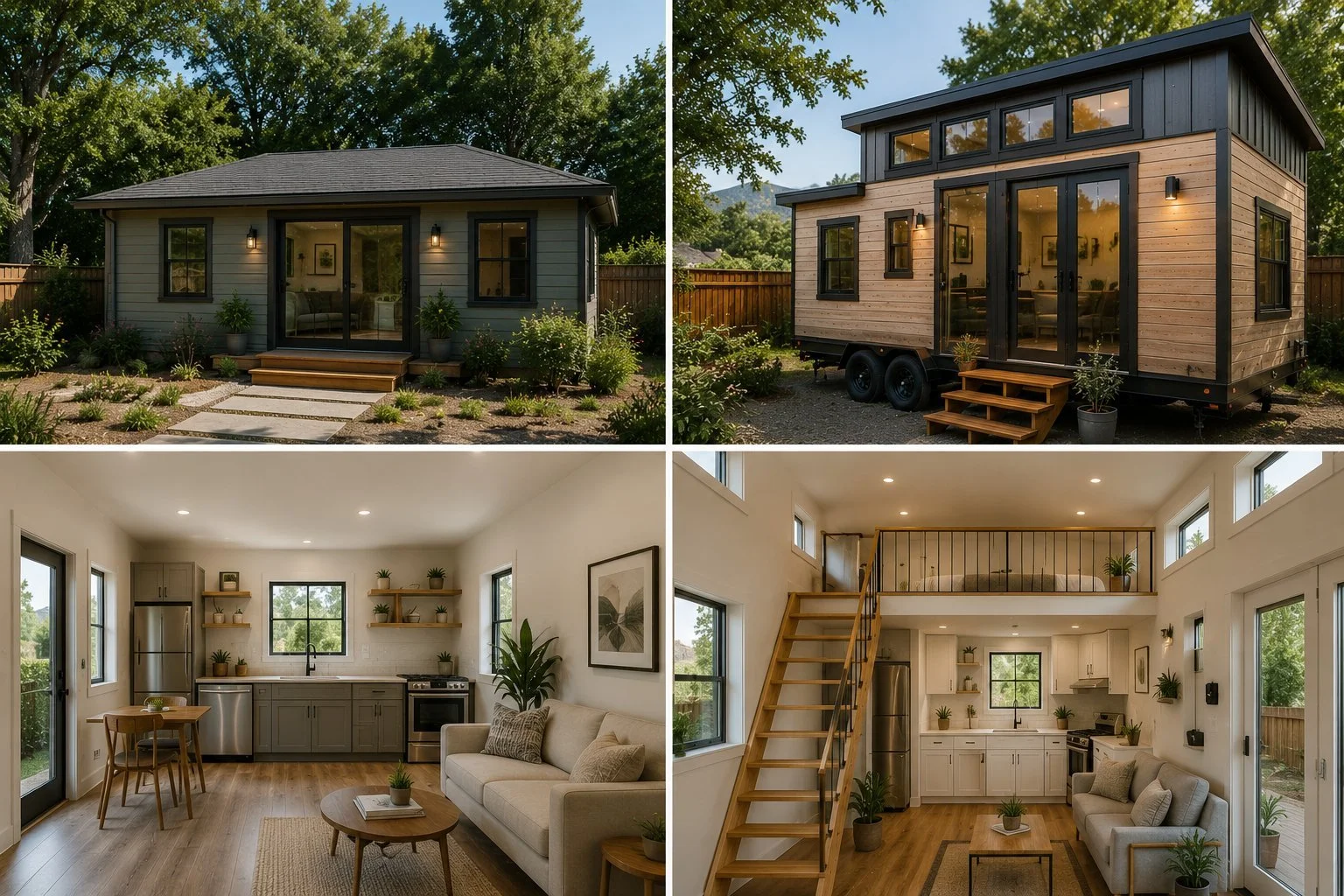
Single story models put the entire living space on one level. Kitchen, living, bath, and bedroom all sit on the ground floor. The interior feels open and accessible. Most single story models from Tiny Home Cottages have approximately nine foot ceilings throughout, which makes the space feel larger than the footprint suggests. For aging parents, accessibility considerations, or buyers who simply prefer not to climb stairs daily, single story is the right answer.
Lofted models add a second level loft above the main living area. The loft is usually used for sleeping, which frees up the lower level for living, kitchen, and bath. Lofted layouts pack more usable space into a smaller footprint. Steep roof pitches, large stacked windows, and the vertical feel give the home a more distinctive look. For younger residents, guests, or buyers who want to maximize usable space on a smaller pad, lofted is often the better fit.
Both styles work as long term residences. The right choice depends on who will live in the home and what they value. Walking through both styles, if possible, or carefully comparing real floor plans is the fastest way to know which one fits your situation.
Cabin series considerations
The cabin series cottages from Tiny Home Cottages have a different feel from the standard single story and lofted lineup. The interior features tongue and groove pine walls and ceilings. The exterior uses metal roofing and fiber cement siding. The overall look is warmer and more rustic than a standard tiny home, which appeals to buyers who want the cottage to stand on its own visually rather than mirror the main house.
The cabin series works particularly well on properties with natural surroundings, in areas where a more rustic look fits the neighborhood, and for buyers who want the unit to feel like a destination rather than a utility structure. For guest houses, mountain or rural properties, and downsizers who want a home with character, the cabin series is often the model that resonates.
The construction quality is the same as the rest of the factory built lineup. The aesthetic is the differentiator. Buyers who want the cabin look should ask about the specific finish options available and any upgrades that match their use case.
HUD manufactured options
HUD manufactured homes are the larger end of the lineup. They generally range from approximately 400 square feet to 1000 square feet, which makes them suitable for primary residences or larger detached units for extended family. HUD homes follow national HUD code construction standards, which differ from the standards used on smaller tiny homes.
The advantages of HUD options include more layout flexibility, more square footage for the price compared to similar custom construction, and broader buyer appeal if the property is ever sold. The constraint is that they require a larger pad and more access room. Lots that can support a HUD home offer more flexibility for buyers who want a real second home, not just a small cottage.
For multigenerational living, downsizing into a long term home, or adding rental capacity that supports a full household, HUD manufactured homes often deliver the right size at a workable price point.
Booking a consultation
The fastest way to land on the right model is to stop browsing in isolation and have a real conversation. A consultation with a builder who knows the California market and the available models is much more useful than another hour of scrolling. The builder can ask about your lot, your goals, and your timeline, then point you to the two or three models that actually fit your situation.
Coming to the conversation prepared makes it more productive. A simple sketch of the lot with the placement spot marked, a sense of your budget range, a list of the people who will use the home, and your financing approach all give the builder enough context to make real recommendations.
A consultation should never feel like a sales pitch. A serious operator listens first and then advises based on what they have heard. If the conversation feels like a pitch, that is information about how the rest of the relationship will go.
Matching the model to the use case
Beyond the lot dimensions, the use case is what drives the model decision. A home for an aging parent who will live there daily for years calls for accessibility, comfortable layout, and durable finishes. A guest house used a few times a year can be smaller and simpler. A rental unit that will host different tenants over time benefits from a layout that appeals broadly and finishes that hold up under heavy use. A primary residence for a downsizer needs everything a full home needs, just at a smaller scale.
Mapping the use case to the model lineup narrows the options quickly. Single story models suit accessibility and full time daily use. Lofted models suit smaller occupants, guests, and buyers wanting more usable space in a tighter footprint. Cabin series cottages suit buyers wanting character and a distinct look. HUD manufactured homes suit larger households or long term residences that need real square footage.
How financing fits the model choice
The model you pick also affects how financing works. Most lenders are familiar with the major series in the factory built market. 21st Mortgage Corporation, which Tiny Home Cottages often recommends, finances a wide range of factory built units including single story, lofted, cabin series, and HUD manufactured homes. Down payment options range from zero percent for highly qualified buyers to higher percentages depending on credit and the property.
Knowing the financing path before you commit to a model gives you confidence that the budget works. Pre-qualifying early sets a real ceiling on your search and lets you focus on the models that are realistic for your situation. Buyers who skip this step sometimes fall in love with a model they cannot finance, which is frustrating for everyone.
When to make the decision
The right time to commit to a model is when three things line up. You have walked the lot and confirmed placement and access. You have reviewed pricing and confirmed it fits your budget after delivery, set, and site work. You have a financing plan in place if you are using a loan. With those three pieces clear, the decision is no longer abstract. It is grounded in your specific situation.
If you want to see all of the model series side by side, you can explore the full California ADU lineup and compare single story, premium single story, lofted, cabin series, and HUD manufactured options in one place. From there, a consultation built around your lot and your goals will lead to the right model decision faster than any amount of independent research.
How the lot dimensions guide everything else
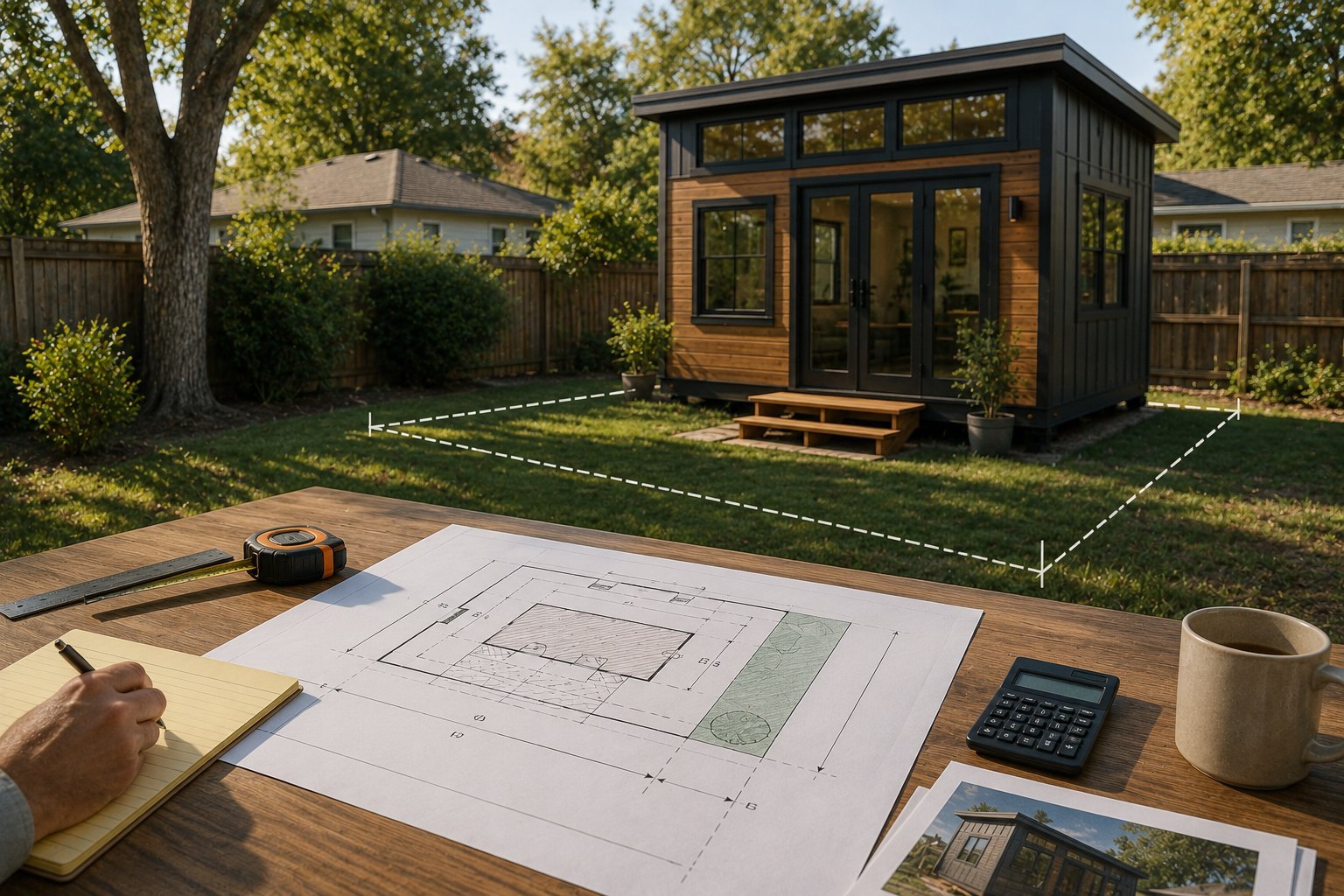
The dimensions of the lot do more than set a hard cap on which models fit. They also influence the layout of the site, the orientation of the home, the placement of utilities, and the experience of using the home day to day. A unit placed too close to a fence feels cramped even if the interior is comfortable. A unit oriented with windows facing the main house instead of the open backyard loses privacy and natural light. Thinking through these details before picking a model leads to a better final result.
The orientation question matters more than most buyers realize. Where the front door points, which windows catch the morning sun, which side faces the prevailing wind, and how the home relates to the existing main house all affect how the cottage actually feels. Walking the placement spot at different times of day before you commit gives you real information that no floor plan can replicate.
Common mistakes to avoid in model selection
A few mistakes show up regularly in the model selection process. The first is picking a model based on the smallest floor plan that meets minimum needs. Small living spaces look fine in a brochure but feel tight in real life. A small upgrade in square footage usually pays off in livability without breaking the budget.
The second is ignoring storage. Tiny homes and lofted models can feel spacious until you try to put a year of clothing, kitchen gear, and supplies away. Models with built-in storage, closet space, and under-stair compartments live better than models that maximize open floor area at the expense of storage.
The third is underestimating future needs. The buyer who is in good health today may need accessibility features in ten years. The buyer who lives alone today may share the home with a partner later. A model with some flexibility built in handles those changes better than one optimized only for today's needs.
Why the consultation matters more than the catalog
The catalog is a useful tool but it is not a decision-making tool. The real decision happens when you talk to a builder who knows the lineup and can match your situation to the right model. A thirty minute conversation with the right person is worth more than three hours of independent research because the conversation surfaces tradeoffs you would not have found on your own.
A good consultation also pressure tests your assumptions. The builder may notice constraints on your lot that you missed, point out that a slightly larger or smaller model fits better for your use case, or flag a financing detail that affects your budget. Those small course corrections add up to a much better outcome over the life of the project.