
Tiny ADU Homes: Compact Living Without Compromise
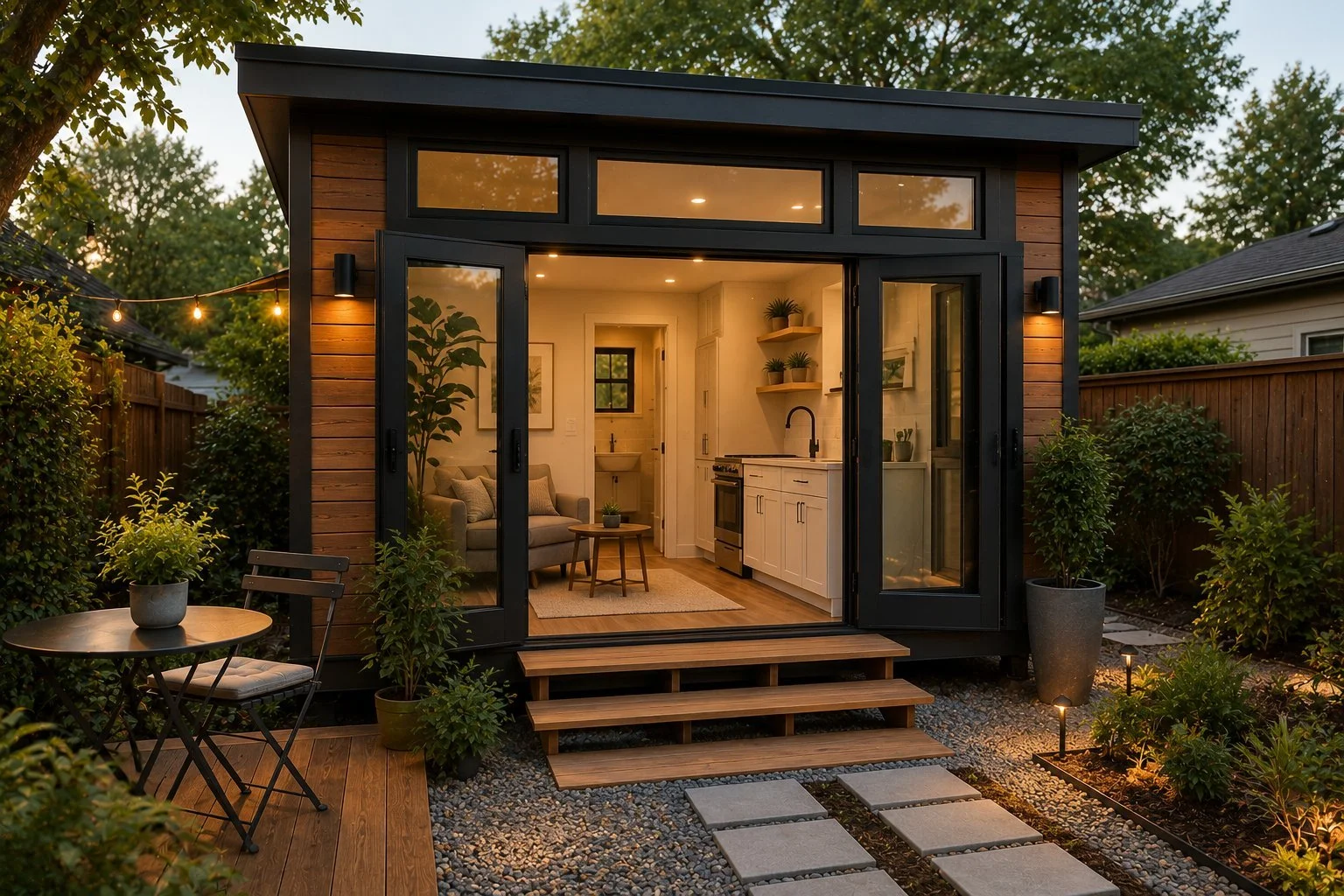
Tiny ADU homes have grown into one of the most practical housing categories on the market. They are small enough to fit on existing residential lots, large enough to live in comfortably, and built in a factory environment that delivers consistent quality. For homeowners who need extra space for family, want to downsize without giving up the feel of a real home, or are looking at flexible long term housing, tiny ADUs check a lot of boxes at once.
This guide covers what makes a tiny ADU different from a standard tiny home, how smart layouts work in small footprints, the finish and material options available, the best use cases for these homes, and a snapshot of how pricing usually works.
What makes a tiny ADU different
A tiny ADU is a small accessory dwelling unit designed to be placed on existing residential property as a detached structure. It is not a primary house. It is not a recreational vehicle. It is a permanent or semi-permanent home that serves a specific use case alongside the main house. The structure is usually built in a factory under controlled conditions and delivered to the lot ready for set, anchoring, and utility connection.
What separates a tiny ADU from a generic tiny home is the use case. The ADU is meant to be a second residence on a property, not a portable lifestyle product. The layouts, the finishes, and the durability standards reflect that. Buyers expect the home to support years of daily use, not occasional weekends. Tiny Home Cottages builds and sells homes designed specifically for this use case.
The factory build process matters because it produces a more consistent product. Walls are framed indoors. Materials are stored protected from weather. Inspections happen at every stage. The result is a home that feels and lives more like a small house than a temporary structure.
Smart layouts in small footprints
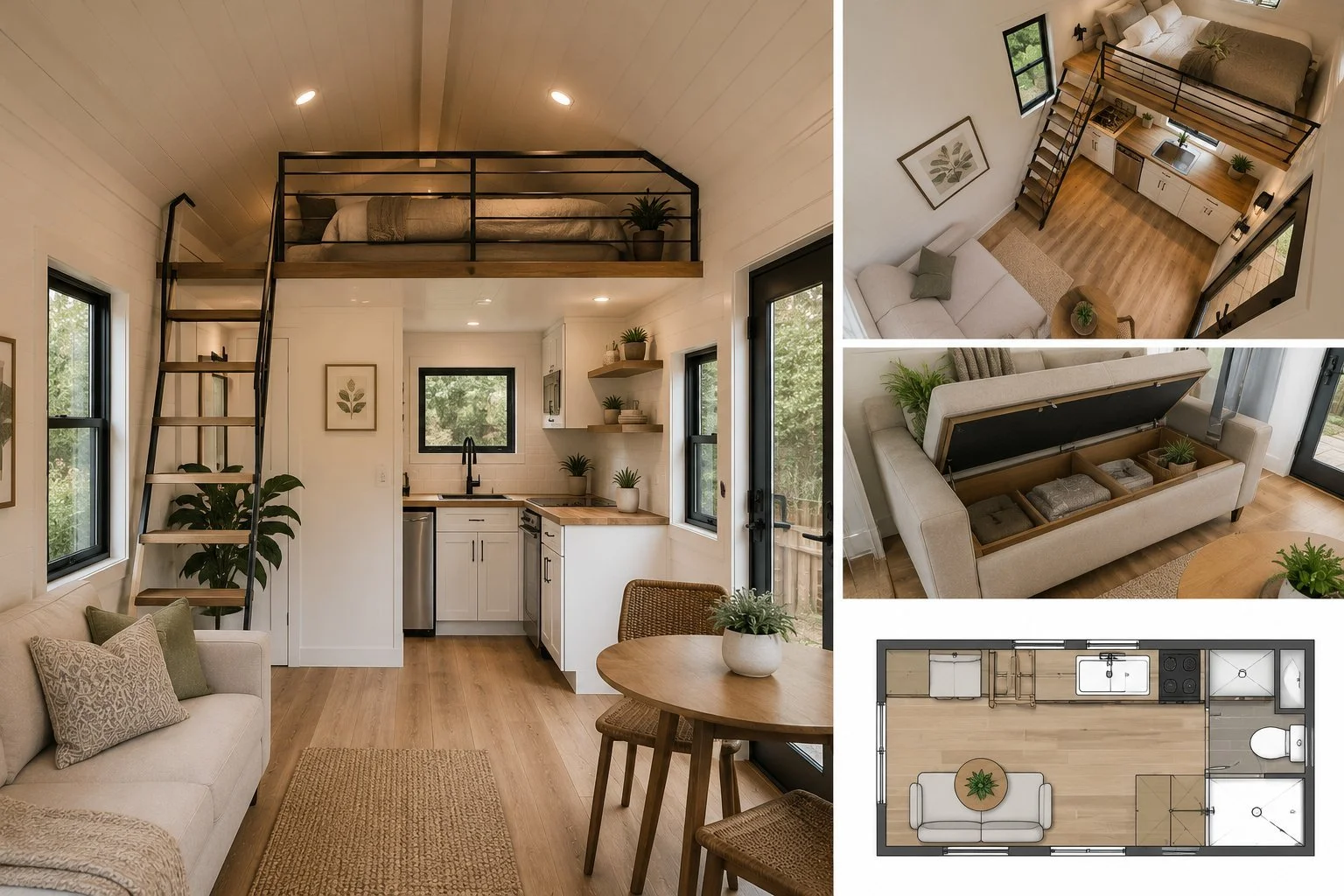
A tiny ADU lives much larger than its footprint suggests when the layout is well designed. Approximately nine foot ceilings throughout the single story models from Tiny Home Cottages make the interior feel open. Open kitchen and living areas avoid the chopped up feel that smaller homes can suffer from. Smart placement of windows brings in natural light without sacrificing privacy.
Storage is where tiny ADUs win or lose. Models that build in storage under stairs, in corners, in the kitchen, and under beds give residents real room to actually live in the home rather than constantly fight clutter. Lofted models use the second level for sleeping, which frees the lower level for everything else and effectively doubles the usable space without doubling the footprint.
Bathrooms and kitchens are sized for real use. Showers fit comfortably. Counters have working space. Cabinets hold what a household needs. The difference between a well designed tiny ADU and a poorly designed one shows up most clearly in these spaces, because they are where daily life happens.
Finish and material options
The factory built lineup from Tiny Home Cottages includes several finish levels and material options. Standard single story models offer modern layouts at an accessible price point. Premium single story models add upgraded features and cement exterior siding for a more durable, refined look. Lofted models bring steep roof pitches and large stacked windows that change the entire feel of the home.
Cabin series cottages take a different aesthetic direction. Tongue and groove pine walls and ceilings give the interior a warmer, more rustic feel. Metal roofing and fiber cement siding handle the exterior. The cabin look appeals to buyers who want the cottage to feel distinct from the main house or sit naturally on a property with natural surroundings.
Inside, finish choices include flooring, countertops, cabinetry, fixtures, and trim. The factory build process keeps these choices consistent and well executed because the same crews install the same components every day under controlled conditions. Custom upgrades are usually available, but buyers should ask early about the options that fit their use case and budget.
Best use cases
Tiny ADU homes shine in several common situations. Aging parents who want their own space while living close to family use them as long term residences. Adult children who need an affordable launching pad live in them while saving for a permanent home. Guests use them as a real guest house instead of a converted spare room. Downsizers move into them as a primary residence after children leave the main house.
Multigenerational families use tiny ADUs to keep family ties strong without forcing everyone into the same building. Rental investors use them to add income from underused land. Remote workers use them as a dedicated home office that is separate from the main living space. Each of these use cases benefits from the combination of real livability, controlled cost, and predictable timeline that a factory built tiny ADU offers.
The right model for each use case varies. A long term home for an aging parent calls for accessibility features and a comfortable single story layout. A guest house can be smaller and simpler. A primary residence for a downsizer benefits from upgraded finishes and a larger footprint. Talking through the specific use case with a builder is the fastest way to find the right model.
Pricing snapshot
Tiny ADU pricing in California and Oregon depends on the series, the size, the finish level, and the included features. Standard single story models price at the most accessible end of the lineup. Premium single story, lofted, and cabin series models price progressively higher based on size and finish. HUD manufactured homes price highest because of the larger square footage and broader code requirements.
The total cost matters more than the unit price. A real quote should include the home itself, delivery, set, anchoring, and the basic work needed to make the unit livable on your lot. Quotes that leave out delivery or set make the headline number look smaller than the actual cost. Asking for a full breakdown is the cleanest way to compare options.
Site prep costs are separate. The pad, utility extensions, and any grading depend on the lot and local conditions, not the builder. A local contractor or the builder's site team can usually provide a separate estimate for these costs after a quick site review.
How financing usually works
Most buyers finance a tiny ADU. Tiny Home Cottages often recommends 21st Mortgage Corporation, which specializes in manufactured and mobile home loans and has been one of the leading lenders in the industry for many years. Down payment options range from zero percent for highly qualified buyers to higher percentages depending on credit profile and property conditions.
The loan application moves through a clear sequence. You pick the home model that fits your needs and budget. You complete an application with the lender. You receive loan approval and review the financing terms. You lock the interest rate and submit identification, income verification, and bank statements. You sign closing documents and finalize the loan. Once everything is signed, funds are distributed and the home purchase process moves forward.
The process is more straightforward than a traditional mortgage on a stick built home, but the documentation requirements are still real. Getting your paperwork organized before you apply speeds the timeline.
Why factory built quality matters for small homes
Quality matters more in a small home, not less. Every square foot is used. Every detail is visible. A wall that is slightly out of square in a 2,500 square foot home gets hidden by the volume of the space. The same wall in a 350 square foot tiny ADU is noticeable every day. Factory built quality is the reason serious tiny ADU buyers prefer this category over alternatives.
The factory environment controls the variables that drive quality. Materials are stored properly. Crews are experienced and consistent. Inspections happen continuously. The home that arrives at your lot is the result of a repeatable process that has produced thousands of similar homes. That repeatability is the engine behind consistent quality.
Timeline and what to expect
The path from initial inquiry to occupancy on a tiny ADU is much shorter than a site built project. After model selection and financing, the factory build runs on a known schedule. Site prep happens in parallel. When the home is ready, it ships to the property, gets set, leveled, anchored, and connected. Most buyers move in within a window that is measured in weeks to a few months rather than a year or more.
If you want to see what is available and compare layouts side by side, you can view our tiny ADU floor plans and start narrowing your shortlist. Real floor plans, real finish levels, and real pricing context all in one place make the next conversation much more productive.
Common buyer questions about tiny ADUs
Buyers researching tiny ADUs ask a similar set of questions before they commit. The first is whether the home is built to a real code standard. Quality factory built tiny ADUs follow national building code standards under strict quality assurance. The builder should be able to point to the specific standards their homes meet.
The second question is whether the home holds up over time. The answer comes down to the manufacturer. Factories with decades of experience producing small homes deliver units that hold up well with normal maintenance. Newer or smaller shops often cannot match that track record.
The third is what happens if something needs service. A quality builder stands behind the home with a warranty and a clear service process. Vague answers on warranty and service are a signal worth listening to.
The fourth is whether the unit can be moved later if needed. Most tiny ADUs can be relocated, though the cost and logistics depend on the size of the home and the distance involved. Knowing the option exists gives buyers flexibility they often appreciate years later.
How tiny ADUs compare to other small home options
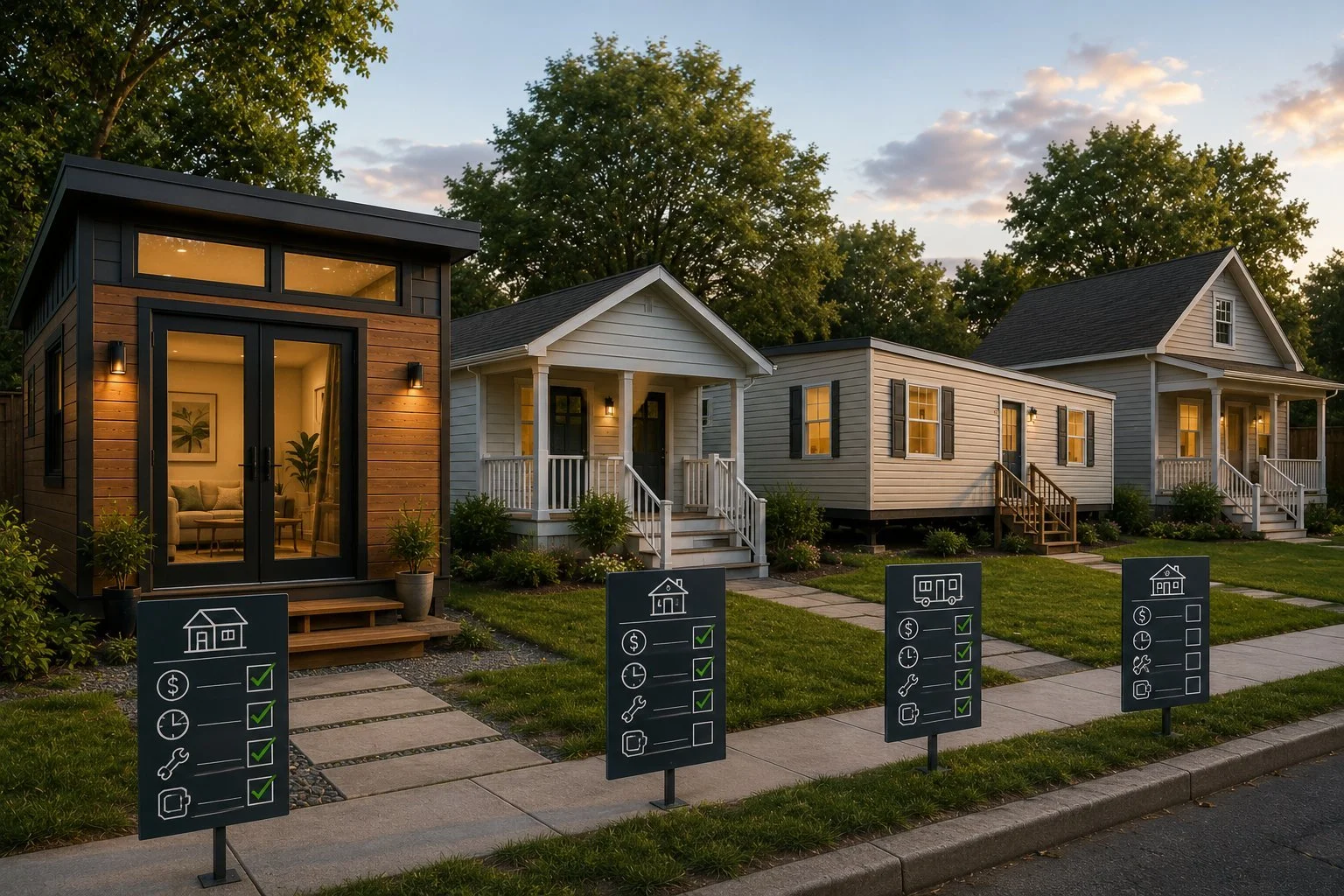
Tiny ADUs differ from a few other small home categories that buyers sometimes confuse them with. RVs and travel trailers are designed for travel, not full time daily living. Their construction, insulation, and durability are different. Park model RVs sit closer to a tiny ADU in some ways but are typically used as recreational or temporary housing rather than permanent residences.
Shipping container homes are another category that comes up. They can work for some use cases but tend to require significant custom work to become livable. The cost and timeline often end up close to or above a factory built tiny ADU.
Site built tiny homes are essentially custom construction at a small scale. They offer maximum flexibility but at the cost of timeline and predictability. For most California and Oregon homeowners, a factory built tiny ADU offers a better balance of cost, timeline, and quality than the alternatives.