
Buying an ADU for Sale in California: Models, Pricing, and Placement

Buying an ADU in California is a real investment, and the three things that drive a smart purchase are model selection, pricing transparency, and placement planning. Most homeowners focus on the model first, but the buyers who end up happiest are the ones who think about all three at the same time. The model only works if it fits the lot. The price only makes sense if it includes the full cost of getting the unit installed and connected. Placement is what turns the model and the price into a livable home.
This guide walks through how to think about each piece so you can make a confident decision instead of an emotional one. It covers the model series available, what to expect on pricing, how placement decisions affect your options, permits and prep, and how financing usually works for California buyers.
Choosing a model that fits your lot
Model selection should start with the lot, not the catalog. The size of your property, the setback rules in your jurisdiction, and the access route for delivery all affect which models will actually work. A unit that looks great in the brochure is the wrong choice if it cannot reach the placement spot or meet local setback distances.
Tiny Home Cottages offers a range of factory built models that cover most California use cases. Single story tiny homes work as entry level options with modern layouts and approximately nine foot ceilings. Premium single story models add upgraded features, modern floor plans, and cement exterior siding. Lofted models include a second level loft and tend to fit buyers who want more vertical space in a smaller footprint. Cabin series cottages feature natural cabin style finishes including tongue and groove pine walls and ceilings, metal roofing, and fiber cement siding. HUD manufactured homes are the larger end of the lineup, generally ranging from approximately 400 square feet to 1000 square feet.
Most California buyers narrow their choice based on a combination of who will live in the home, how long they expect to use it, and what the lot can physically support. A backyard cottage for a parent has different requirements than a guest house or a long term rental unit. Talking through these specifics with a builder upfront saves time and helps you avoid models that look right on paper but do not work in practice.
Pricing ranges by series
Pricing on a California ADU varies based on the series, the finish level, the size, and the included features. Single story tiny homes tend to be the most affordable. Premium single story homes add cost for the upgraded features and finishes. Lofted models price between the two depending on size. Cabin series cottages and HUD manufactured homes price higher because of the larger size or specialty finishes.
The number that matters is the total cost, not just the unit price. A quality quote should include the home itself, delivery, set, anchoring, and the basic work needed to make the unit livable on your lot. Some quotes leave out delivery or set, which makes the headline number look smaller than the actual cost. Asking for a full breakdown of what is and is not included is one of the most useful questions you can ask any ADU builder.
Site prep is another variable. The cost of preparing a pad, running utility extensions, and handling any site grading falls on the property owner. These costs depend on your lot and local conditions, not the builder. Getting a separate quote from a local contractor for site prep is the cleanest way to understand the total project cost.
Placement and delivery basics
Placement starts with three questions. Where will the unit sit on the lot. How will the delivery truck reach that spot. How will utilities connect to the unit. Walking the property with these three questions in mind, ideally with a tape measure and a builder representative, makes placement decisions much clearer.
You want a flat, level pad properly sized for the model you choose. You want clear access from the street, with enough overhead room and turning room for the truck and trailer. You want water, power, and waste connections close enough to reach without major utility work.
Most California residential lots can accommodate a factory built ADU with reasonable site prep. The lots that take more planning tend to have steep slopes, narrow access from the street, mature trees in the path, or restricted side yards. None of these are deal breakers on their own, but they affect cost and timeline if not handled early.
Permits and prep
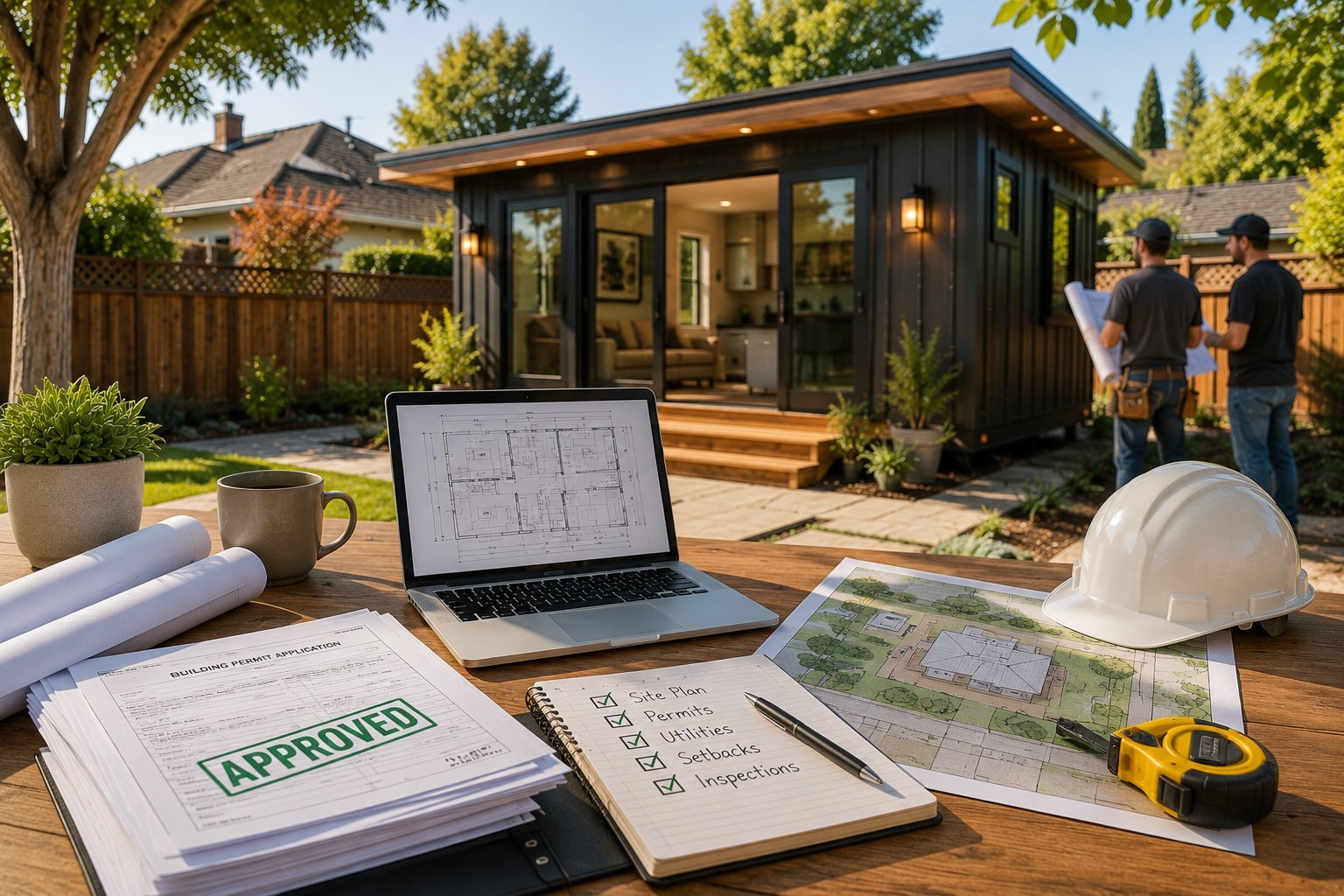
California has worked to make ADU permitting more predictable, but local jurisdictions still vary. Some cities and counties have streamlined ADU approval processes. Others require more steps. Most permits cover the placement of the unit, the connection to utilities, and the site preparation work.
The factory built unit itself is constructed to applicable national or state code standards before it arrives, which simplifies the inspection process on your end. The permit work generally focuses on the site, the pad, the utility connections, and the placement, rather than the construction of the unit itself.
Working with a builder who has delivered units in California and knows the typical permitting process saves you time. They can usually point you to the documents and information your local jurisdiction will want, and they can coordinate with your contractor on the site work so the timing of delivery and permit approval line up.
Financing options
Tiny Home Cottages often recommends 21st Mortgage Corporation for buyers who need financing. They specialize in manufactured and mobile home loans and have been one of the leading lenders in the industry for many years. Financing may include options with down payments ranging from zero percent for well qualified buyers to higher percentages depending on credit profile and property conditions.
The typical loan application process is straightforward. You choose the home model that fits your needs and budget. You complete a loan application through the lender. You receive loan approval and review financing terms. You lock the interest rate and submit required documentation such as identification, income verification, and bank statements. You sign closing documents and finalize the loan. Once completed, funds are distributed and the home purchase process moves forward.
Most California buyers move from initial inquiry to occupancy in a much shorter window than a site built project. Predictable timeline, predictable cost, and a clear financing path are the three things that make this category work for most homeowners.
Common buyer profiles
Different buyer profiles tend to gravitate to different models. Homeowners adding space for an aging parent usually want a single story unit with accessible features, comfortable square footage, and a layout that supports daily living without stairs or tight transitions. Single story tiny homes and HUD manufactured homes both work well for this use case depending on the lot and the parent's needs.
Homeowners adding space for an adult child often look at lofted models because the second level loft gives a private sleeping area while keeping the ground floor open for living. Lofted models also tend to come in at a price point that works for buyers funding the unit themselves.
Downsizers buying for their own use lean toward premium single story or cabin series cottages. They want the finishes to feel like a real home, not a temporary structure. Cement exterior siding, upgraded interiors, and warmer cabin style materials all matter when the home is going to be the primary residence for the long term.
Investors and homeowners adding rental capacity tend to focus on durability, ease of maintenance, and floor plans that appeal to a broad set of renters. The right model in this case is less about personal style and more about long term wear and consistent tenant appeal.
What to confirm before signing
Before you sign on a model, confirm a short list of essentials. Confirm the exact model number, the dimensions, and the included features in writing. Confirm the delivered price with all line items broken out. Confirm the delivery window and what happens if there are delays. Confirm the warranty terms and the process for service issues. Confirm the financing terms if you are using a loan and make sure the rate is locked in writing.
None of these are difficult to confirm. The reason to do it is that small details have a way of slipping when the conversation stays verbal. Putting the important pieces in writing gives both sides a clear reference point and reduces the chance of misalignment as the project moves toward delivery.
Timeline planning from order to move in
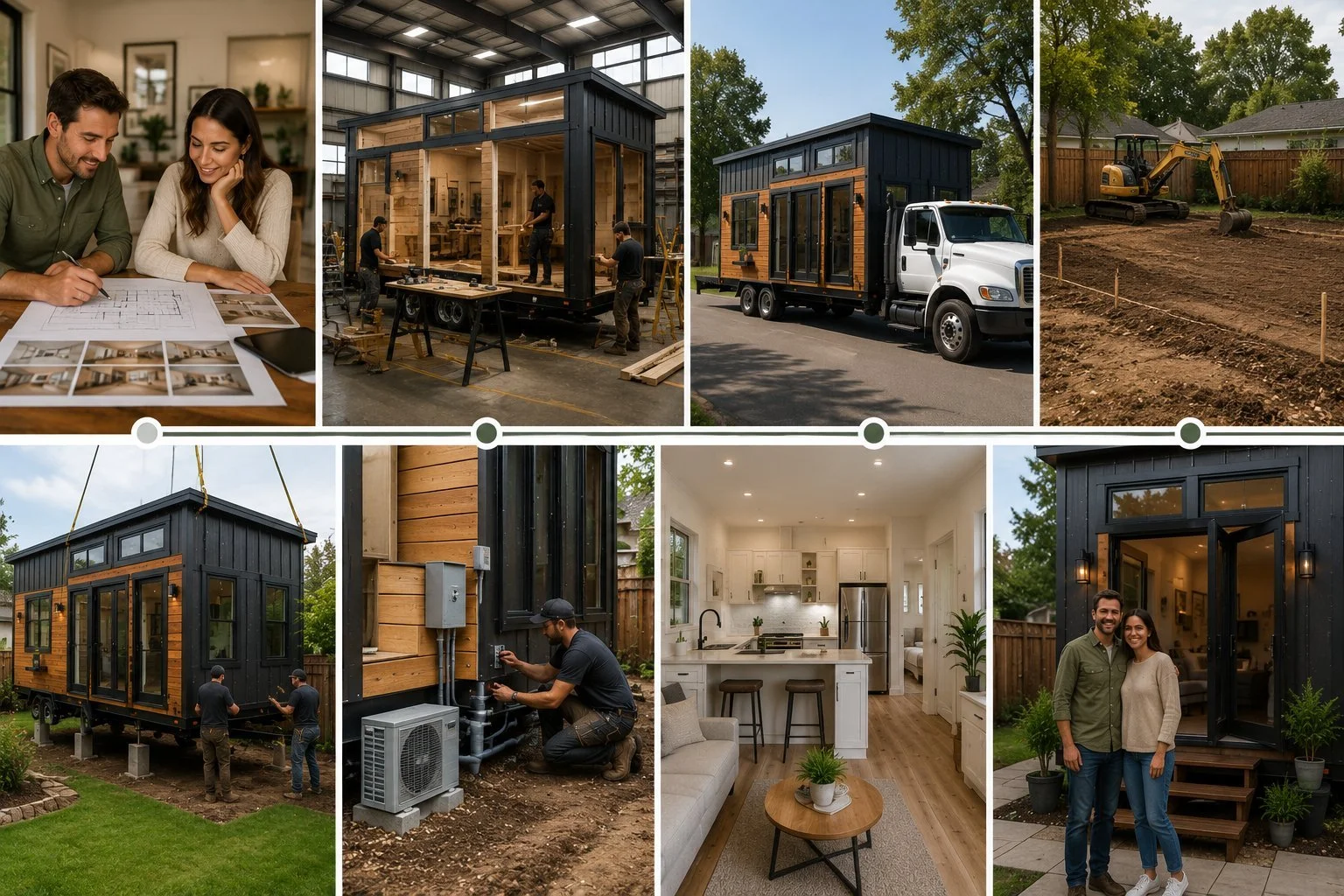
Most California ADU buyers want a realistic timeline before they commit. A typical schedule starts with model selection and a deposit. The factory production schedule sets the build window, which usually runs a known number of weeks. Site prep happens in parallel so the pad, utilities, and any local permitting are ready when the home is built. Once the unit is finished, it ships, gets set, leveled, anchored, and connected.
For buyers who handle site prep proactively and have financing in place, the full timeline from inquiry to occupancy is much shorter than a site built project. The factory built path removes most of the weather risk, supply risk, and subcontractor risk that drag traditional builds out. Knowing this upfront helps you plan around the home rather than wait on it.
If you are ready to see actual models with finish levels and floor plans, you can browse our California ADU options and compare series side by side. From there, a quick conversation about your lot and your goals will tell you whether one of the models is the right fit.
Site work that can affect cost
Site work is the variable most California buyers underestimate. The pad is the main piece, and the cost depends on the lot. A flat suburban backyard with good drainage needs less work than a sloped rural lot with poor soil. Concrete pads, gravel pads, and pier systems each have their own price points and tradeoffs. A local contractor or your builder can usually recommend the right approach for your specific situation.
Utility runs are the other major piece. Water, power, and waste lines need to reach the unit. If existing connections are close to the placement spot, the work is straightforward. If trenching across the property is required, the cost grows. Local code may also require permitted electrical and plumbing work, which adds inspection steps. None of this is unusual but all of it benefits from a clear estimate before the project starts.
Grading, drainage, and any tree or fence removal also fall into the site work bucket. Walking the lot with a contractor early in the process gives you a realistic number to add to the home cost. That total is what matters for budgeting, not just the model price.
When a California ADU is the right move
Not every property is the right fit for an ADU and not every household needs one. The California buyers who get the most value are usually solving a specific problem. Aging parents need their own space without moving away from family. Adult children need an affordable launching pad. Multigenerational families need privacy without separate addresses. Downsizers want a simpler home with lower overhead. Rental investors want extra income from underused land.
If your situation matches one of these patterns and your lot can support a factory built unit, a California ADU is worth serious consideration. The combination of predictable timeline, controlled cost, and quality factory construction is hard to match with other housing options at the same scale.