
How to Find Quality ADU Homes for Sale Near You

Most homeowners start their ADU research by searching for options near them. That makes sense. You want to know what is available, who can deliver to your property, and what the homes actually look like in person. The challenge is that the search results vary widely in quality. Some are real factory builders. Some are resellers with limited inventory. Some are local contractors quoting site builds with long timelines and uncertain pricing.
This guide will help you make sense of the search and focus on the options that are actually worth your time. The goal is to give you a clear path from initial research to a real shortlist, so you can spend less time scrolling and more time making a decision.
What near me really means for ADU buyers
When you search for ADU homes for sale near you, the results that come back are not always local. Some are nearby dealers or resellers. Some are factories that deliver across a wide region. Some are contractors who only build on site. For a factory built ADU, the actual factory does not need to be in your county or even your state. What matters is whether the builder delivers to your area and whether the home meets the code requirements where you live.
In California and Oregon, most factory built ADUs come from manufacturers with regional reach. The home is produced at the factory, then trucked to your site. Delivery distance affects cost but does not affect quality. A unit built in a controlled factory and shipped two hundred miles is generally a better product than a unit built locally on an open lot by a small crew under variable conditions.
So when you search near me, what you are really looking for is a builder who can deliver to your property, has the right experience, and offers the model types you want. Not necessarily the closest one to your zip code.
Delivery areas explained
Factory built ADU homes from Tiny Home Cottages are delivered across California and Oregon. The delivery process involves transporting the unit on a truck and trailer, navigating to the site, setting the home in the prepared location, leveling, anchoring, and making the basic connections to utilities. Most homeowners do not think about delivery logistics until they get close to purchase, but the access piece is worth checking early.
A standard delivery needs a clear path from the road to the final spot. Tree branches, fences, sheds, overhead wires, narrow gates, and tight turns all affect whether a truck can reach the site. For most residential lots, this is straightforward. For more rural lots, hillside lots, or lots with restricted access, a site visit before ordering is essential.
Delivery cost varies based on distance and complexity. A unit going to a suburban backyard with a paved driveway and a wide gate costs less to set than a unit going to a steep rural lot with a narrow approach. Builders that have done a lot of deliveries can usually quote this accurately after a quick site review.
Factory built vs site built quality
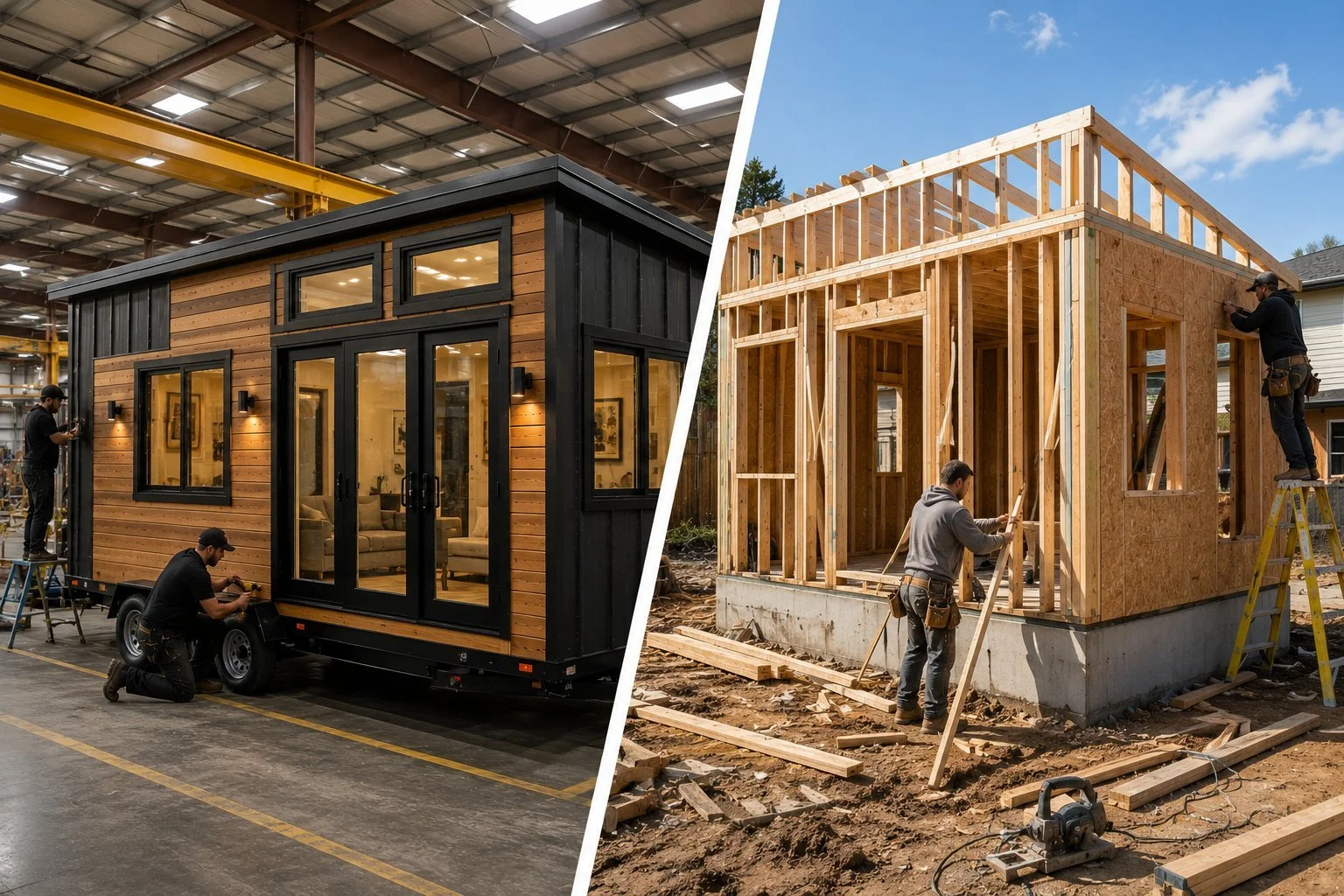
Buyers searching for ADU homes near them often run into both factory built and site built options. The two products are very different, and the differences matter.
A factory built home is constructed indoors under controlled conditions. The same crews use the same materials and the same processes every day. Inspections happen continuously during construction. Materials stay dry, walls stay square, and finishes line up because the build environment is consistent. The home is then delivered as a finished or near finished unit.
A site built home is constructed outdoors on your property. The work depends on local subcontractors, weather, supply chains, permits, and a long list of variables that affect timeline and quality. A good local contractor can build a good ADU, but the variance from one project to the next is much wider than a factory built unit.
For most homeowners, the factory built option provides better predictability on price, timeline, and quality. That predictability is the main reason factory built has grown so quickly as a category over the past several years.
What to inspect before buying
Before you commit to a specific ADU home for sale, take time to inspect or evaluate the model in three areas. The first is construction. Look at how the walls meet the floor and ceiling. Check that doors and windows operate smoothly. Look for consistent finishes inside and outside. A quality factory build shows up in the small details.
The second area is the features and floor plan. Walk through the layout and picture daily life in the home. Where does the bed go. Where do you keep groceries. Where do you sit. Where do you put the trash bin. These practical questions matter more than fancy renderings.
The third area is the builder and the support behind the home. Who built it. How long have they been in business. What is their quality assurance process. How do they handle issues after delivery. A good builder welcomes these questions and answers them directly. A weak one tries to redirect to features and pricing.
If the home you are looking at comes from a serious factory builder with a history of quality work, the answers will be clear. If they are vague or evasive, that is a signal worth listening to.
Common pitfalls to avoid when shopping
A few common pitfalls come up over and over for buyers searching ADU homes near them. The first is fixating on the lowest headline price without checking what is included. Some sellers advertise a low base price and then add delivery, set, anchoring, and basic options as separate line items. The total ends up higher than a competitor whose base price already included all of that. Comparing apples to apples means asking for an itemized quote.
The second pitfall is underestimating the site work. The home itself is one piece of the project. The pad, the utility connections, and the local permitting are the other pieces. Some buyers focus only on the home cost and discover the site work runs higher than expected. Getting a separate site work estimate before you commit to a model is worth the time.
The third pitfall is buying based on pictures alone. Renderings and staged photos look great. Real homes look different in different conditions. Try to see a similar model in person, watch a delivery video, or talk to a recent buyer if you can. The more concrete your reference point, the less likely you are to be surprised at the end.
Questions to ask any ADU seller
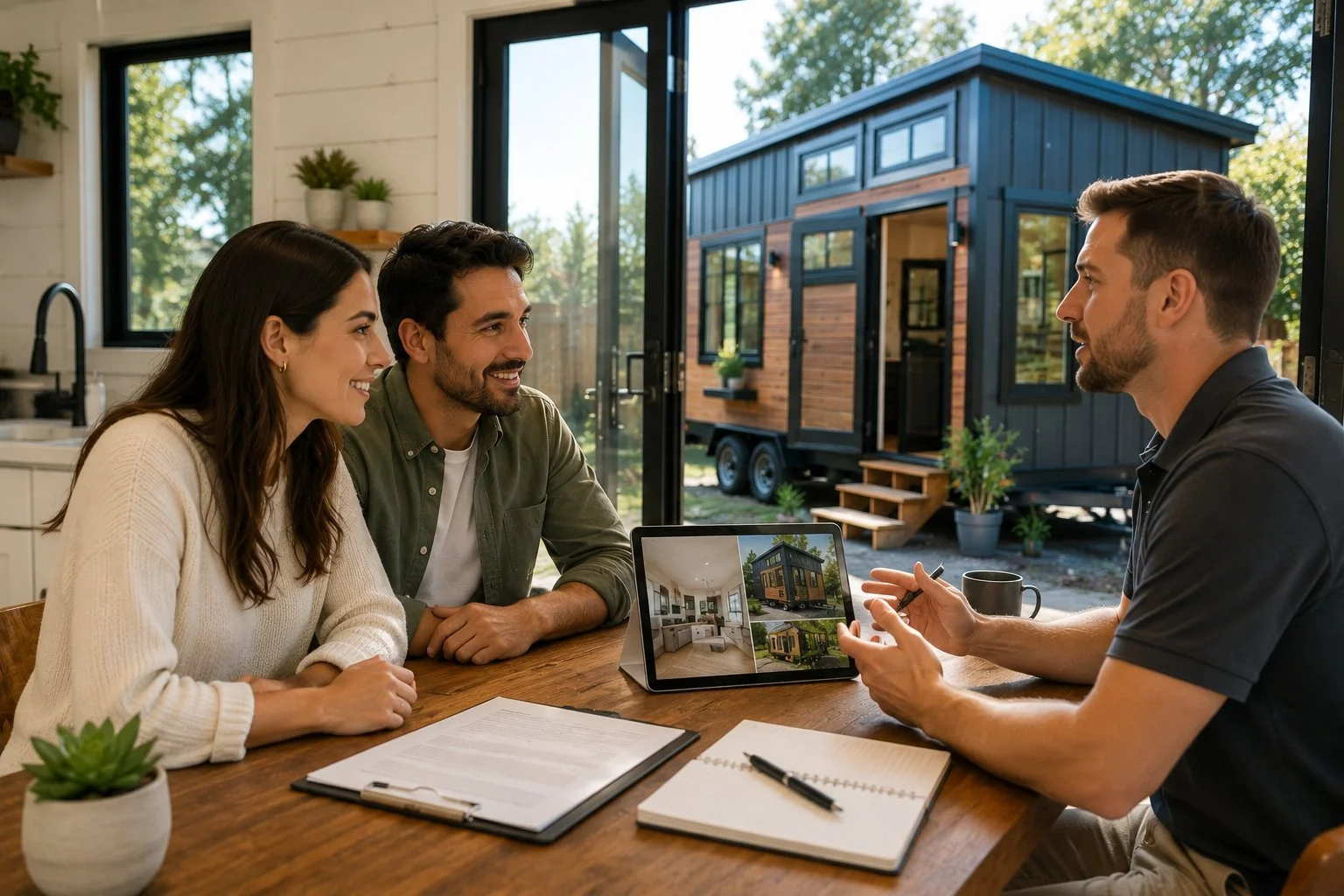
Three questions will tell you a lot about who you are dealing with. The first is who actually builds the home. Some sellers are factories, some are dealers, some are brokers. None of those are bad on their own, but knowing who is on the other side of the transaction matters when something needs attention later.
The second is what is included in the price. A clear, written breakdown should cover the home itself, delivery, set, anchoring, included options, and any standard warranty. If the seller hesitates or gives a soft answer, push for specifics.
The third is what happens after delivery. Service and warranty support is the part of the relationship that lasts the longest. A serious operator will walk you through their process, their warranty terms, and the way they handle issues that come up after the home is in place.
How financing usually works locally
Most local ADU buyers finance the purchase. Tiny Home Cottages often recommends 21st Mortgage Corporation, which specializes in manufactured and mobile home loans and has been one of the leading lenders in the category for many years. Their options range from zero percent down for highly qualified buyers to higher down payments depending on credit and property conditions.
The loan process is more straightforward than a traditional mortgage on a stick built home, but the documentation requirements are still real. You will need identification, income verification, and bank statements. You will pick the home model, complete the application, receive approval, lock the rate, and sign closing documents. Funds are released and the purchase moves to delivery scheduling.
Knowing the financing path before you fall in love with a model keeps the timeline realistic and the budget grounded. Pre-qualifying early gives you a clear picture of what you can afford and what the monthly payment will look like.
Comparing local and regional sellers
A real comparison between two ADU sellers comes down to a few specific items, not the website design or the marketing language. Start with experience. How many homes has the seller delivered in your area. How long has the underlying factory been building. A few years of experience is not the same as a few decades. The factories Tiny Home Cottages partners with have spent decades producing small homes and cottage style dwellings. That kind of background shows up in every part of the finished product.
Next, look at the actual model lineup. Some sellers carry one or two designs and try to fit every buyer into the same product. A serious operator offers a range of options including single story, premium single story, lofted, cabin series, and HUD manufactured homes so buyers can pick the right model for their use case and lot.
Finally, look at how the seller talks about timeline, pricing, and warranty. If those answers are vague, the rest of the relationship will probably be vague as well. If those answers are specific and written down, the seller has done this enough times to know what matters.
What to bring to your first conversation
Coming prepared makes the first conversation more useful for both sides. Bring a basic sketch of the lot showing where you want the home placed. Bring the access path from the street to the placement spot, with any tight clearances noted. Bring a sense of your budget range and your financing plan. Bring a short list of the people who will use the home and what they need from it.
None of this has to be perfect. A simple hand drawing and a rough budget number are enough to start. The point is to make the conversation about your specific situation, not a generic pitch. A builder who is ready to talk through your actual lot and your actual use case will give you better answers than one who only wants to walk through brochures.
Next steps
Once you know what to look for in a factory built ADU, the next step is to look at real models. Pictures and floor plans on a website tell you a lot. Walking through the actual home tells you more. If you can visit a display unit or tour a recently delivered home in your area, do it.
Pricing comes next. Get a clear quote that includes the home, delivery, set, and any add-ons. Vague quotes lead to surprise costs at the end. A reputable builder will break down what is included and what is not.
Financing is the last major piece. Tiny Home Cottages often recommends 21st Mortgage Corporation for buyers who need a loan. They specialize in manufactured and mobile home loans and offer a range of options based on credit, property, and down payment.
If you are ready to start looking at real options, you can see ADU models available in your area and review floor plans, finish levels, and pricing context all in one place. That is the fastest way to move from research to a real conversation about your property and your goals.