
ADU Homes for Sale in California: What to Look For in 2026

If you are searching for ADU homes for sale in California, you have probably noticed that the market looks very different than it did even a couple of years ago. Demand for detached backyard cottages, tiny homes, and small manufactured homes has grown steadily. Prices on traditional housing have stayed high. State and local rules around ADUs continue to make it easier for homeowners to add a second unit to their property. The result is a real, active market for factory built ADU homes across the state.
This guide is for homeowners who want to understand the market before they commit to a purchase. Not a marketing pitch. A practical overview of what is available, how the models differ, what financing usually looks like, and how to separate a quality build from a low effort one.
California ADU market overview
The ADU category in California covers a wide range of structures. On one end you have small detached cottages built for guests, family members, or rental use. On the other end you have larger manufactured homes that work as a full primary residence on smaller lots. In between, you find tiny homes, lofted cottages, and cabin style cottages that fit different lifestyle preferences and budgets.
What ties them together is the use case. These homes are typically placed on existing residential property as a second living space. They are not the main house. They are a detached structure designed to add useful square footage without the cost and timeline of building a full custom home.
California homeowners are buying these for housing aging parents, supporting adult children, generating rental income, downsizing, or simply adding flexible space on a property they already own. The state has moved over the past several years toward making ADU permitting more predictable, which has opened the door for more buyers to seriously consider this path.
The factory built portion of the market is growing the fastest. Buyers want predictable pricing, controlled timelines, and consistent quality. Site built ADUs still exist, but the price and timeline gap continues to push more homeowners toward factory built options.
Single story vs lofted models
The first decision most California buyers make is whether to go single story or lofted. Single story tiny homes have the full living space on one level. They are easier for older buyers, easier for buyers with mobility considerations, and easier to use as a long term guest house. Most single story models from Tiny Home Cottages have approximately nine foot ceilings throughout, which gives the interior a much larger feeling than the footprint suggests.
Lofted models add a second level loft above the main living area. They feature steep roof pitches, large stacked windows, and a more dramatic vertical feel. The loft is usually used as a sleeping area, which frees up the ground level for living, kitchen, and bath. Lofted homes pack more usable space into a smaller footprint, which matters when lot size or setback rules are tight.
Both styles work as long term residences. The right choice depends on who is living in the unit and what they value. Older buyers tend to prefer single story for accessibility. Younger buyers and downsizers tend to like the lofted designs for the space efficiency and the look.
Cabin series and HUD options
Beyond the single story and lofted categories, Tiny Home Cottages offers cabin series cottages and HUD manufactured homes. Cabin series cottages feature natural cabin style finishes, including tongue and groove pine walls and ceilings, metal roofing, and fiber cement siding. These have a warmer, more rustic feel and tend to appeal to buyers who want the cottage to feel distinct from the main house.
HUD manufactured homes are the larger end of the lineup, generally ranging from approximately 400 square feet to 1000 square feet. These work well as a primary residence on smaller lots, as a long term home for an extended family member, or as a more substantial detached unit when the lot supports the size. HUD homes follow national HUD code construction standards and offer more layout flexibility than a smaller tiny home.
The right model comes down to how the unit will be used, who will live in it, and what the lot can support. A backyard cottage for a parent looks different from a primary residence for a downsizer, even when the price points are similar.
Financing through 21st Mortgage
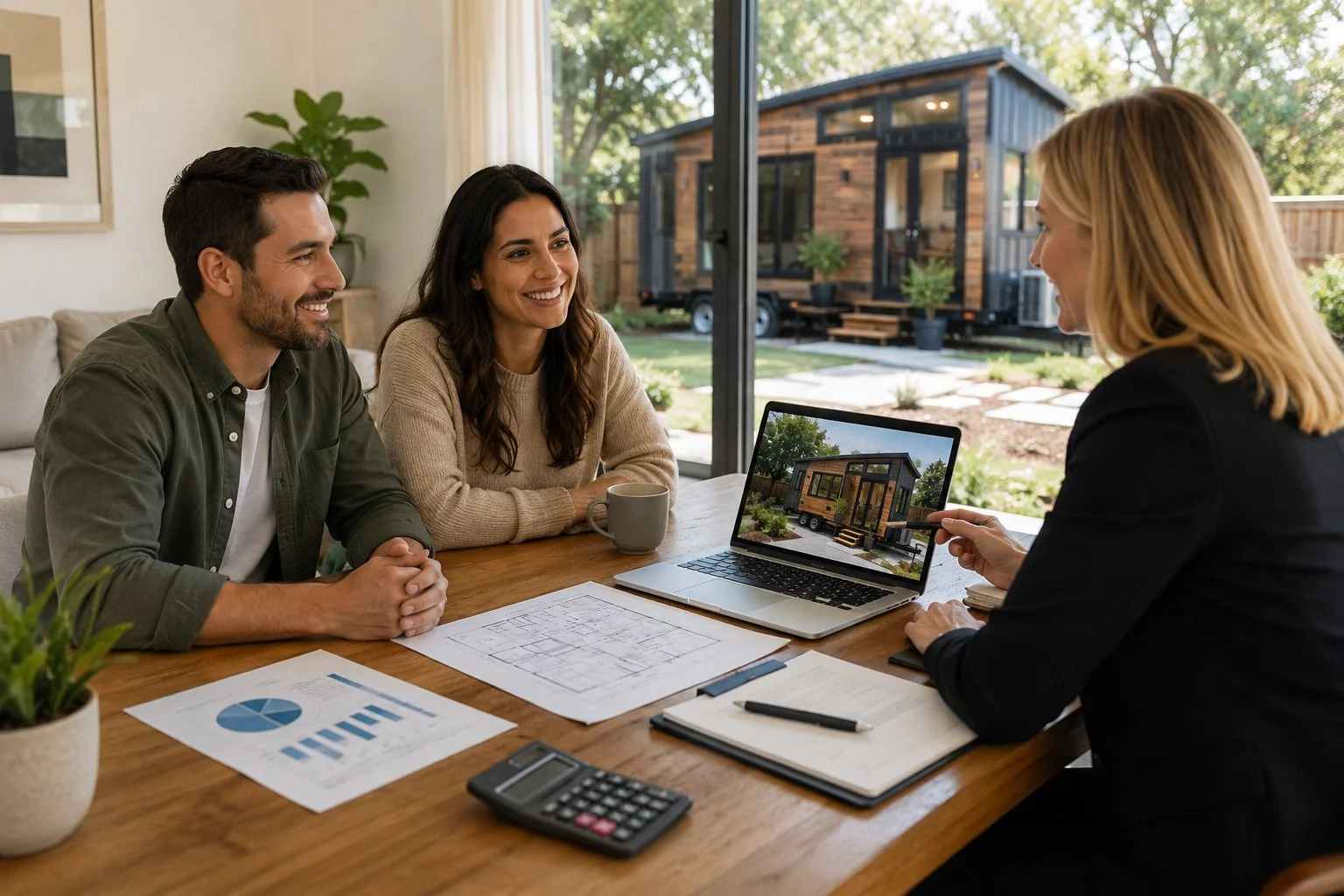
Most buyers use financing for an ADU home purchase. Tiny Home Cottages often recommends 21st Mortgage Corporation, which specializes in manufactured and mobile home loans and has been one of the leading lenders in the industry for many years. Their options range from zero percent down for highly qualified buyers to higher down payments depending on credit profile and the specifics of the property.
A typical loan application moves through a clear set of steps. You pick the home model that fits your needs and budget. You complete a loan application through the lender. You receive loan approval and review financing terms. You lock the interest rate and submit identification, income verification, and bank statements. You sign closing documents and finalize the loan. Once everything is signed, funds are distributed and the home purchase process moves forward.
The process is more straightforward than a traditional mortgage on a stick built house, but the documentation requirements are still real. Getting your income, identification, and bank statements organized before you apply speeds the timeline by weeks.
Choosing a builder
The factory builder behind the home matters as much as the model itself. You want a builder with decades of experience producing small homes and cottage style dwellings, not a startup operating out of a small shop. You want quality assurance protocols that show up in the finished home, not just the marketing copy. You want a partner that can deliver, set, and stand behind the work.
Questions worth asking include how long the manufacturer has been building, how their quality assurance process works, what standards the home is built to, and how they handle warranty and service after delivery. The answers tell you everything you need to know about whether you are buying from a real operator or a reseller who flips units.
Sizes and footprints to consider
Footprint matters more than most California buyers realize. The home that fits one lot is wrong for the next. Small tiny homes work on tight lots and in side yards where setbacks limit the available space. Mid sized lofted models fit standard residential backyards comfortably. HUD manufactured homes in the 400 to 1000 square foot range need a larger pad and more clearance, but they unlock a primary residence use case that smaller units cannot.
The right footprint comes down to who is using the home and how long they will be in it. A short term guest house can lean smaller because the use is occasional. A long term home for a parent or adult child needs enough room for daily living, storage, and personal space. A primary residence for a downsizer often goes larger so the home supports a full life, not just a sleeping space.
Walking through the lot with the actual model dimensions in mind is the fastest way to know what works. Measuring the pad area, the clearance from fences, and the access for delivery makes the model decision concrete rather than theoretical.
What sets a quality factory build apart
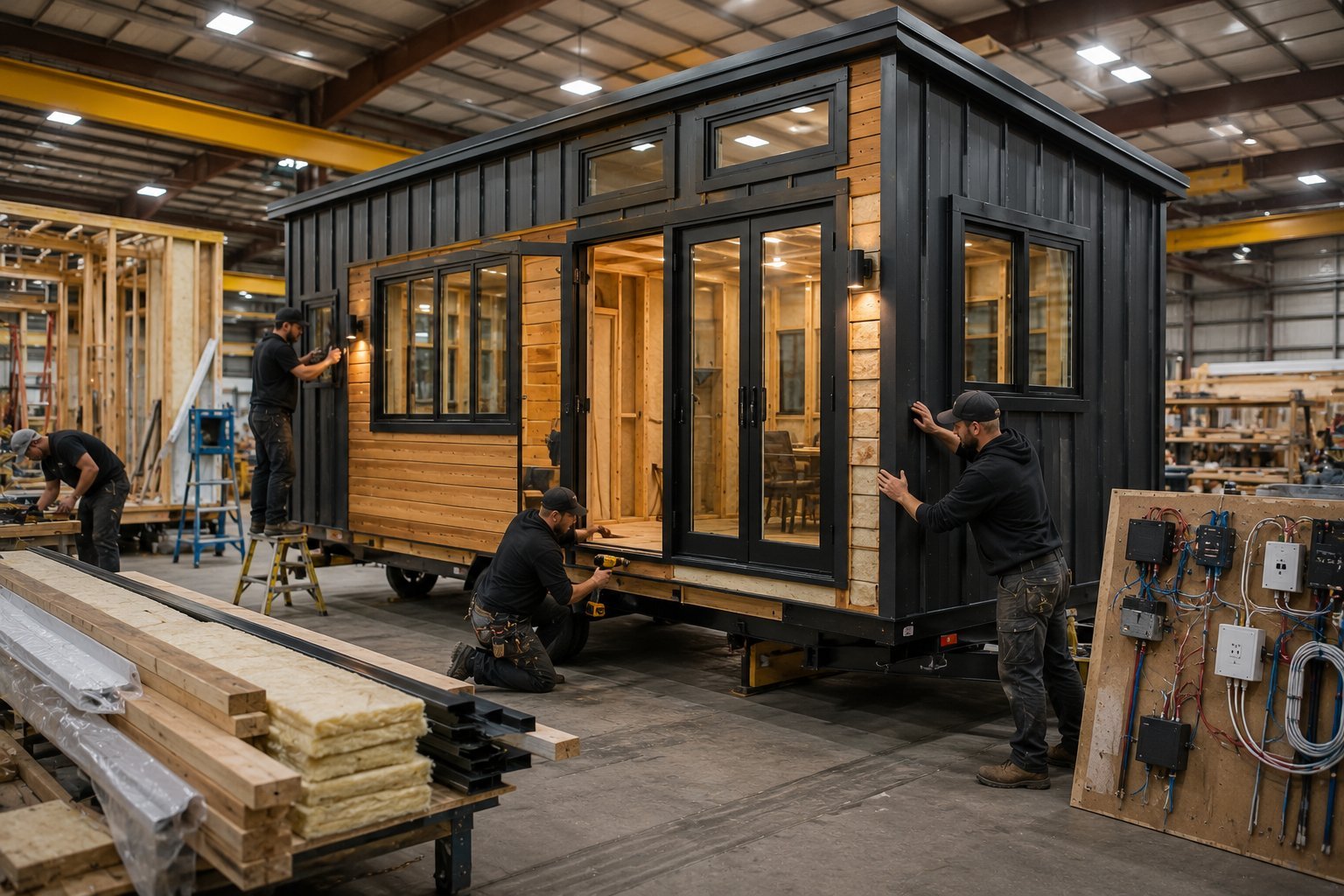
Not every ADU on the market is built the same way. A quality factory build shows up in details that are easy to miss in a brochure but obvious in person. The walls are square. The doors and windows operate smoothly. The trim lines are clean. The cabinets close flush. The siding is consistent without gaps or unevenness. None of these are exciting features, but they are the difference between a home you enjoy and a home that frustrates you.
Quality also shows up in the materials. Tiny Home Cottages works with manufacturers that have built small homes and cottage style dwellings for decades. The materials are selected for durability, not just appearance. Roofing, siding, framing, insulation, plumbing, and electrical components are chosen to hold up over years of real use, not just look good for the first week.
The third quality marker is the process. A factory that produces homes on a controlled schedule under continuous inspection delivers a different product than a shop that runs jobs as they come in. Repeatability is the engine behind factory built quality, and it is the part that buyers should look for when they evaluate options.
Timeline expectations from inquiry to occupancy
One of the biggest reasons California buyers choose a factory built ADU is timeline predictability. A typical buyer journey starts with model research and a conversation with a builder. From there, the buyer confirms placement details and pricing, applies for financing, locks the loan, and schedules production. The factory build runs on a known timeline while the site prep happens in parallel. Once the home is ready, it ships to the property, gets set, leveled, anchored, and connected.
The full path from initial inquiry to occupancy is usually weeks to a few months, depending on financing, site prep, and factory schedule. Compared to a site built ADU that can stretch for a year or more once permits, weather, and subcontractor scheduling come into play, the factory built path is far more predictable from start to finish.
Common buyer profiles in California
California ADU buyers tend to fall into a few clear profiles. Homeowners adding space for an aging parent usually want a single story unit with accessible features and comfortable square footage. Living close to family without sharing a roof is the main driver here, and these buyers care most about how the home will feel for daily living over years, not just months.
Homeowners adding housing for an adult child often gravitate to lofted models because the second level loft gives a private sleeping area while keeping the ground floor open for living. Price tends to matter more in this profile because the unit may be funded partly or entirely by the parent generation.
Downsizers buying the unit as their own primary residence focus on finish level, durability, and how the home will feel as a long term residence. Premium single story models and cabin series cottages both perform well in this profile because the finishes feel like a real home, not a temporary structure.
Investors and homeowners adding rental capacity care most about durability, ease of maintenance, and broad appeal to renters. Floor plan choice in this profile leans toward layouts that work for a range of tenant types, not just one specific lifestyle.
What to confirm before signing
Before committing on a model, confirm a short list of essentials in writing. Confirm the exact model number, dimensions, and included features. Confirm the delivered price with all line items broken out. Confirm the delivery window and what happens if delays occur on either side. Confirm warranty terms and the service process. Confirm financing terms and the rate lock if you are using a loan.
None of these are hard to confirm. The reason to do them in writing is that verbal commitments slip when timelines stretch. A clear written reference protects both sides and prevents misalignment as the project moves toward delivery.
If you want to see the lineup of factory built models and compare options side by side, you can view available ADU homes in California and see real layouts, finish levels, and pricing context. Walking through the gallery is the fastest way to narrow down which series fits your property and your goals.