
ADUs on Wheels: A Practical Guide to Movable Backyard Living
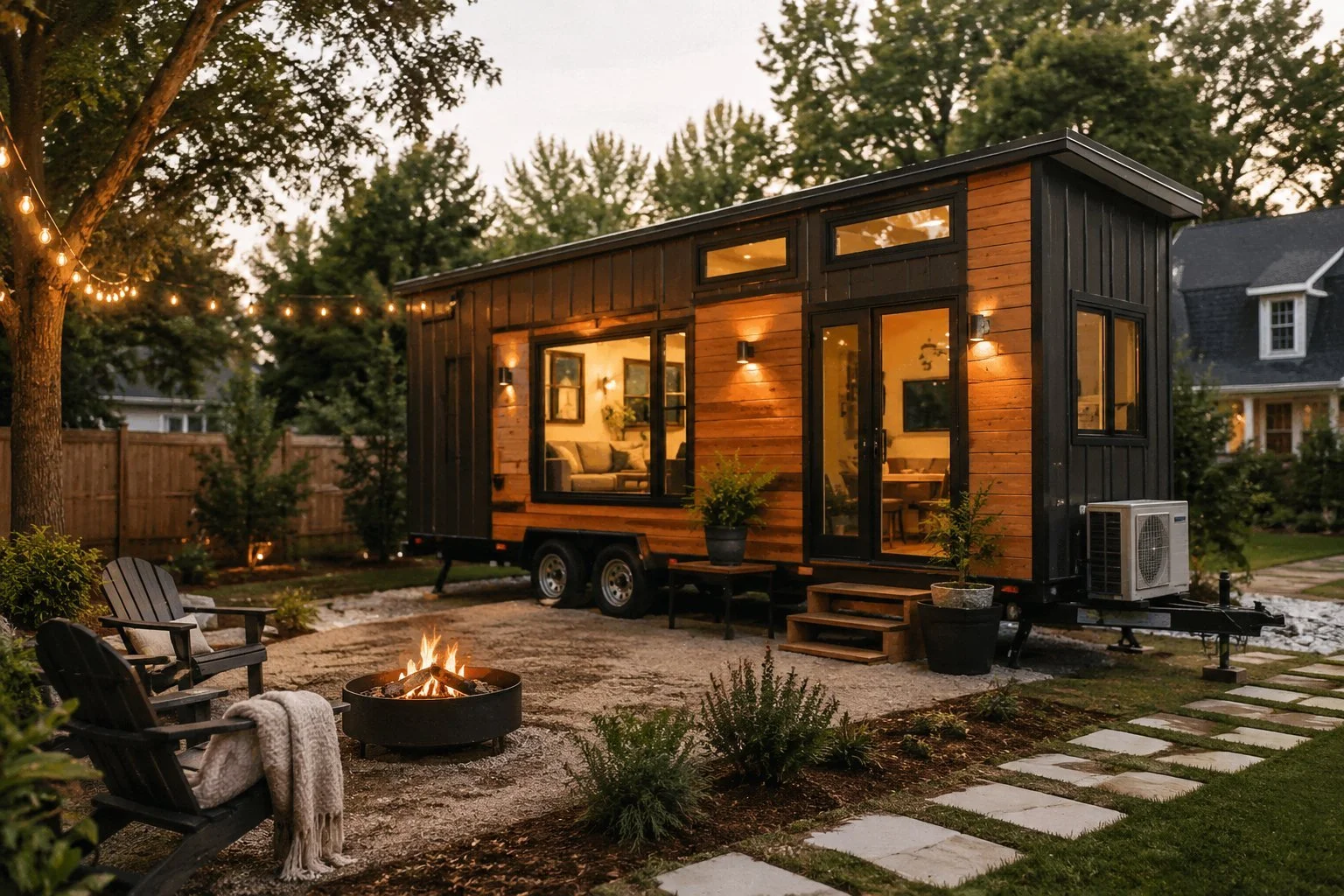
If you have started researching ADUs and the phrase ADU on wheels keeps showing up, you are not alone. More homeowners are exploring movable housing because the timeline, the cost, and the flexibility look very different from a traditional site built ADU. Some buyers want a unit they can relocate someday. Others just want something delivered, set, and ready to live in within a reasonable window. Either way, an ADU on wheels covers a different set of needs than a permanent structure, and understanding those differences makes the buying decision much easier.
This guide walks through what an ADU on wheels actually is, where it fits on a residential property, the most common use cases, and what to expect when it comes time to order one. The goal is to give you a clear picture of how these homes work in real life so you can decide whether a movable unit makes sense for your family and your property.
What an ADU on wheels actually is
The phrase ADU on wheels is a catch-all for movable accessory dwelling units that can be transported to your property and placed in a usable spot. In practice, that usually means a factory built tiny home, a park model style structure, or a small manufactured home that arrives by truck and is set on a prepared site. The structure itself is built inside a controlled factory environment, then delivered to the lot, leveled, anchored, and connected to utilities.
The "on wheels" piece refers to how the unit travels, not necessarily how it lives. Some buyers leave the chassis in place. Others set the home permanently on piers or a foundation. The flexibility is what draws people to this category. You can take delivery in a much shorter window than a site built project, and you avoid the unpredictability that comes with traditional construction crews, weather delays, and rolling subcontractor schedules.
A modern movable ADU is not the camper or RV that most people picture. The units sold by Tiny Home Cottages are built to national building code standards under strict quality assurance protocols. The construction matches what you would expect from a small house, just produced inside a factory. Walls, insulation, electrical, plumbing, roofing, finishes, all of it goes in under controlled conditions with consistent inspection at every stage.
Movable tiny homes vs traditional ADUs
The biggest difference between a movable tiny home and a traditional site built ADU is how it gets built and how predictable the process is. With a site built ADU, the timeline depends on weather, subcontractors, inspections, supply chains, and dozens of small variables that can stretch a four month project into twelve. With a factory built movable unit, the home is constructed indoors on a controlled schedule. You know what you are buying before it shows up.
Cost is another contrast. A site built ADU in California can run well into six figures once you add design fees, permits, materials, labor, and contractor overhead. A factory built tiny home or movable ADU is generally more predictable on price because the unit is produced under repeatable conditions. The same crew uses the same materials and the same processes every day. That repeatability is the part most people overlook when they compare a site build to a factory build.
Quality control plays out differently too. In a factory, the same team assembles the same components every day. Materials are stored indoors and protected from weather. Inspections happen at every stage of the build instead of just at city or county milestones. That consistency shows up in the finished product. You can see it in how square the walls are, how the doors and windows fit, and how the finishes line up.
Resale and future flexibility are worth thinking about as well. A site built ADU is locked to the lot. A movable unit can be relocated if your family situation changes. That option has real value, especially for homeowners who are not sure how long they will stay at the current property.
Where they fit on residential lots
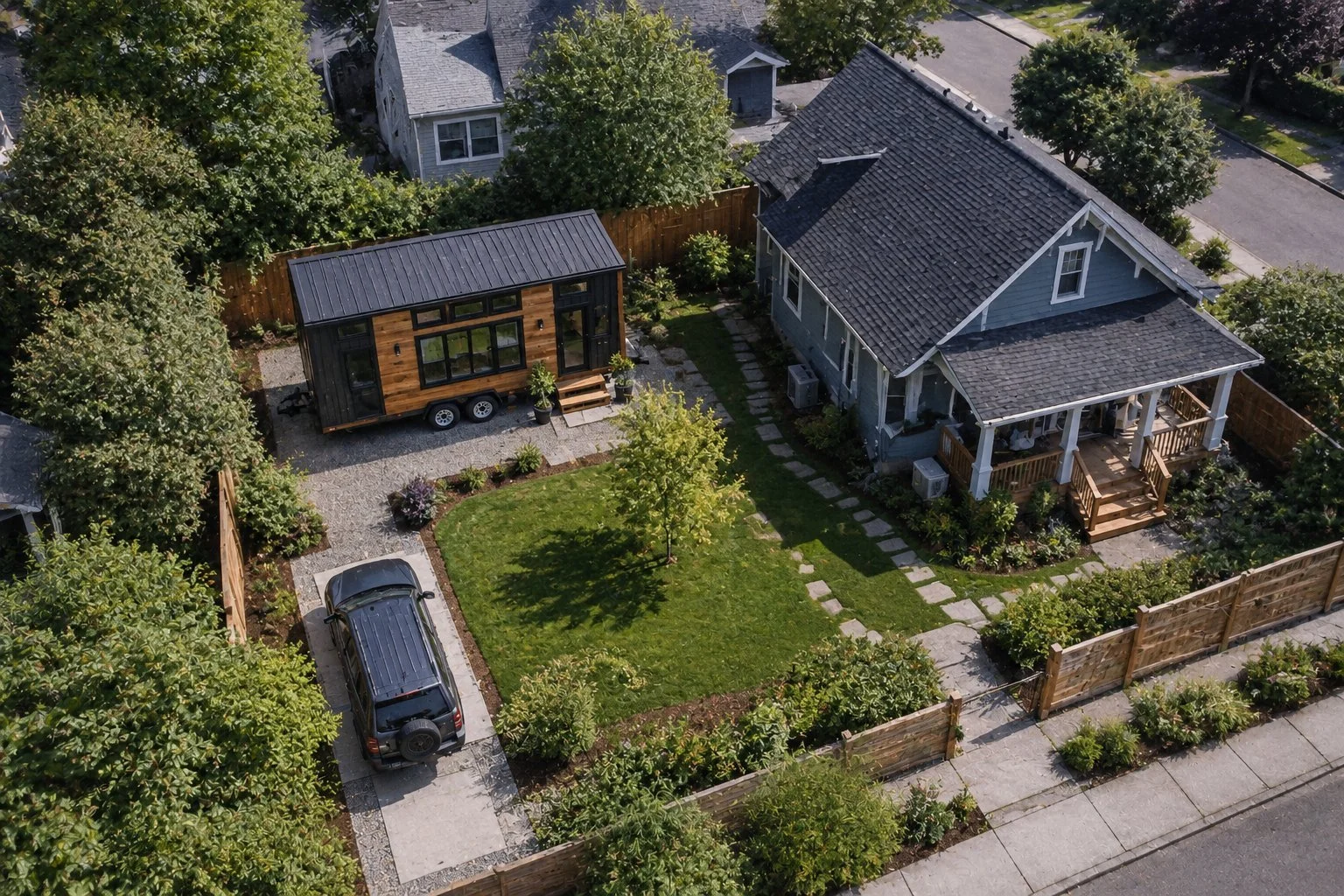
Most homeowners who buy a movable ADU place it in the backyard, on a side yard, or in an unused portion of a larger residential lot. The footprint is small, so the unit can usually fit on properties that would not support a full site built second house. Placement still depends on local setback rules, utility access, and access for the delivery truck, but the unit itself is flexible.
You want a clear path from the street to the final placement spot. You want a prepared pad, usually gravel or concrete, that is level and properly sized for the model you choose. You want water, power, and waste connections close enough to reach without major utility work. None of this is unusual. It is just the prep that makes delivery day smooth.
Trees, fences, sheds, and overhead wires are the most common surprises that come up during placement planning. Walking the path with a tape measure ahead of time saves you headaches later. If you are working with a builder who handles delivery, they will usually do a site review with you before you commit to a model, and that review covers all the practical pieces that affect how the truck and crane reach the final spot.
Common use cases
The reasons people buy these homes vary, but a few patterns come up over and over again. Aging parents move into the unit and live close enough to be helped but far enough to keep their own space and routine. Adult children come home after college or a job change and stay in the cottage while they save for a place of their own. Some homeowners use the unit as a long term guest house. Others downsize into the cottage themselves and rent the main house or share it with extended family.
A growing share of buyers also use these units as a primary residence on smaller lots, especially in areas where land is more affordable than full sized homes. The unit serves as the main house, and the buyer skips the cost and timeline of a full custom build. For first time buyers and downsizers alike, this can be the difference between owning and renting.
Multigenerational living is another major driver. Families that want grandparents close to grandchildren, or adult siblings who want to share property without sharing a roof, find that a movable ADU lets them keep family ties strong while preserving privacy. The unit creates real separation without forcing anyone into a separate neighborhood or city.
How to get one delivered
The process is more straightforward than most people expect. You start by picking a model that fits your needs and budget. From there, you confirm placement details, prepare the site, and arrange financing if needed. Tiny Home Cottages often recommends 21st Mortgage Corporation for buyers who need a loan. They are one of the largest lenders for manufactured and mobile homes, with options ranging from zero percent down for highly qualified buyers to higher down payments depending on credit profile and the specifics of the property.
Once you are approved, you finalize paperwork, lock the rate, and schedule delivery. The unit is built in the factory, transported to your site, set in place, leveled, and connected. Most buyers go from initial inquiry to occupancy faster than they expect, especially compared to a traditional site built project that can drag on for a year or more.
What to expect on delivery day
Delivery day is one of the more memorable parts of the process. The home is loaded at the factory, secured for transport, and trucked to your address. Depending on the size of the unit and the access on your lot, the delivery crew uses a truck, trailer, and sometimes a crane to position the home on the prepared pad. The actual set usually takes a few hours for a smaller tiny home and longer for a larger HUD manufactured home.
Most buyers want to be home during delivery to confirm the placement and review the home as it is set. Walking around the unit, checking the orientation, and confirming the final position takes only a few minutes but matters for the next several years. Once the home is leveled and anchored, the crew makes the basic connections to utilities and walks you through the initial setup of the systems inside.
Site prep ahead of delivery is the other half of the equation. The pad needs to be level, properly sized, and ready to receive the unit. Utility stub-outs need to be in place at the locations the home expects. If you are working with a local contractor for site prep, coordinate the schedule so the pad and utilities are ready when the home arrives. Delays on either side cost money and add stress.
Common questions buyers ask before ordering
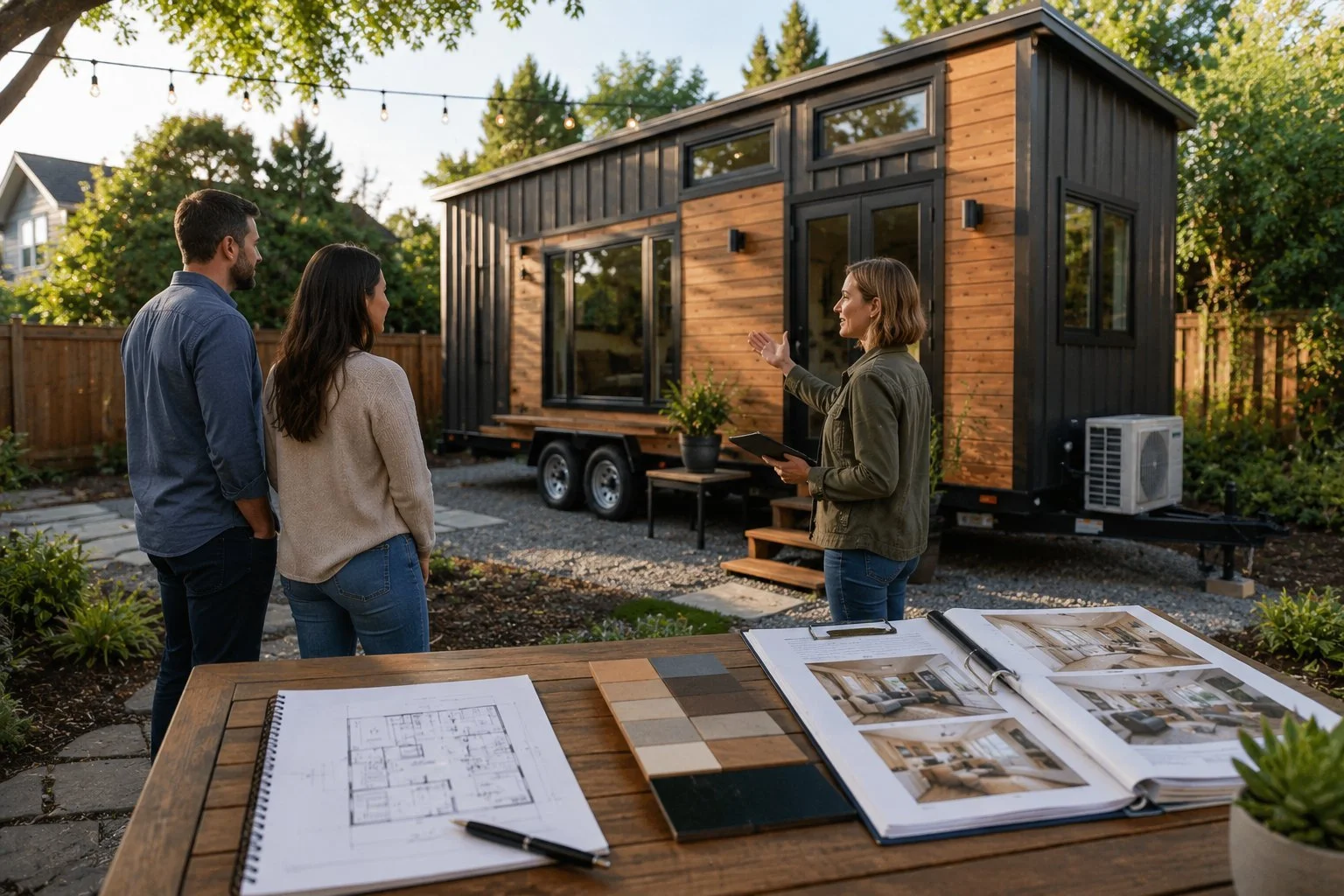
Buyers usually have a few common questions before they commit. The first is whether the home is the right size for the intended use. A small tiny home feels very different from a 500 square foot lofted model, even if both look great in pictures. Spending time inside a similar layout or carefully reading floor plans helps you avoid sizing surprises later.
The second question is whether the home meets local code where the unit is being placed. The factory built unit itself is constructed to applicable national standards, but local jurisdictions have their own placement rules, setback requirements, and utility connection rules. A builder who has delivered in your area can usually walk you through the relevant items.
The third is what happens if something needs service after delivery. Quality manufacturers stand behind the home with a warranty and a clear process for handling service issues. Knowing the warranty terms before you sign is part of buying with confidence rather than buying on hope.
Choosing the right model for your situation
The right movable ADU for one homeowner is the wrong one for the next. The way to land on the right model is to start with the use case and work backward. For an aging parent who will use the home daily, a single story layout with comfortable square footage and accessible features is usually the right call. For an adult child or guest space, a lofted model gives more living area in a smaller footprint and tends to be more affordable. For a primary residence on a smaller lot, a premium single story or HUD manufactured home offers the room and finish level needed for full time use.
The lot dimensions, setback rules, and access all narrow the model list further. Once you know the use case and the lot can support the model, the final piece is finish level and personal preference. The cabin series offers a warmer, more rustic feel with tongue and groove pine and metal roofing. Premium single story models feature cement exterior siding and upgraded interior features. Standard single story models keep the price point lower while still delivering the same factory built quality.
If you want to see the actual models available, you can explore our tiny home models on the main site. The gallery walks through the single story, premium single story, lofted, cabin series, and HUD manufactured options, so you can see real layouts and finish levels before booking a conversation. Whether you are weighing an ADU on wheels for a parent, a guest, or yourself, seeing the actual models is the fastest way to know whether this category fits what you have in mind.