
Backyard Cottage Builder California: Turning Your Backyard Into Income
Key Takeaways
In California, a backyard cottage is a detached ADU that can add long-term rental income, flexible family housing, and significant property value to your property.
Tiny Home Cottages builds factory-built backyard cottages and tiny homes off-site, then delivers them to California backyards for faster, more predictable projects.
Most California homeowners can add a detached ADU up to 800–1,200 sq ft, depending on local zoning, setbacks, and utility access.
Factory construction offers a controlled environment, consistent quality, shorter build times, and fewer on-site disruptions compared to traditional stick-built ADUs.
Homeowners can finance backyard cottages through specialized lenders like 21st Mortgage Corporation, then use rental income or family housing savings to offset monthly payments.
If you own a home in California, your backyard might be sitting on untapped potential. With housing costs continuing to climb and ADU-friendly laws making it easier than ever to add a secondary dwelling, many homeowners are turning their yards into income-producing assets. Whether you want to house aging parents, create space for adult children, or generate extra income through rentals, a backyard cottage offers a practical path forward.
This guide walks you through what backyard cottages are, how factory-built options from Tiny Home Cottages work, and what California rules you need to know before breaking ground.
What Is a Backyard Cottage in California?
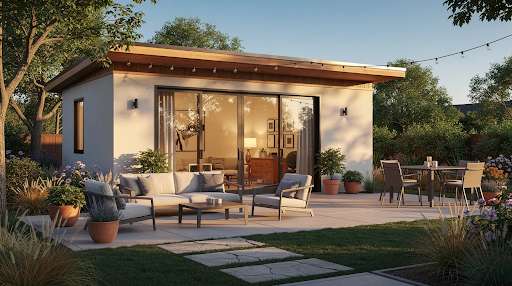
A backyard cottage is a detached accessory dwelling unit (ADU) or tiny home placed behind or beside the primary residence on the same lot. Unlike room additions or basement conversions, these structures stand completely separate from your main house, offering privacy for both occupants.
In California, backyard cottages are fully independent living spaces with their own kitchen, bathroom, and sleeping areas suitable for full-time occupancy. They function as complete homes rather than temporary guest quarters.
California cities use several terms interchangeably to describe these structures:
Detached ADU – The formal planning term used in most municipal codes
Granny flat – A common informal term, especially for family housing
Backyard cottage – Popular description emphasizing the structure’s location
Accessory dwelling unit ADU – The legal classification under state law
Attached vs. Detached ADUs: A Quick Comparison
|
Feature |
Attached ADU |
Detached Backyard Cottage |
|
Location |
Shares wall with main home |
Standalone structure in yard |
|
Privacy |
Limited separation |
Full independence |
|
Construction impact |
Modifies existing home |
Minimal disruption to main house |
|
Placement flexibility |
Tied to house footprint |
Can be positioned in rear or side yard |
|
Rental appeal |
Lower in privacy-focused markets |
Higher for tenants wanting separation |
Detached backyard cottages tend to perform better as rentals because tenants value having their own space with a separate entrance. They also preserve the main house layout without requiring internal modifications.
Why California Homeowners Are Adding Backyard Cottages
California faces a chronic housing shortage, needing over 2.5 million new units by 2030. With median home prices exceeding $800,000 in major metros like Los Angeles and San Francisco, building more housing on existing lots has become a state priority. Since 2017, a series of bills including SB 1069, AB 68, and AB 881 have made it significantly easier for homeowners to add detached ADUs.
Common Use Cases for Backyard Cottages
Housing aging parents – Sacramento families are housing aging parents in 600 sq ft cottages, avoiding $5,000+ monthly assisted living fees while keeping family members close
Space for adult children – Young professionals priced out of the housing market can live affordably on the family property
Caregiver housing – San Diego caregivers occupy units near primary homes for 24/7 access to those they serve
Guest accommodations – A dedicated space for visitors and friends that can convert to a rental later
Income Generation Potential
Bay Area homeowners rent out 800 sq ft spaces for $2,500-4,000 monthly, often offsetting significant portions of their mortgage payments. Cities like Sacramento, San Diego, and Los Angeles see similar demand, with vacancy rates running between 5-7% in well-located areas.
Lifestyle Applications
Convert a cottage to a home office during remote work
Create an artist studio or creative space
Downsize into the cottage while leasing the main home for $4,000+ in high-demand areas
Use it as a part-time retreat when family isn’t visiting
The lifestyle flexibility is one reason 18% of California households now include three generations living together. A detached backyard cottage makes this arrangement work without sacrificing anyone’s independence.
Factory-Built Backyard Cottages vs. Site-Built ADUs
When most people picture ADU construction, they imagine months of work with a general contractor managing crews in their backyard. There’s another approach: factory-built backyard cottages that arrive largely complete, ready for final installation.
Tiny Home Cottages works with experienced manufacturers who build homes in a controlled indoor facility under national building codes. This means construction happens protected from weather, with consistent quality protocols that are difficult to achieve in outdoor conditions.
The Site-Built Challenge
Traditional site-built ADUs come with predictable headaches:
9-18 months from start to finish
Weather delays averaging 20-30% longer timelines (Northern California sees 40+ rainy days annually)
Multiple subcontractors with varying schedules and quality standards
Material shortages inflating costs by 10-15%
Extended disruption to your daily life
The Factory-Built Advantage
Factory methods cut timelines by roughly 50%, bringing projects to completion in 3-6 months total. While your home is being built off-site, parallel site preparation handles foundations and utility connections, maximizing efficiency.
|
Factor |
Site-Built ADU |
Factory-Built Cottage |
|
Timeline |
9-18 months |
3-6 months |
|
Weather impact |
Significant delays |
None during build |
|
Quality control |
Variable by crew |
Consistent factory standards |
|
Cost per sq ft |
$250-450 |
$150-300 |
|
On-site disruption |
Months of activity |
Days for delivery and hookup |
|
Inspections |
Fragmented local checks |
Streamlined factory certification |
The stress free nature of factory construction appeals to homeowners who don’t want their property turned into a construction site for the better part of a year. Delivery typically happens via specialized trucks that place modules in hours, followed by utility hookups over the following days.

Backyard Cottage Options from Tiny Home Cottages
Tiny Home Cottages offers several types of factory-built homes designed specifically to work as detached ADUs in California. Each model addresses different lot sizes, aesthetic preferences, and intended uses.
Single-Story Tiny Homes
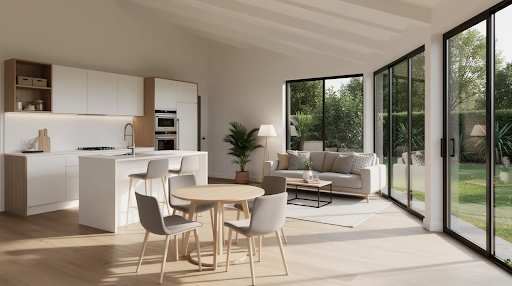
These entry-level homes feature modern open layouts with approximately nine-foot ceilings throughout. With footprints ranging from 300-500 square feet, they fit comfortably on smaller lots while providing a complete independent living space. Galley kitchens and optional loft sleeping nooks maximize functionality in compact floor plans.
Premium Single-Story Tiny Homes
For neighborhoods with stricter design expectations, premium single-story models offer upgraded finishes. Features include:
Quartz countertops
Cement fiber siding mimicking stucco for HOA compliance
600-800 sq ft floor plans with 2-bedroom/1-bathroom configurations
Contemporary exterior palettes matching Craftsman or Mid-Century aesthetics
Lofted Tiny Homes
These homes maximize vertical space on narrow lots through steep gable roofs reaching up to 25 feet (compliant with California height limits). Large stacked clerestory windows flood the interior with natural light. Total living area runs 400-700 sq ft including approximately 150 sq ft loft spaces. This design is particularly popular in Los Angeles where vertical designs help work around strict side setbacks.
Cabin Series Cottages
For properties seeking a natural or rustic aesthetic, cabin series cottages feature:
Tongue-and-groove pine walls and ceilings
Standing-seam metal roofing durable against coastal salt air
Fiber cement exteriors that blend with foothill neighborhoods
Sizes from 500-900 sq ft
HUD Manufactured Homes
Homeowners wanting larger detached units can choose HUD-approved manufactured homes ranging from roughly 400 to 1,000 square feet. These homes include full bedrooms, laundry, and HVAC systems. They qualify for financing through chattel loans and fit within most California ADU size limits.
Each option can be tailored for different uses: long-term rentals generating additional income, family housing for parents or adult children, aging-in-place cottages with accessibility features, or downsizing solutions where homeowners move into the cottage while renting the main home.
Key California Rules for Backyard Cottages
California has broadly encouraged ADUs statewide since 2017 through multiple bills that preempt restrictive local zoning. While laws continue to evolve, the general framework has become homeowner-friendly across most of the state.
Size Limits
Most properties can add at least an 800 sq ft detached ADU
Many cities allow up to 1,000-1,200 sq ft depending on lot size
Studio and one-bedroom units typically capped at 850 sq ft
Two or more bedroom units often allowed up to 1,000 sq ft
Some cities like San Diego permit 1,200 sq ft on larger lots
Height and Setback Requirements
Height limits typically 16 feet for flat roofs
Up to 25 feet allowed for sloped roofs under AB 1332
Standard setbacks: 4 feet from side and rear property lines
No intrusion into front yard setbacks required
Distance from main house varies by city
Parking Rules
Parking requirements have been significantly relaxed:
Properties within half-mile of transit (rail or frequent bus) often exempt
Historic districts frequently exempt
When required, typically only one additional space ($20,000-30,000 cost)
About 70% of urban lots qualify for exemptions
Owner-Occupancy
Under AB 976, many jurisdictions have lifted owner-occupancy requirements, allowing homeowners to rent both the main house and the ADU. This opens the door to living in your backyard cottage while generating rental income from your existing home.
Important Reminders
Impact and school fees waived for units under 750 sq ft via SB 543
Coastal zones qualify for fast-track 60-day permits under AB 462
Lot coverage limits (typically 50% impervious surface) still apply
Utility capacity may require upgrades in older neighborhoods ($15,000+ for sewer in some cases)
Always confirm current local regulations with your city or county planning department before finalizing any design. Pre-approved plans can cut permit timelines to as little as 30 days in some jurisdictions.
How the Backyard Cottage Process Works with Tiny Home Cottages
The whole process from first contact to move-in follows a streamlined path designed to minimize confusion and delays. Here’s what a typical project looks like.
Phase 1: Initial Consultation (1-2 Weeks)
During this phase, you share property photos, approximate dimensions, and goals with the Tiny Home Cottages team. Whether you’re focused on rental income, housing family members, creating a home office space, or downsizing, this conversation shapes everything that follows. The team reviews zoning using resources like the HCD handbook to confirm what’s possible on your lot.
Phase 2: Model Selection and Design
You choose from 20+ plans, selecting a model that fits your site and goals. Customization options include:
Appliance packages
Exterior finishes matching neighborhood aesthetics
Accessibility features for aging-in-place
Solar pre-wiring for energy efficiency (reducing utility bills by approximately 30%)
Interior upgrade packages
Phase 3: Parallel Construction
This is where the factory-built approach shines. While your home is being constructed in the factory (typically 6-12 weeks), site work happens simultaneously:
Foundation installation (concrete piers typically $8,000-15,000)
Utility trenching for shared or separate connections
Access preparation for delivery vehicles
Phase 4: Delivery and Installation (1-2 Days)
Specialized trucks deliver 20-40 foot modules to your location. Cranes or tilt-down systems place the structure on the prepared foundation, often completing placement in a single day.
Phase 5: Final Hookups and Inspections (2-4 Weeks)
Utility connections, final inspection, and any remaining finishing work complete the project. Total timeline from order to occupancy typically runs 3-5 months versus 12+ months for comparable site-built construction.
Case studies show Sacramento installations achieving occupancy in 14 weeks, while Bay Area lofted units have been rented at $3,200/month following 60-day ministerial approval processes.
Financing a Backyard Cottage in California
Financing represents a major consideration for many homeowners. The good news: backyard cottages can often be financed through specialized lenders rather than requiring a traditional home mortgage.
Recommended Lender: 21st Mortgage Corporation
Tiny Home Cottages frequently recommends 21st Mortgage Corporation, one of the leading lenders in the manufactured and mobile home financing industry for many years. They offer several financing options:
FHA Title I/II loans
VA loans for eligible veterans
Chattel loans for homes not on permanent foundations
Interest rates typically 5-8% (2026 averages)
Loan terms from 15-30 years
Down Payment Expectations
|
Credit Profile |
Typical Down Payment |
|
700+ FICO on owned land |
0% possible |
|
Good credit, standard situation |
10-20% |
|
Lower credit or complex property |
Higher percentage required |
Typical Loan Application Steps
Choose the home model that fits your needs and budget
Complete a loan application through the lender
Receive approval (typically 3-7 days)
Lock your interest rate
Submit required documentation (ID, income verification, bank statements)
Sign closing documents and finalize the loan
Funds distributed to manufacturer
Connecting Financing to Rental Income
Monthly payments typically run $800-1,500 for a $150,000 unit. With long-term rents averaging $2,200 (studio) to $3,500 (2-bedroom) statewide, many homeowners achieve breakeven within 1-2 years. The rental income effectively pays for the cottage over time while building equity in an appreciating asset.
Maximizing Income and Value from Your Backyard Cottage
A properly planned backyard cottage delivers both immediate rental income and long-term property value gains in California’s high-demand markets.
Long-Term Rental Strategy
Long-term leases represent the most common and straightforward approach. Typical tenants include:
Students attending nearby colleges
Local workers needing affordable housing
Retirees looking to downsize
Young professionals building savings
Statewide occupancy rates run around 95% in desirable areas like Los Angeles and San Diego, meaning well-located units rarely sit vacant.
Short-Term Rental Considerations
Before planning a short term rental strategy through platforms like Airbnb, check local restrictions carefully. Approximately 80% of California cities impose some limitations:
San Francisco limits short-term rentals to 90 days annually
Many cities require primary residence status
Permit requirements vary significantly
Long-term leases often prove more reliable and less management-intensive anyway.
Family Housing Value
Housing family members creates financial value even without direct rent payments:
Avoiding $40,000+ annual assisted living costs for aging parents
Eliminating rent payments for adult children trying to save
Reducing caregiver commute time and costs
Resale Value Impact
ADU-equipped homes sell at 20-40% premiums according to Zillow data, translating to $100,000-300,000 in additional value in many California markets. With annual appreciation running around 7%, a legal, well-built detached ADU becomes a significant wealth-building asset.
Future buyers increasingly seek move-in ready properties with rental potential already established. A finished product with permits in order commands top dollar.
Choosing the Right Backyard Cottage Builder in California
Selecting among ADU builders requires evaluating experience, construction quality, and support throughout the entire process. Here’s what to look for.
Key Evaluation Criteria
Track record with detached ADUs – Look for 500+ successful installations
California ADU expertise – Familiarity with state laws and local variations
Factory certification – HUD or RVA compliance ensures quality standards
Transparent pricing – All-in costs of $150-350 per square foot
Permit support – Assistance navigating local planning requirements
Why Homeowners Choose Tiny Home Cottages
As a trusted partner for California homeowners, Tiny Home Cottages offers several advantages:
Factory-built consistency eliminating weather delays and quality variations
Multiple model options covering single-story, lofted, cabin, and HUD homes
Guidance through design selection and the purchasing process
Coordination with local contractors for site work
Financing recommendations through established lenders
Due Diligence Steps
Before committing to any builder:
Review photos of completed projects in California neighborhoods
Read customer feedback and testimonials
Speak directly with the builder about your goals and timeline expectations
Verify transparent pricing with no hidden fees
Confirm support for permitting and inspection coordination
The ADU industry continues evolving, with stricter HCD enforcement beginning in 2026 potentially resulting in $10,000+ fines for unpermitted construction. Working with established ADU construction specialists protects your investment.
Getting Started with Your Backyard Cottage
Ready to explore your property’s potential? Here’s a practical path forward.
Step 1: Assess Your Space
Measure your yard to understand what might fit. Even modest California backyards can often accommodate a compact tiny home in the 400-800 sq ft range. Minimum space typically needs roughly 20x30 feet after accounting for setbacks and delivery access.
Step 2: Clarify Your Goals
Define whether you’re focused on:
Rental income generation
Housing for family members
A home office or creative room
Downsizing while staying on your property
Your goals shape model selection, financing approach, and site planning.
Step 3: Research Local Rules
Visit your city or county planning department website or the California HCD portal to understand:
Maximum allowed square footage
Height restrictions
Setback requirements
Parking rules
Owner-occupancy status
Step 4: Set a Budget
Budget $100,000-250,000 for most projects including site work, permits, and the home itself. Consider how rental income or family housing savings offset monthly costs.
Step 5: Explore Models
Browse Tiny Home Cottages floor plans, comparing sizes and exterior styles that fit California lot sizes and neighborhood aesthetics. Consider which features matter most for your intended use.
Step 6: Schedule a Consultation
A consultation evaluates your property specifics, discusses utilities and access (shared utilities work in approximately 70% of cases), and estimates realistic timelines based on factory production and site readiness.
Contact Tiny Home Cottages to start exploring which model fits your goals, understand your financing options through lenders like 21st Mortgage, and map out your backyard cottage project from ideas to finished living space.

Frequently Asked Questions
How long does it typically take to add a factory-built backyard cottage in California?
Most factory-built projects move from ordering to installation in 3-6 months rather than a year or more like some custom site-built ADUs. The timeline breaks down roughly as:
Design and model selection: 1-2 weeks
Loan approval: 1-2 weeks
Factory build: 6-12 weeks
Site preparation (parallel to factory build): 4-8 weeks
Delivery and installation: 1-2 days
Final hookups and inspection: 2-4 weeks
Local permitting and utility coordination can affect the schedule, so building in some flexibility makes sense. Ministerial approval processes in many California cities now complete in 60 days or less.
Do I need a separate address or utility meters for my backyard cottage?
Many California cities allow backyard cottages to share utilities with the main home, while others may require or encourage separate meters. About 60% of homeowners legally share the main house meter for electricity and water.
Regarding addresses, approximately 50% of cities assign a separate address to the ADU. Your local planning or building department can confirm requirements for your specific location. Tiny Home Cottages helps homeowners understand typical utility setups and coordinates with local trades for plumbing, electrical, and other connections where needed.
Can I live in the backyard cottage and rent out my main house?
Yes, in many California jurisdictions the homeowner can choose to live in either the main house or the ADU. Post-AB 976, approximately 80% of jurisdictions allow this arrangement.
This strategy appeals to homeowners looking to downsize while generating significant rental income. In high-demand areas, main homes can rent for $4,000+ monthly while the homeowner lives comfortably in an 800 sq ft cottage. Verify current owner-occupancy rules with your city before finalizing this plan.
How much space do I need in my backyard for a detached cottage?
Even modest California backyards can often fit a compact tiny home, especially one-story units in the 400-800 square foot range. A rough minimum is approximately 20x30 feet of usable space after accounting for required setbacks.
Space planning must consider:
4-foot setbacks from side and rear property lines
Distance from your main house (varies by jurisdiction)
Utility runs from existing connections
Access for delivery trucks and crane swing radius
Take rough measurements and photos of your yard to share during an initial consultation. The Tiny Home Cottages team can assess whether your site works and which models fit best.
Are factory-built backyard cottages allowed in historic or design-controlled neighborhoods?
Many historic districts and design-controlled areas in California do allow ADUs, though they may impose stricter guidelines on exterior appearance, materials, and placement. The key is selecting a model with customizable exteriors that can match existing neighborhood character.
Premium single-story and cabin series models from Tiny Home Cottages offer flexibility in exterior finishes, rooflines, and color palettes. Review your local design standards early in the process and work with the team to select options that blend with surrounding homes. Height compliance up to 25 feet accommodates most historic district requirements for sloped roofs that match traditional architecture.