
Using a Mobile Home as an ADU: What California Homeowners Should Know

The phrase mobile home gets used loosely in housing conversations, and that vagueness creates confusion for California homeowners trying to figure out whether one can serve as an ADU on their property. The short answer is yes, with some specifics. Mobile homes that meet HUD code, modern factory built tiny homes, and small manufactured homes can all serve as ADUs depending on local rules and lot conditions. This guide walks through the details so you can understand what fits your situation.
The conversation covers how a mobile home qualifies as an ADU, the HUD manufactured options available, placement and lot rules to consider, financing through 21st Mortgage Corporation, and the practical next steps for homeowners ready to move forward.
How a mobile home qualifies as an ADU
A mobile home becomes an ADU when it is placed on a residential property as a second dwelling unit alongside the main house. California has worked over the past several years to make ADU permitting more predictable, and the rules increasingly recognize factory built homes as legitimate ADU options. The exact definition and the qualifying criteria depend on the specific local jurisdiction, but the general pattern is consistent.
The home itself needs to meet applicable construction standards. Modern HUD manufactured homes follow national HUD code standards. Tiny homes and cottage style structures from Tiny Home Cottages follow national building code standards. Either category can serve as a detached ADU on a residential lot when the local rules permit and the home is set, anchored, and connected properly.
The placement and the use also matter. An ADU is a second dwelling unit, which means it needs a kitchen, a bathroom, and the basic systems for living. Recreational vehicles and travel trailers do not qualify because they are not designed for permanent occupancy. Modern factory built mobile homes are designed exactly for that purpose, which is why they fit the ADU definition.
HUD manufactured options
HUD manufactured homes are one of the most common formats for mobile home ADU placement in California. They are built to national HUD code construction standards and generally range from approximately 400 square feet to 1000 square feet. The larger size compared to a tiny home makes them suitable as primary residences, long term homes for extended family, or substantial detached units on properties that can accommodate the footprint.
The construction process for HUD homes happens in a factory under controlled conditions. The home is built on a steel chassis, transported to the lot, set on a prepared foundation or pier system, anchored, and connected. The factory build delivers consistent quality because the same crews use the same materials and the same processes every day.
Tiny Home Cottages offers HUD manufactured homes as part of its lineup, alongside single story tiny homes, premium single story models, lofted models, and cabin series cottages. The right model depends on the use case, the lot, and the buyer's preferences. HUD homes work especially well when the buyer needs more square footage and the lot can support the larger footprint.
Placement and lot rules
Local jurisdictions in California vary in how they handle mobile home and manufactured home placement as ADUs. Some cities and counties have streamlined processes that recognize factory built homes specifically. Others apply more general ADU rules that cover any second dwelling unit. The right approach depends on your specific address and zoning.
Setback rules determine how close the home can be placed to property lines, the main house, and other structures. These rules vary by jurisdiction and sometimes by zoning district. A site review with your builder and a quick check with the local planning office tells you what is possible on your lot.
Access requirements for the placement spot are practical considerations on top of the regulatory ones. The home needs to be transported by truck and trailer to the final spot. Trees, fences, overhead wires, narrow gates, and tight turns can all affect whether a truck can reach the site. For most residential lots in California, this is straightforward. For more rural lots or lots with restricted access, a site visit before ordering is essential.
Utility connections are the third placement consideration. Water, power, and waste lines need to reach the unit. If existing connections are close to the placement spot, the work is straightforward. If trenching across the property is needed, the cost and timeline grow.
Financing through 21st Mortgage
Most buyers finance a mobile home ADU purchase. Tiny Home Cottages often recommends 21st Mortgage Corporation, which specializes in manufactured and mobile home loans and has been one of the leading lenders in the industry for many years. They are familiar with HUD manufactured homes, factory built tiny homes, and the placement of these units as ADUs on residential property.
Down payment options range from zero percent for highly qualified buyers to higher percentages depending on credit profile and property conditions. The loan application follows a clear sequence. You pick the home model that fits your needs and budget. You complete a loan application through the lender. You receive loan approval and review financing terms. You lock the interest rate and submit identification, income verification, and bank statements. You sign closing documents and finalize the loan. Once everything is signed, funds are distributed and the home purchase process moves forward.
The financing path is more familiar to lenders than custom site built ADUs because the factory built category has established loan products that have been in the market for many years. Knowing the financing path before you commit to a model keeps the budget grounded.
Next steps
The path from initial research to occupancy on a mobile home ADU is more straightforward than most buyers expect. The first step is understanding your lot and your use case. Walk the property with placement in mind. Note the access from the street. Confirm where utility connections are. Think through who will live in the unit and what they need from the home.
The second step is looking at real models. Tiny Home Cottages publishes its lineup online so you can compare HUD manufactured options alongside tiny homes, lofted models, and cabin series cottages. Floor plans, finish levels, and pricing context are all in one place. Walking through real models is much more useful than browsing in the abstract.
The third step is talking to a builder about your specific situation. A short consultation will tell you which models fit your lot, what the realistic timeline looks like, and how the financing works for your situation. Coming prepared with a basic lot sketch, your budget range, and a sense of the use case makes the conversation more productive.
Common mobile home ADU use cases
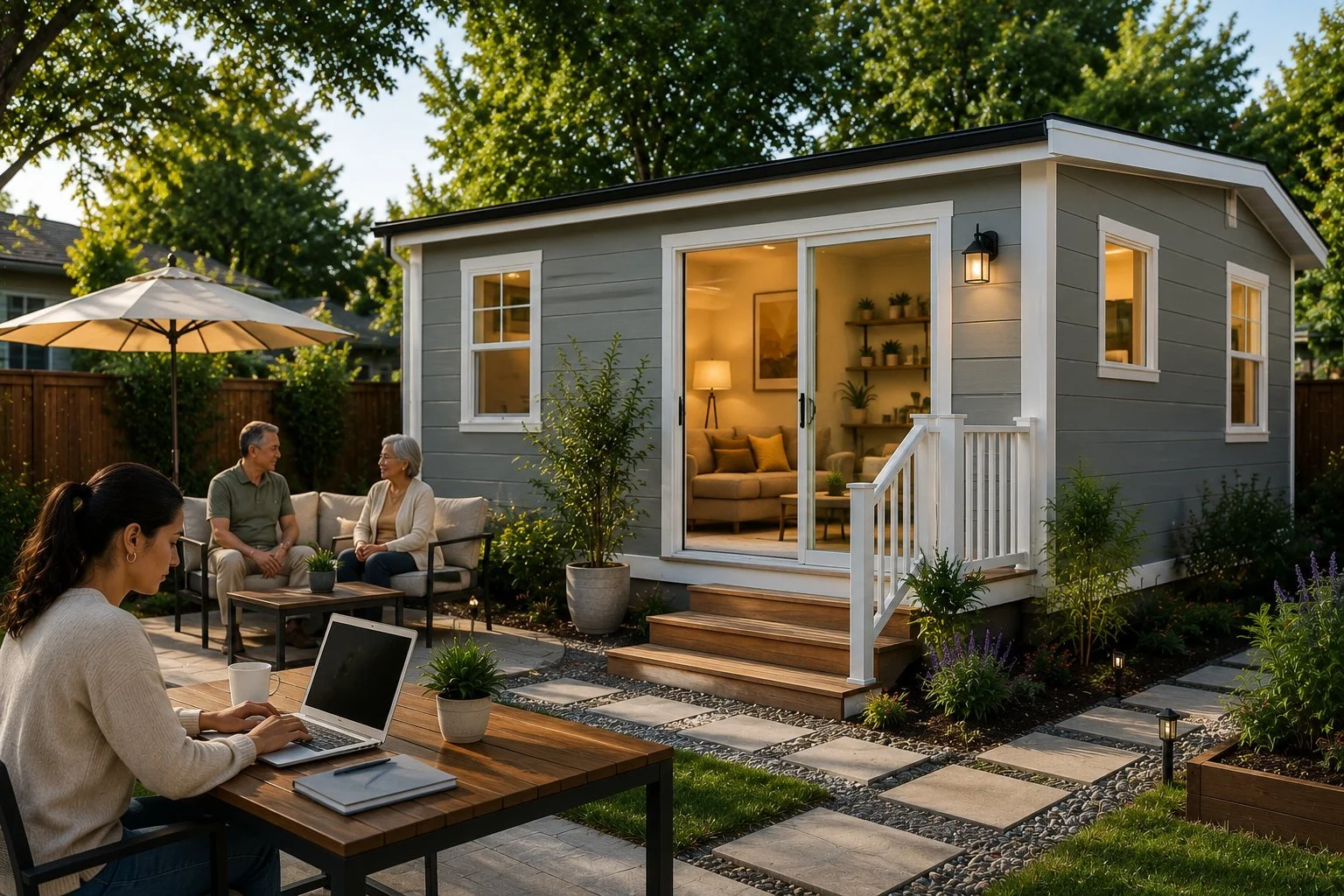
The most common use case is housing for an aging parent or grandparent. A mobile home ADU gives the family member their own space close to family without forcing them into a separate household. The larger HUD manufactured homes work especially well for this because the square footage supports daily living comfortably.
Multigenerational living is another major driver. Families that want grandparents close to grandchildren find that a backyard mobile home ADU offers the right balance between closeness and privacy. The detached structure preserves separate routines and personal space.
Downsizing into the ADU and renting the main house is another pattern. Empty nesters and older homeowners sometimes move into a smaller HUD manufactured home on the property and rent the main house. This unlocks income while letting them stay in the neighborhood they know.
Rental income is a fourth common use case. Homeowners with available backyard space add a mobile home ADU as a long term rental, which generates ongoing monthly income from underused property.
Comparing mobile home ADUs to alternatives
For California homeowners considering ADU options, the mobile home category usually competes with site built ADUs, attached additions, and smaller tiny homes. Each option has tradeoffs.
Site built ADUs offer the most design flexibility but the longest timeline, the highest cost variance, and the most weather risk during construction. Attached additions integrate with the main house but reduce privacy and often surprise buyers on cost. Smaller tiny homes work for some use cases but cannot match the square footage of a HUD manufactured home for households that need more space.
A factory built mobile home ADU sits at the intersection of size, cost predictability, and timeline reliability. For many California families, especially those housing extended family or downsizing into a long term home, it is the most practical choice.
What sets quality factory builds apart
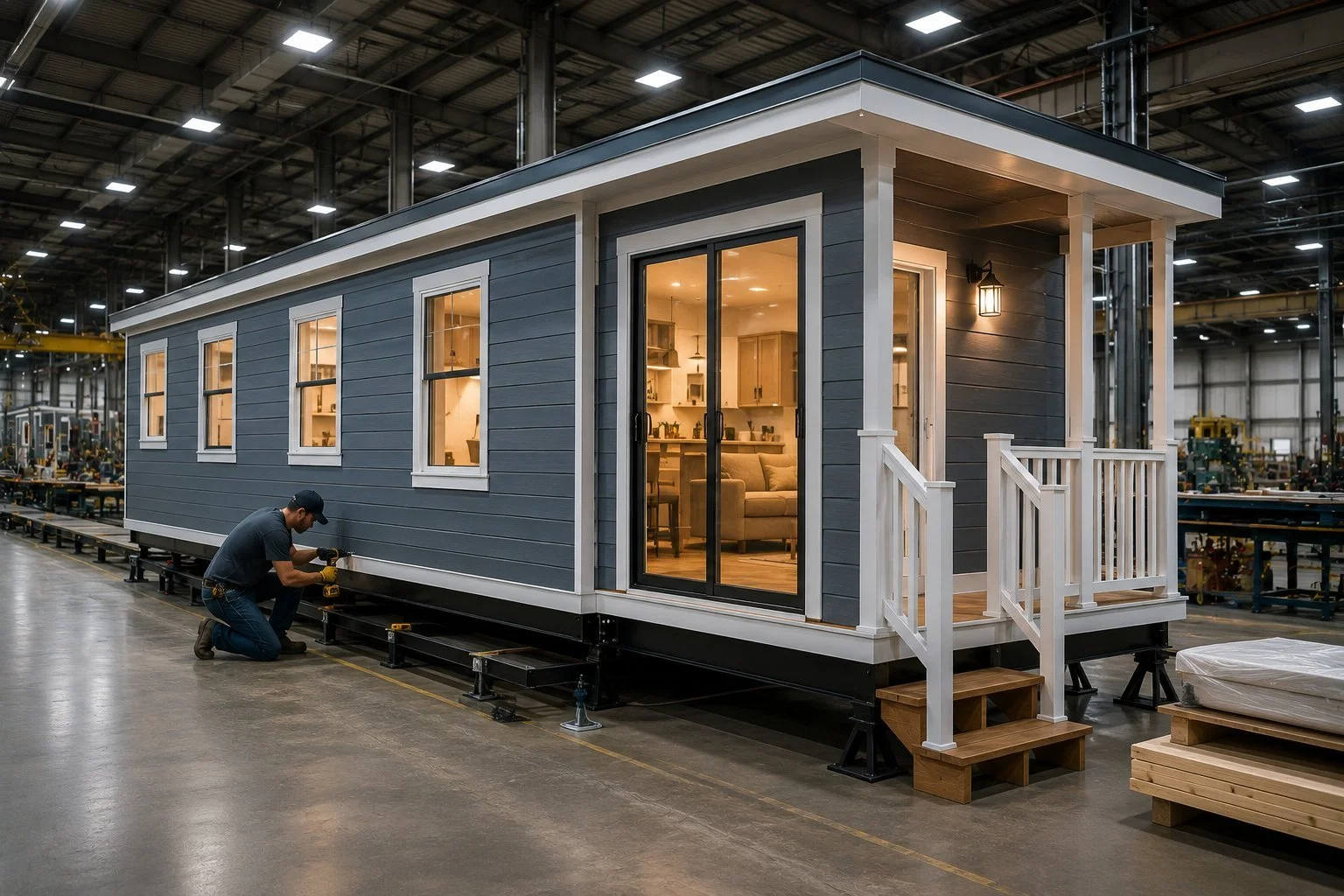
Not every mobile home is built to the same standard. A quality factory build shows up in details that are easy to miss in a brochure but obvious in person. The walls are square. The doors and windows operate smoothly. The trim is consistent. The cabinets close flush. The siding lines up.
Tiny Home Cottages partners with manufacturers that have decades of experience producing small homes and cottage style dwellings. That experience produces consistent quality, reliable craftsmanship, and homes that hold up over time. The factory environment controls the variables that drive quality, which is why factory built homes consistently outperform site built alternatives on construction quality measures.
If you want to see what is available in the HUD manufactured category alongside tiny homes and cottages, you can view HUD manufactured ADU options and review real floor plans, sizes, and finish levels. Starting with real models is the fastest way to know what fits your property and your goals.
Permits and the paper trail
Permitting on a mobile home ADU placement is generally more straightforward than on a custom site build because the home itself comes with documentation that meets recognized standards. The permit work focuses on the site, the pad, the utility connections, and the placement rather than the construction of the unit itself.
Local jurisdictions vary in how they handle the paperwork. Some have streamlined processes specifically for factory built ADUs. Others apply general ADU rules that cover any second dwelling unit. A short call to the local planning office or a conversation with your builder will tell you what to expect for your specific address.
Keeping good records throughout the project pays off years later. The original purchase paperwork, the manufacturer documentation, the placement permits, the utility connection records, and the warranty information should all live in one folder. If you ever sell the property, refinance, or insure the home, the paper trail makes everything easier.