
Detached ADU Meaning: What It Is and Why It Matters for Your Property

When homeowners start researching accessory dwelling units, the first question is usually about terminology. What does detached ADU actually mean. The phrase shows up everywhere in California real estate conversations, but the practical meaning is not always clear. This guide gives a plain-English definition, explains how detached ADUs differ from attached ADUs, and walks through why the distinction matters for buyers thinking about their property.
The short answer is that a detached ADU is a separate, freestanding second home on a residential property. The longer answer involves the design considerations, the lot requirements, and the practical implications for everyone who lives on the property. Understanding the meaning fully helps you make better decisions about which kind of unit fits your situation.
Plain-English definition
A detached ADU is a complete, standalone second living unit on a residential property. It has its own walls, roof, foundation or pad, and entrance. It is physically separate from the main house. It has its own kitchen, bathroom, and basic systems for daily living. Utilities connect to it, but the building itself does not share any structural element with the primary residence.
The phrase ADU stands for accessory dwelling unit. The word detached distinguishes this category from attached options like garage conversions, additions, and basement conversions. The detached version sits as a separate structure on the property, usually in the backyard or on a side yard.
Detached ADUs can be site built or factory built. Site built versions are constructed on your property by local crews. Factory built versions are produced in a controlled factory environment and trucked to the lot for set, anchoring, and connection. Tiny Home Cottages specializes in factory built detached units including single story tiny homes, premium single story models, lofted models, cabin series cottages, and HUD manufactured homes.
Detached vs attached at a glance
The clearest way to understand detached is to compare it to attached. An attached ADU shares at least one wall or structural element with the main house. Common examples include garage conversions, basement conversions, additions, and above-garage units. A detached ADU shares nothing structural with the main house. It stands as its own building.
This single difference cascades into many practical consequences. Privacy is different. Sound transmission is different. Construction process is different. Cost structure is different. Resale appeal is different. Future flexibility is different. Two homes on the same property look very different in real life depending on whether they are attached or detached.
For most homeowners adding a second living unit, the detached option offers meaningful advantages on privacy, timeline, and predictability. The attached option can make sense when the lot cannot accommodate a separate structure or when the homeowner wants to leverage existing structure to reduce cost. The right choice depends on the specific property and the specific use case.
Why detached matters for resale and use
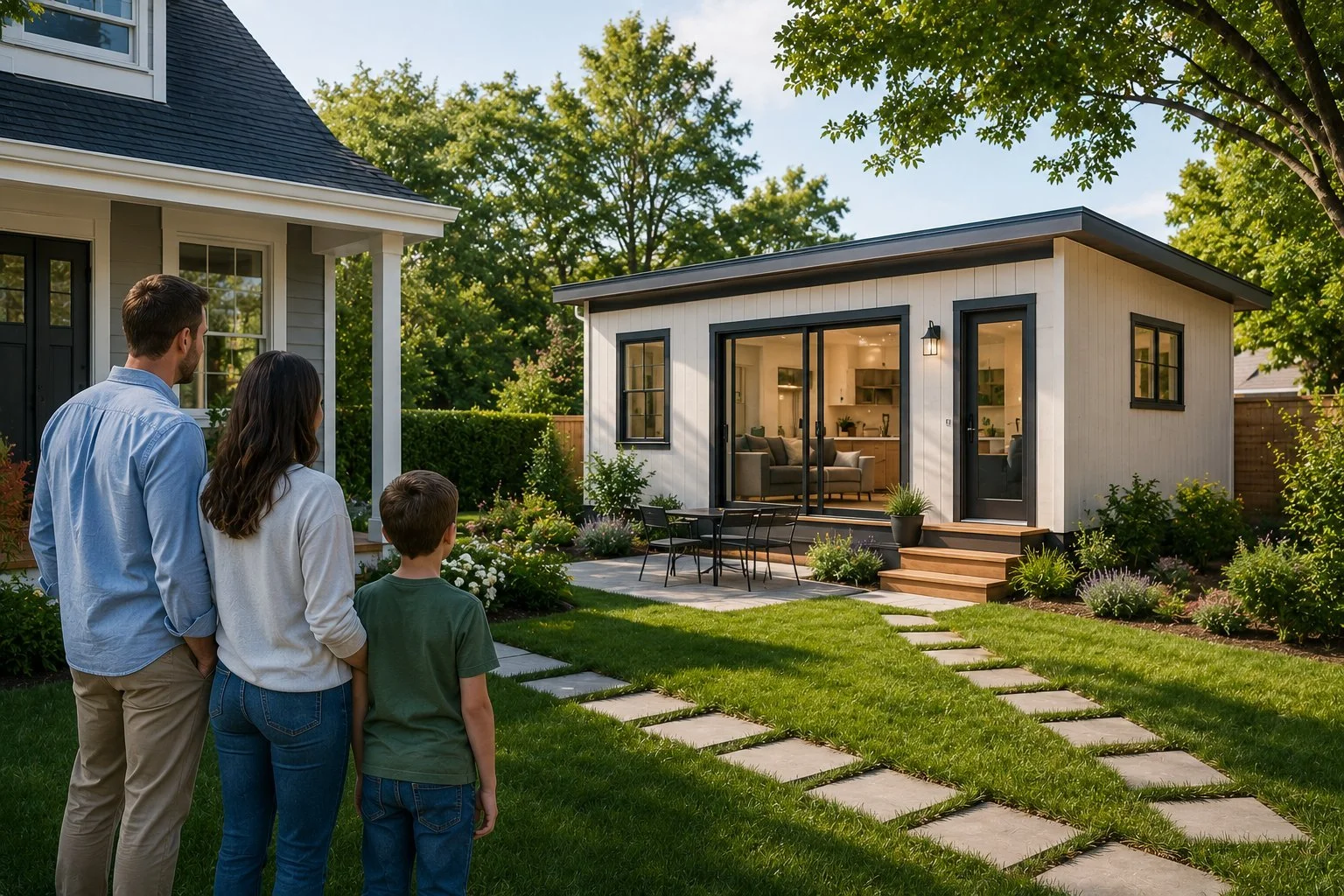
The detached versus attached distinction matters more than most buyers realize because it affects how the property functions day to day. A detached unit gives both households real separation. The main house remains the main house. The cottage operates independently. Residents of each can have different schedules, different visitors, and different routines without affecting each other.
For aging parents living in a backyard cottage, the detached arrangement preserves their independence. They have their own front door, their own routine, and their own space. The main household preserves its routine too. Both relationships work better because the separation is real.
For adult children in a detached unit, the same dynamic applies in reverse. They have a real home of their own rather than a converted room. They can come and go on their own schedule. They learn to live independently without the friction of shared living. When they move out, the unit transitions cleanly to a new use without renovations.
For resale, detached units are usually easier for future buyers to understand and value. The two structures read clearly as related but independent. The buyer sees the main house and the cottage and can imagine using them for their own situation. Attached units sometimes complicate the property because the integration between the two units is harder to evaluate.
Common detached ADU styles
Detached ADUs come in several distinct styles. The category includes small tiny homes designed as backyard cottages, larger single story homes that work as primary residences, lofted homes that pack more usable space into a smaller footprint, cabin style cottages with natural finishes, and HUD manufactured homes that offer more square footage.
Single story tiny homes from Tiny Home Cottages have modern layouts with approximately nine foot ceilings throughout. The interior feels open and accessible. These work well as guest houses, long term homes for aging parents, or affordable launching pads for adult children.
Premium single story models add upgraded features and cement exterior siding. The aesthetic is more refined and the exterior more durable. These suit buyers using the unit as a primary residence or long term home.
Lofted models include a second level loft, steep roof pitches, and large stacked windows. The vertical feel and the maximized usable space make them a strong choice for younger residents or buyers with tighter lot constraints.
Cabin series cottages feature tongue and groove pine walls and ceilings inside, with metal roofing and fiber cement siding outside. The warmer, more rustic look fits properties with natural surroundings or buyers who want the cottage to stand on its own visually.
HUD manufactured homes are the larger end of the lineup, generally ranging from approximately 400 square feet to 1000 square feet. These work as primary residences on smaller lots, long term homes for extended family, or larger detached units when the lot supports the size.
Getting started
If you have decided that a detached ADU is the right path for your property, the next step is matching a specific model to your lot and your use case. Walk the property with placement in mind. Note the setback rules in your jurisdiction. Confirm the access path from the street. Identify where utility connections are. Think through who will live in the unit and how they will use it day to day.
From there, you can look at real models. Tiny Home Cottages publishes its lineup online so you can compare single story, premium single story, lofted, cabin series, and HUD manufactured options side by side. Floor plans, finishes, and pricing context are all in one place.
A consultation with a builder who knows the California and Oregon ADU market will narrow the options quickly. Coming prepared with a basic lot sketch, your budget range, your use case, and your financing approach makes the conversation more productive. Most buyers leave the consultation with a short list of two or three models that actually fit, which is much more useful than scrolling through everything in isolation.
Financing for detached ADUs

Most buyers finance a detached factory built ADU. Tiny Home Cottages often recommends 21st Mortgage Corporation, which specializes in manufactured and mobile home loans and has been one of the leading lenders in the industry for many years. Down payment options range from zero percent for highly qualified buyers to higher percentages depending on credit and the property.
The application moves through a clear sequence. You pick the home model that fits your needs and budget. You complete a loan application through the lender. You receive loan approval and review the financing terms. You lock the interest rate and submit identification, income verification, and bank statements. You sign closing documents and finalize the loan. Once everything is signed, funds are distributed and the home purchase process moves forward.
Why the meaning matters
Understanding what detached ADU means is more than a vocabulary exercise. It affects every part of the project, from how the home is built to how it gets delivered to how it lives day to day. Homeowners who understand the distinction tend to make better decisions because they can evaluate options against the right criteria.
A factory built detached ADU is not the same as a converted garage. The two products serve different needs at different price points with different timelines. Knowing which one fits your situation is the first step in making a good housing decision. Brushing past the terminology and assuming the categories are interchangeable leads to projects that disappoint.
If you want to dig deeper into the detached versus attached comparison and see how each option performs across the dimensions that matter, you can see the full detached vs attached comparison for the detailed breakdown. That comparison gives you the most efficient path to the right answer for your property and your situation.
How to talk about detached ADUs with your family
A second living unit on a property affects more than just the homeowner. The conversation often involves spouses, partners, parents, adult children, and sometimes extended family who will use or be affected by the home. Bringing everyone into the discussion early prevents friction later in the project.
For aging parents moving into a backyard cottage, the conversation should cover how the unit will be furnished, how routines will work, how meals and visits will happen, and what level of independence the parent wants. The detached structure preserves the parent's autonomy, but the family relationship still needs alignment on expectations.
For adult children, the conversation centers on the timeline of the arrangement. Is this a transition home for a few years. Is it long term. Are there rent or contribution expectations. Does it come with privacy norms about visitors and use. The clearer the answers, the smoother the arrangement.
For multigenerational households, the detached ADU works best when everyone has agreed on what the unit means and how it fits into family life. A few honest conversations upfront prevent years of small misunderstandings later.
What detached gives you that attached cannot
Detached gives you genuine separation. The two households share property but not roof, walls, or daily routines. That structural separation is what makes detached ADUs work for situations where attached units create friction. For families that value privacy alongside closeness, the detached option is usually the only design that actually delivers both.