
Detached ADUs: The Backyard Cottage Option Reshaping Modern Housing
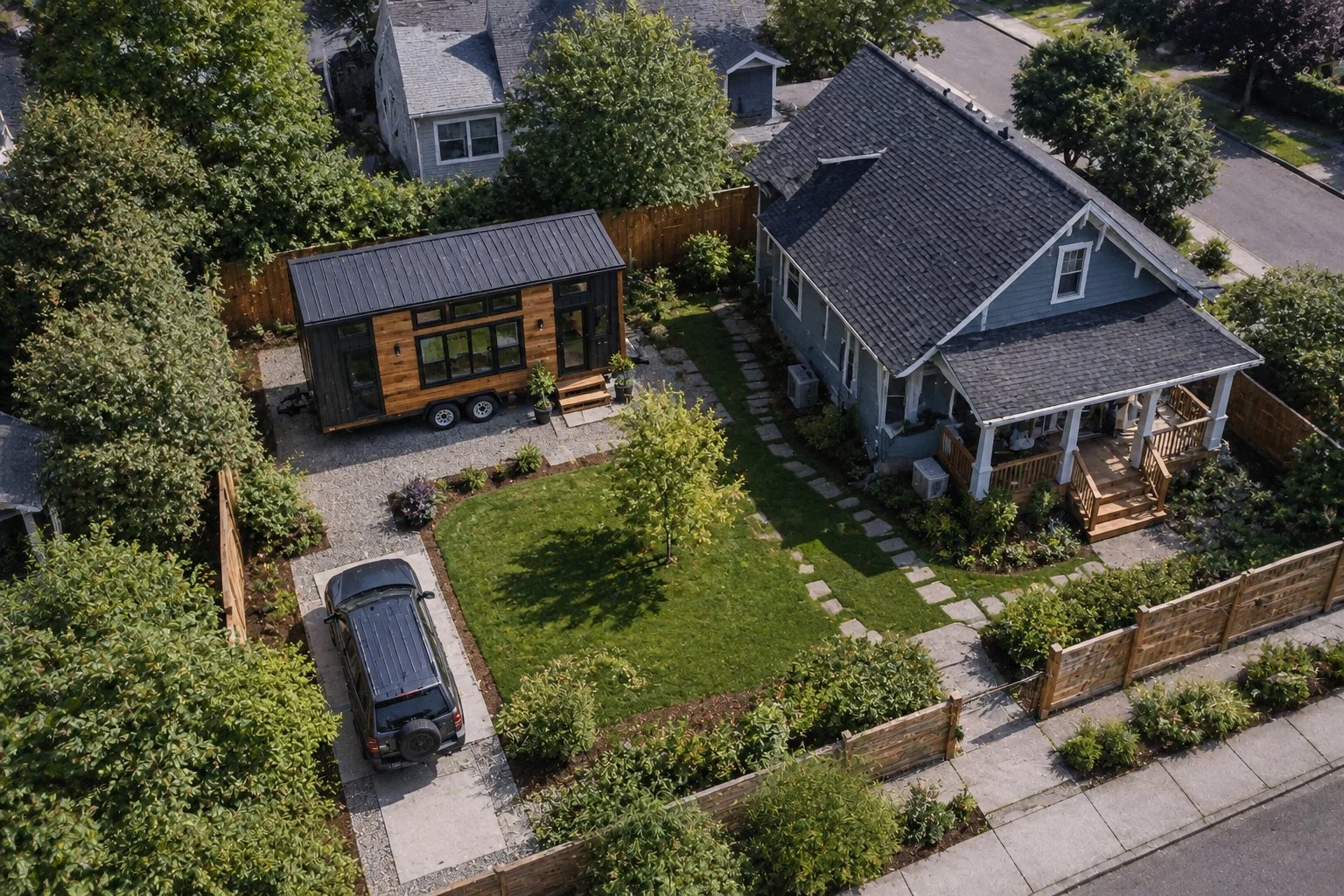
Detached ADUs have moved from niche option to mainstream housing solution across California and Oregon. Homeowners who need additional living space on their property are increasingly choosing detached backyard cottages and tiny homes over attached additions, garage conversions, and traditional site built second units. The reasons come down to privacy, flexibility, build timeline, and the consistent quality that factory built construction delivers.
This guide walks through what a detached ADU actually is, why privacy and flexibility matter so much in real life, the backyard cottage style options available, the timeline advantages of factory built detached units, and how to choose the right model for your property.
What detached ADUs are
A detached ADU is a second living unit on a residential property that stands as its own structure, separate from the main house. It has its own walls, its own roof, its own foundation or pad, and its own entrance. Utilities connect to it, but the building is independent of the main residence.
Detached ADUs can be site built or factory built. Site built options follow traditional construction methods, with a crew assembling the home on your property over the course of months. Factory built options are produced in a controlled factory environment and trucked to the lot for set, anchoring, and connection. The factory built path has grown faster than the site built option because it offers a more predictable result on cost, timeline, and quality.
Tiny Home Cottages specializes in factory built detached ADUs. The lineup includes single story tiny homes, premium single story models, lofted models, cabin series cottages, and HUD manufactured homes. Each fits a different combination of lot, use case, and budget.
Why privacy and flexibility matter
Privacy is the single biggest reason homeowners pick detached over attached. A wall between two households is not the same as a yard between them. With an attached unit, the day to day life of one household affects the other. Sounds travel. Visitors come and go through shared spaces. Schedules overlap. With a detached unit, both households have real separation while still sharing the property.
For aging parents who want to stay close to family without giving up their independence, a detached backyard cottage delivers exactly the right balance. For adult children launching their own lives, a detached unit gives them a real home of their own without the conflicts of shared living. For multigenerational households, the detached option keeps relationships strong because everyone has space to retreat to.
Flexibility matters because life changes. A detached unit can house a parent now and an adult child later. It can be a guest house, then a rental, then a primary residence for a downsizing homeowner. The freestanding structure adapts to whatever the household needs without requiring renovations of the main house.
Factory built detached units add another layer of flexibility. They can be relocated if the family situation calls for it. Site built units cannot move once they are built. That option matters for homeowners who are not sure how long they will stay at the current property.
Backyard cottage style options
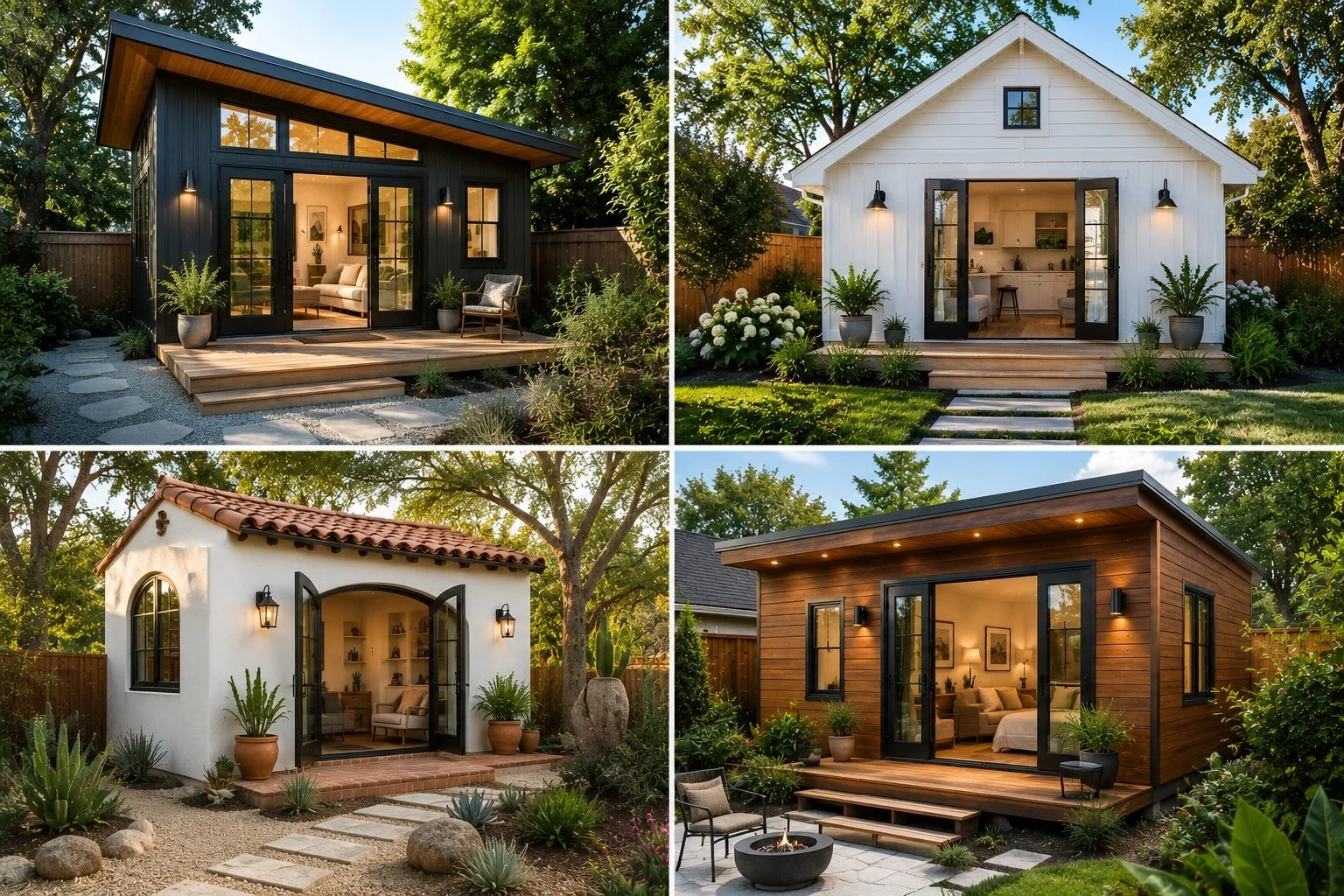
The detached ADU category includes several distinct style options. Single story tiny homes offer modern layouts with approximately nine foot ceilings on one level. They work well for accessibility, daily living, and buyers who prefer not to navigate stairs. The interior feels open and the maintenance is straightforward.
Premium single story models add upgraded features and cement exterior siding. The aesthetic is more refined and the durability of the exterior is improved. For buyers using the home as a primary residence or long term guest house, the premium tier is worth considering.
Lofted models add a second level loft above the main living area. The vertical feel, the steep roof pitch, and the large stacked windows give the home a distinctive look. The loft is usually used as sleeping space, which frees the lower level for living, kitchen, and bath. Lofted homes deliver more usable space in a smaller footprint, which matters when setbacks limit lot space.
Cabin series cottages take a different design direction with tongue and groove pine walls and ceilings, metal roofing, and fiber cement siding. The result is a warmer, more rustic feel that fits properties with natural surroundings or buyers who want the cottage to stand on its own visually.
HUD manufactured homes are the larger end of the lineup, generally ranging from approximately 400 square feet to 1000 square feet. These work as primary residences on smaller lots or as more substantial detached units for extended family living.
Timeline advantages
Detached factory built ADUs win on timeline because the home is constructed in a factory while the site is prepared in parallel. The factory production runs on a known schedule that does not depend on local weather, subcontractor availability, or supply chain conditions. Site prep on your property happens at the same time, so when the home is ready it can be delivered, set, and connected without waiting for the next phase of construction.
A typical timeline from initial inquiry to occupancy on a factory built detached ADU is measured in weeks to a few months, depending on financing, site prep, and the factory schedule. A site built ADU often stretches over a year once permits, weather, and subcontractor scheduling come into play. The factory built detached path is far more predictable from start to finish.
That predictability matters for families who are planning around the unit. An aging parent who needs housing this year cannot wait two years for a site build. A downsizing homeowner trying to rent the main house needs the new home ready on a defined schedule. A multigenerational family planning around a wedding or a school year needs to know when the unit will be available. Factory built detached ADUs deliver that clarity.
Choosing the right model
The right model for a detached ADU starts with the lot and the use case. Setback rules in your jurisdiction set the boundaries for where the home can go. Access for the delivery truck affects which models can reach the spot. Utility connections influence where the home is best placed.
Once the lot constraints are clear, the use case drives the model selection. A long term home for an aging parent benefits from a single story layout with accessibility features. A guest house can be smaller and simpler. A primary residence for a downsizer often calls for upgraded finishes and a larger footprint. A rental unit benefits from a layout that appeals to a broad set of tenants.
Walking through the lineup with a builder who knows the models is the fastest way to narrow the options. Two or three models usually emerge as the best fits after a short conversation. From there, walking through real floor plans and finish levels makes the decision concrete.
Cost and financing
Detached factory built ADU pricing depends on the series, the size, the finish level, and the included features. The total delivered cost includes the home itself, delivery, set, anchoring, and the basic work needed to make the unit livable on your lot. Site prep is usually a separate cost depending on the lot and local conditions.
Most buyers finance the purchase. Tiny Home Cottages often recommends 21st Mortgage Corporation, which specializes in manufactured and mobile home loans. Down payment options range from zero percent for highly qualified buyers to higher percentages depending on credit and the property. The application process is more straightforward than a traditional mortgage on a stick built home, but the documentation requirements are still real.
Why the category is growing
Detached ADUs are reshaping modern housing because they solve real problems for real families. Aging parents need housing close to family. Adult children need affordable housing options. Downsizers need smaller homes without leaving the neighborhood. Multigenerational families need space without compromise. Detached factory built units address all of these needs with predictable cost and predictable timelines.
The trend will continue because the underlying demand is structural. Housing costs in California and Oregon stay high. Families want flexibility. Homeowners want to use their property efficiently. The detached factory built ADU sits at the intersection of all of these forces and delivers a practical answer.
Comparing detached and attached at a glance
For homeowners trying to decide between detached and attached options, a few quick comparisons help. Detached units offer better privacy. Attached units may have lower site work costs in some cases. Detached factory built units win on timeline and predictability. Attached units may make sense when the lot cannot support a separate structure. Detached units offer more long term flexibility because they can sometimes be relocated. Attached units integrate with the main house structure but cannot be moved.
If you want to dig deeper into the comparison and see how each option performs across the dimensions that matter, you can read the detached vs attached ADU breakdown for a detailed look at the tradeoffs. That comparison is the most efficient way to land on the right answer for your property.
How detached ADUs perform on resale
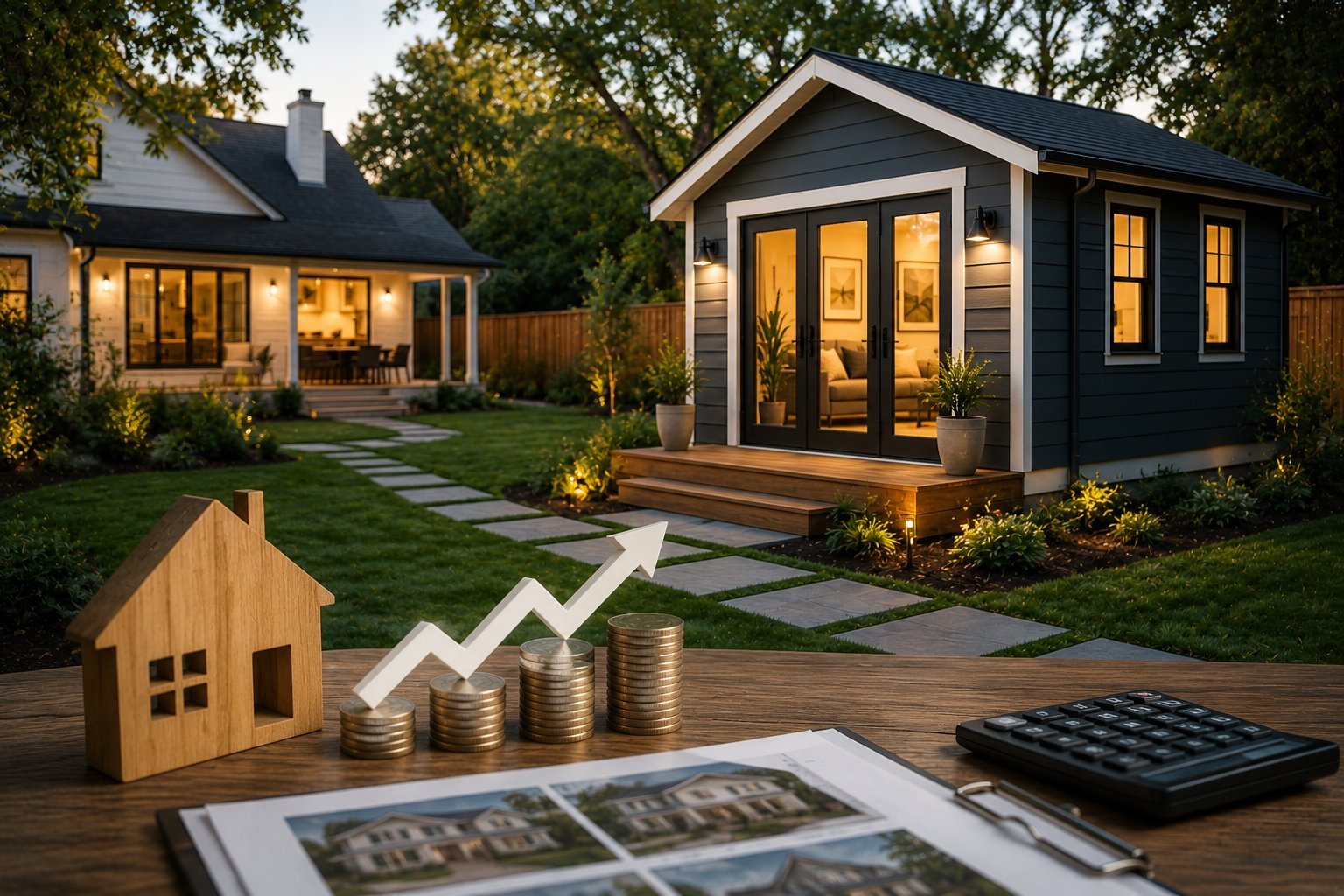
Detached factory built ADUs perform well on resale in most California and Oregon markets because they read cleanly to potential buyers. The main house is the main house. The cottage is the cottage. The two structures are related but independent. That clarity makes pricing and valuation more straightforward than a complex attached addition.
The factory built construction also helps with resale because the manufacturer behind the home matters to discerning buyers. A home from a manufacturer with decades of experience and a strong reputation holds value better than a one-off custom build from a small shop. Buyers value the predictability and the documentation that comes with a factory built unit.
The flexibility of the structure adds another resale benefit. A future buyer can use the cottage as a guest house, a rental, a home office, or housing for family. That optionality makes the property more attractive to a broader set of buyers, which usually translates into a stronger sale outcome.
Common questions about detached ADUs
Buyers researching detached factory built ADUs ask a similar set of questions before they commit. The first is whether the home will look like a real house or like a temporary structure. Modern factory built detached ADUs from quality manufacturers look like real homes. The construction, the finishes, and the design all match what buyers expect from small custom homes.
The second is whether the unit will hold up over time. The answer depends on the manufacturer. Factories with decades of experience produce homes that hold up well with normal maintenance. The warranty and the service process matter for the same reason.
The third is whether the home can be relocated. Most factory built detached ADUs can be moved, though the cost and logistics depend on the size and the distance. Knowing the option exists gives buyers flexibility they often appreciate years later.